Minecraft Lush Caves Guide: Find Them, Farm Them, Live There
Lush caves are the prettiest biome you will ever accidentally fall into — and the one most players never find on purpose. Here is how azalea trees give them away, what every green block down there is actually for, and why the axolotls are the real reason to go.
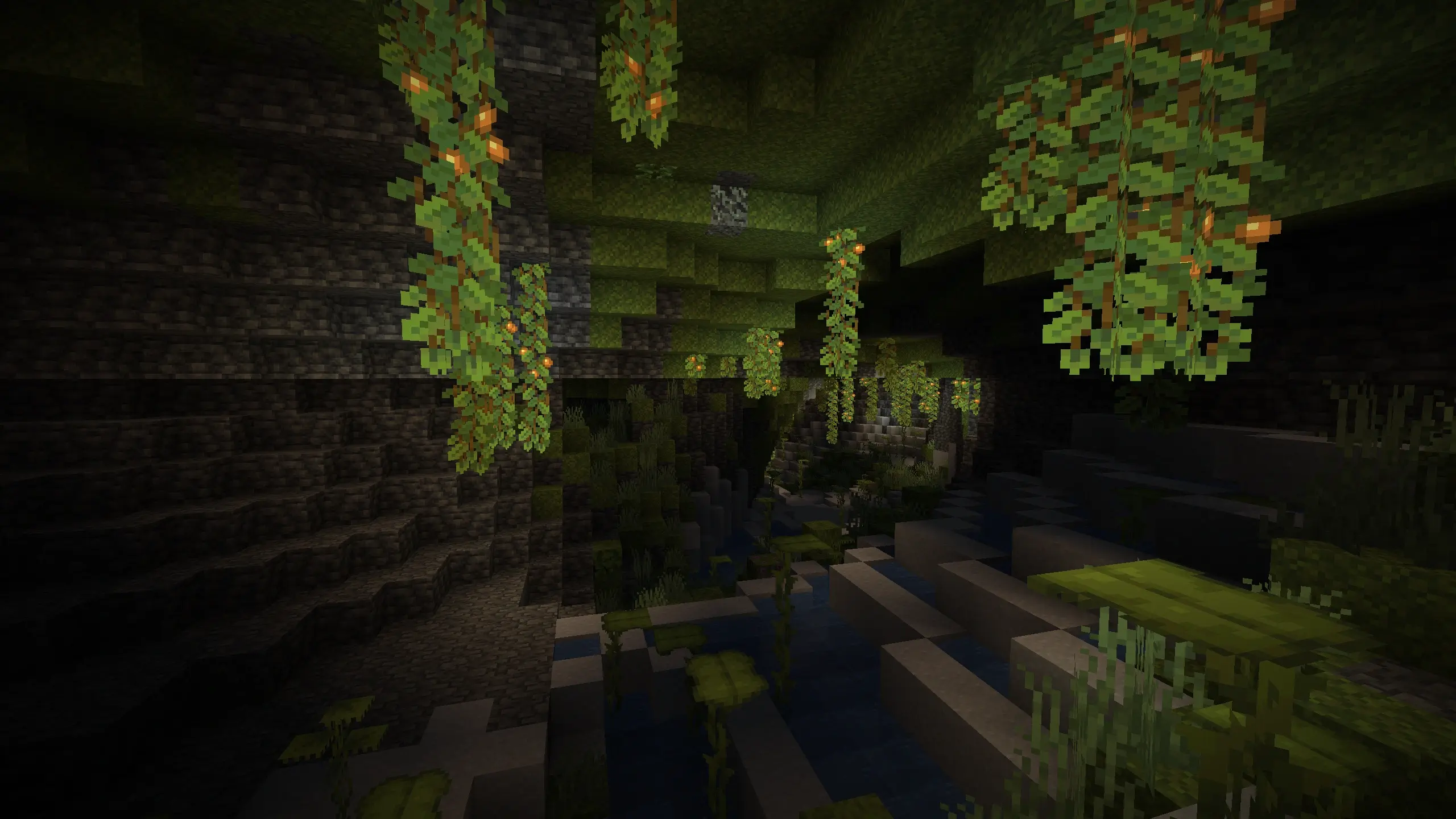
Most players meet a lush cave by falling into one. You are strip-mining at Y -20, you break one wrong block, and suddenly there is daylight-green moss, glowing vines dripping berries, and a pink lizard staring at you from a pool of clear water. It feels like a bug. It is not. Lush caves are one of the best-looking biomes in the game and one of the hardest to find on purpose — which is exactly the problem this guide fixes.
We will cover why the biome is worth a dedicated trip, the azalea tree trick that lets you find one from the surface without guessing, and what every green block down there actually does — moss, cave vines and glow berries, big and small dripleaf, spore blossoms, and the axolotls that are the real prize. Everything here is checked against the Minecraft Wiki, because there is a lot of vague "just dig down" advice that wastes your night.
Why lush caves are worth the detour
A lush cave is a temperate Overworld cave biome, and it is the only place several useful things generate naturally. You go for a specific shopping list:
- Axolotls — the only passive mob that spawns here, and they spawn nowhere else in the world. If you want them, this is the trip.
- Glow berries — the only renewable light-emitting food, and the only way to get cave vines for decoration.
- Moss blocks — a bone-meal-fueled block converter that turns stone into grass, dirt, and free flowers.
- Big dripleaf — a plant platform that works as a natural pressure plate and a slow elevator.
- Spore blossoms and azalea — decoration that no other biome hands you.
None of that is strictly required to beat the game. All of it makes your base look and function better, and the axolotls double as combat allies underwater. For where this sits in your priority list, our biomes guide has the full map of what each biome is actually good for.
How to actually find a lush cave
Here is the thing nobody tells you: you do not have to find lush caves underground. The game marks them on the surface. Lush caves generate below azalea trees, so a single tree topside is a giant arrow pointing at the biome beneath your feet.
The azalea tree trick
An azalea tree is a small oak-shaped tree with distinctive azalea leaves — bushy, blue-green foliage, often with pink flowers when it is the flowering variant. They grow scattered across a lot of biomes, and every single one sits directly above a lush cave. Spot one, and you have found your biome without a single block of blind digging.
The workflow is dead simple:
- Walk until you see an azalea tree. They stand out against normal oak and birch — the leaf color is wrong in a good way.
- Dig straight down next to it (never through the block you are standing on — see the survival guide for beginners on why straight-down digging kills people).
- Follow the roots. Below the tree you will hit rooted dirt and hanging roots threading down toward the cave. That is the biome bleeding upward.
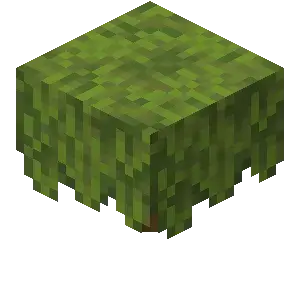
You can also grow your own azalea tree: bone meal an azalea or flowering azalea bush placed on dirt, moss, clay, or similar, and it grows into the full tree. That does not create a lush cave — the biome has to already be there — but it confirms good dirt and gives you leaves and flowers.
Other ways in
If you are not hunting azaleas, two backup methods work:
- Read the ore-hunting depth. Lush caves generate throughout the deepslate and stone layers, roughly the same band you mine for diamonds, so a normal deep mining session eventually stumbles into one. It is luck, not a plan.
- Chunk-search seeds. On a known seed, third-party chunk viewers plot lush cave locations exactly. Fine for a planned base, useless for a survival world you did not seed-pick.
The azalea method beats both because it works on any world, no tools, no luck.
Everything growing down there
Once you drop in, the biome is a garden. Here is the full block list and what each one is for, so you know what to harvest and what to leave:
- Moss block and moss carpet — your bone meal converter (big section below).
- Cave vines with glow berries — hanging light-food vines.
- Small and big dripleaf — platforms and a natural pressure plate.
- Spore blossom — a ceiling decoration that rains green particles and drips water.
- Clay — generates in the water pools, your easiest renewable-free clay for bricks and pots.
- Azalea and flowering azalea — the bush form, plantable and bone-meal-able into trees.
- Rooted dirt and hanging roots — the connective tissue; rooted dirt gives you hanging roots when broken and can be hoed for a dirt + a hanging root in some versions.
Grab clay while you are there. It is a genuine pain to find elsewhere and it is just sitting in the pools.
Moss and the bone meal spread
Moss is the sleeper item of the whole biome. A moss block does one very useful thing: bone meal it, and it converts nearby stone, dirt, and similar blocks into more moss, plus scatters grass, tall grass, moss carpet, and flowers on top. It spreads in roughly a small area around the block you fertilize.
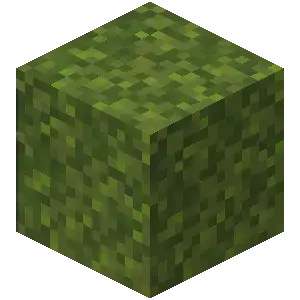
Why that matters:
- Stone-to-moss farming. Ring a floor of moss blocks with cobblestone or deepslate, bone meal the moss, and it eats the stone into more moss — a slow but genuinely renewable moss and flower supply.
- Free flowers. The spread drops flowers you would otherwise have to hunt across biomes, handy for dyes and bee breeding.
- Decoration. Moss and moss carpet are some of the best natural-looking building blocks in the game, and they soften stone builds instantly.
Take a stack of moss blocks home and you have a portable garden starter. That single mechanic is worth the trip even before the axolotls.
Glow berries and cave vines
Cave vines hang from the ceiling and, when mature, sprout glow berries — small glowing fruit. This is the only renewable food in the game that also emits light (a soft glow, level 14 when berries are present), which makes it a rare double-duty item.

What to do with them:
- Eat them in a pinch — they restore a small amount of hunger, less than proper food, but they stack and never spoil.
- Plant them. Use glow berries on the underside of a block and they grow cave vines downward, so you can farm both the berries and the glowing decoration anywhere. Bone meal speeds the berry growth.
- Feed foxes. Glow berries are one of the items foxes will take, useful if you are collecting mobs.
- Light and vibe. A curtain of glowing cave vines is one of the nicest ambient light sources for a cave base, and it does not need redstone or torches.
Bring a few berries home and you never need to return to the biome for more — they are fully farmable from a single harvest.
Dripleaf, the parkour plant
Dripleaf comes in two sizes and both are more useful than they look.
Small dripleaf grows on clay or moss underwater and is mostly a step toward the big version — bone meal a small dripleaf and it becomes a big dripleaf.
Big dripleaf is the interesting one. It is a wide platform that tilts and drops you through when you stand on it too long, then springs back up. That gives you two mechanics for free:
- A natural pressure plate / trap. Stand on it, it holds for a moment, then drops — great for gated drops, hidden passages, or a soft-launch into water.
- A slow elevator. Because it resets to horizontal, you can bone-meal a stack of big dripleaf up a wall and use it as an organic climbing route.
It is not a redstone component, but it behaves like one, and it is the only plant in the game that does. Pair it with the redstone basics guide if you want to build actual contraptions around it.
Axolotls, the real reason to go
Axolotls are the headline. They are the only passive mob that spawns in lush caves and they spawn nowhere else naturally, so if you want them, this biome is the entire supply.
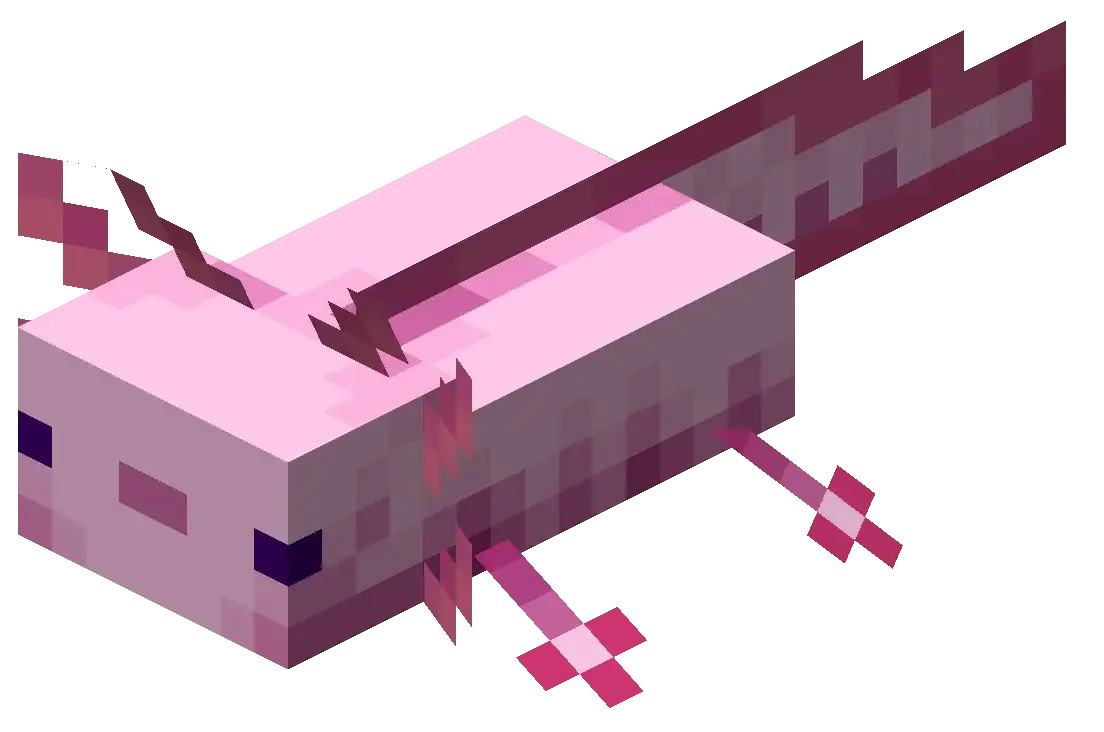
They are not just decoration:
- They fight for you underwater. Axolotls attack most aquatic hostiles — drowned, guardians — and while attacking they can gain a regeneration buff and reset their attack cooldown. In an ocean monument raid, a squad of them is a real help.
- They play dead. When hurt, an axolotl can flop and play dead to shed aggro and heal — an actual survival mechanic, not a bug.
- You catch and breed them with buckets and tropical fish. Scoop one into a water bucket to carry it home safely, and breed them by feeding two a bucket of tropical fish. Breeding rewards you with a chance at the rare blue axolotl, which does not spawn naturally at all.
The catch: bucket them, do not lead them. They are aquatic, they suffocate on land, and a water bucket is the only clean way to relocate one. For the broader "which mobs are worth raising" picture, the taming and breeding guide covers axolotls alongside everything else.
Turning a lush cave into a base
A lush cave is one of the best natural base sites in the game, because half the aesthetic work is already done. A few moves that make it livable:
- Light it without ruining it. Hostile mobs still spawn in the dark parts, so light up the edges — glow berry vines and glow lichen keep the vibe, or hide torches behind moss.
- Wall off the water. Keep the axolotl pools intact but fence your build area so a wandering skeleton does not knock your lizards around.
- Harvest, do not strip. Moss, azalea, and dripleaf all regrow or replant, so you can farm the biome indefinitely instead of clearing it once.
- Route in. Dig a proper stairwell or drop-shaft from your azalea tree so you are not pillar-jumping every trip. The transportation guide has clean vertical-travel options.
Because the biome self-decorates, a lush cave base looks finished on day one and just gets better as your moss and vines spread.
Java vs Bedrock notes
The biome is nearly identical across editions, with a couple of small differences worth knowing:
- Generation trigger. Both editions place lush caves below azalea trees. In Bedrock, they also occasionally generate below bamboo jungles, giving you a second surface tell that Java does not have.
- Downfall and temperature values differ slightly between editions (they affect internal biome math, not how you play), so do not be surprised if grass tints look a hair different.
- Axolotl spawning, moss spread, dripleaf behavior, and glow berry mechanics are the same on both — everything in this guide works regardless of edition.
If you are on Bedrock and near a bamboo jungle, check for a lush cave underneath before you go hunting azaleas elsewhere.
Quick Action Checklist
- Find an azalea tree on the surface — it always marks a lush cave directly below
- Dig down beside it and follow rooted dirt and hanging roots into the biome
- Grab clay from the water pools while you are down there
- Take moss blocks home to bone-meal into renewable moss, grass, and flowers
- Harvest glow berries and replant them on block undersides for light-food vines
- Bone meal small dripleaf into big dripleaf for platforms and slow elevators
- Bucket axolotls (never lead them) and breed with a bucket of tropical fish
- Aim for the rare blue axolotl through breeding — it never spawns naturally
- Light the biome subtly with glow vines so hostiles do not spawn in your base
- On Bedrock, also check under bamboo jungles for a second lush cave entrance
Frequently Asked Questions
How do you find lush caves in Minecraft?
What are axolotls used for in Minecraft?
What do glow berries do in Minecraft?
How does moss work in Minecraft?
What is big dripleaf good for?
Keep Reading
Related Guides
Minecraft Ice Caves Guide: Frostbite, Icicles and Freezing
Minecraft's fifth cave biome is mostly packed ice, its icicles drop when you light them, and its new zombie variant applies a brand-new Freezing effect with its melee hits. The ice caves drop is playable today in Bedrock Preview 26.60.29 and not yet in Java. Here is what is in it, with the numbers, and what could still change.
Minecraft Wilderness Bound Guide: Dappled Forest and Camps
Minecraft quietly swapped its whole version-numbering scheme and shipped a full content drop the same week — a new autumn biome, camping structures with a chest that hides in a different spot every time, and the game's first real sit-down furniture. Here is every number from Wilderness Bound, checked against the wiki the day after launch.
Minecraft Sulfur Caves: Geysers, Cinnabar, and Sulfur Cubes
Java 26.2 dropped a cave biome that does not reward you with a mob you fight, or loot you carry home. It rewards you with a ball. The sulfur cube takes on the physics of whatever block you feed it, and the game ships twelve different physics profiles to choose from — bounciness, friction and air drag, all published numbers. Here is the whole biome, including the geyser maths.

Minecraft Pale Garden Guide: Creaking, Resin, and Pale Oak
The pale garden is the only biome in Minecraft that turns your music off on purpose, and it guards the only mob in the game you cannot damage. Here is how the creaking staring contest actually works, how to turn its heart into a renewable resin farm, and every Java/Bedrock number that matters.
Minecraft Survival Guide for Beginners: Your First Days
You have about ten minutes of daylight before the sun sets and the world tries to kill you. Here is exactly what to do with them — punch a tree, build a tool chain, and get a roof over your head before the zombies arrive.

Best Minecraft Enchantments, Ranked — The Ones Worth Your XP
Mending is the enchantment that ends the grind — gear that repairs itself forever. Everything else is a fight over your XP and anvil uses. Here is what actually earns a slot, ranked, with the real max levels.