Minecraft Ice Caves Guide: Frostbite, Icicles and Freezing
Minecraft's fifth cave biome is mostly packed ice, its icicles drop when you light them, and its new zombie variant applies a brand-new Freezing effect with its melee hits. The ice caves drop is playable today in Bedrock Preview 26.60.29 and not yet in Java. Here is what is in it, with the numbers, and what could still change.
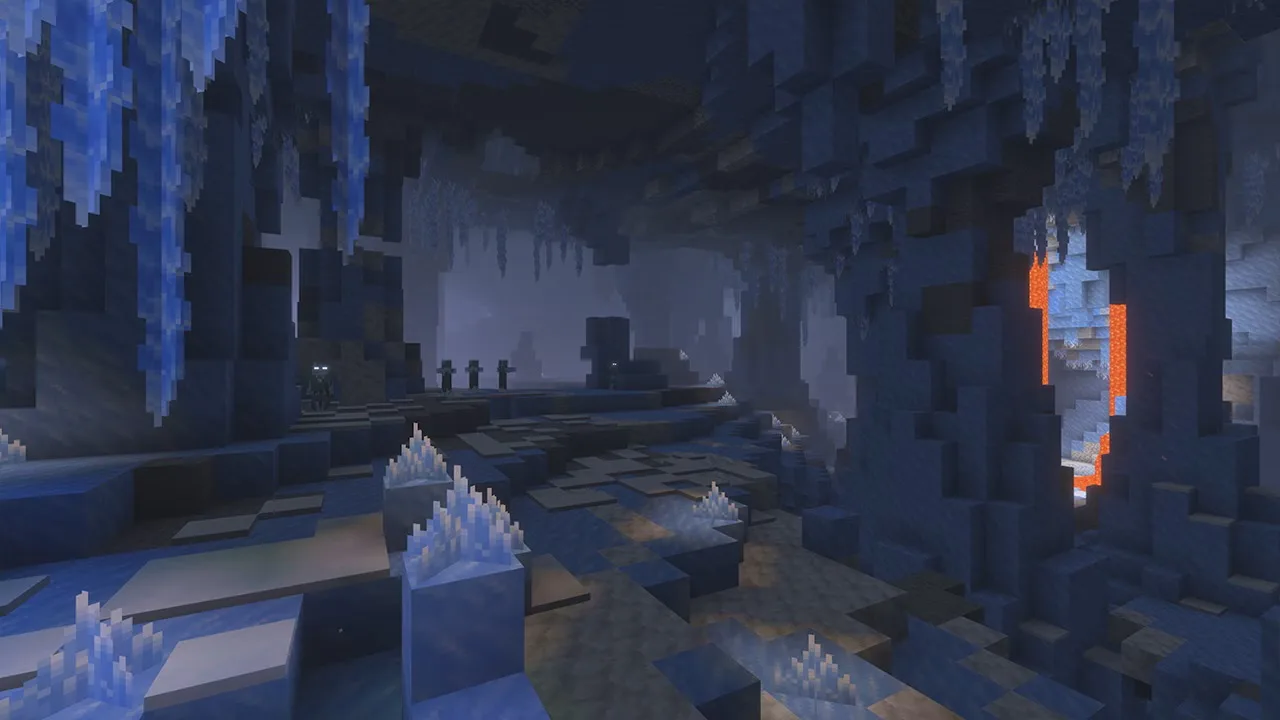
Minecraft's next cave biome is built mostly out of packed ice, the block that crafts into blue ice. Ice caves were revealed at Minecraft LIVE on September 26, 2026, and they come with icicles that drop when you light them up, ice crystals that glow at light level 4, and the frostbite: a zombie variant whose melee hits apply a brand-new Freezing status effect, and whose drops brew into the potion for it.
Mojang calls this the final game drop of 2026, and for now the only way to play it is a Bedrock test build. Bedrock Preview and Beta 26.60.29, whose changelog is dated September 30, carry it behind an experiment toggle named Drop 4 of 2026. Java has not picked it up: 26.4 Snapshot 2 on September 29 was a fog, sky and debug-screen update.
Everything below is preview content, taken from Mojang's own changelog and the Minecraft Wiki's entries for the preview build as of October 2, 2026. Numbers can move before release, and where the sources disagree, this post says so rather than picking one.
Ice caves at a glance
| Detail | |
|---|---|
| Announced | Minecraft LIVE, September 26, 2026 |
| Drop | Mojang's "final game drop of 2026"; experiment toggle "Drop 4 of 2026" |
| Planned versions | Java Edition 26.4 and Bedrock Edition 26.70 (per the Minecraft Wiki) |
| Release date | Not announced |
| Playable now | Bedrock Preview and Beta 26.60.29, experiment switched on |
| In Java snapshots | Not yet: 26.4 Snapshot 1 (September 22) and Snapshot 2 (September 29) contain no ice cave content |
| New biome | Ice caves, the fifth Overworld cave biome after lush caves, dripstone caves, the deep dark and sulfur caves |
| New blocks | Icicle, ice crystal |
| New mob | Frostbite, a zombie variant |
| New items | Ice ball; Potion of Freezing with splash and lingering versions; Arrow of Freezing |
| New status effect | Freezing |
How to play the ice caves before release
Right now this is a Bedrock-only test. The steps:
- Get the test build. Mojang's changelog lists Minecraft Preview on Xbox, PlayStation, Windows and iOS, and the Beta on Android through Google Play. You need 26.60.29 or later.
- Create a new world and switch on the experiment. In the world's Experiments settings, turn on Drop 4 of 2026.
- Accept the costs. Per the wiki's experiments page, a Bedrock world with an experiment on cannot earn achievements, and the experiment cannot be turned off once the world exists. Mojang also warns that test versions can corrupt worlds, so back up or use a separate save.
- Head for snow. The next section explains why.
Java players can install snapshots from the launcher's Installations tab, but there is nothing frozen in them yet. 26.4 Snapshot 1 made Vulkan the default graphics API, and Snapshot 2 reworked render-distance fog and redesigned the F3 debug screen. Mojang's testing page for this drop says it will collect each new testing moment in one place as they arrive, so that is the page to watch for the first Java ice cave snapshot.
Where ice caves generate: go to the snow, then go down
Mojang's changelog keeps it short: ice caves appear under biomes with low temperature. The wiki's generation notes fill in the rest. They form below snowy plains, snowy taigas and frozen oceans at high weirdness values, and rarely below ordinary taigas, which means an ice spikes biome can sit on top of one. Where humidity or continentalness climbs, lush caves or dripstone caves take their place instead.
That weirdness rule makes ice caves the mirror image of sulfur caves. The wiki puts it bluntly: ice caves are always on the other side of a river from sulfur caves. So the search plan flips too. Our sulfur caves guide tells you to stand on flat ground near a swamp or desert and look for a spring; for ice caves, get to snow first and dig down from there.
Two rarer ways in: ice caves can generate on the surface at weirdness above 1.25, which the wiki calls extremely rare, and like other cave biomes they can leak out of cave openings and ravines. If a ravine wall in a snowy biome looks blue instead of grey, look closer.
What is actually down there
| Block or feature | Where it is | Why it matters |
|---|---|---|
| Packed ice | Most of the walls and terrain | Drops nothing without Silk Touch; 9 craft 1 blue ice |
| Calcite | Blobs in the walls | Second main terrain block |
| Stone and deepslate | Pockets inside the ice | Where the ores generate |
| Snow | Occasional floor patches | Does not melt, though the biome gets no snowfall |
| Icicles | Clusters on the ceiling | New block; can fall once lit |
| Large packed-ice icicles | Hanging from the ceiling and rising from the floor | Terrain feature, not the new icicle block |
| Ice crystals | Occasionally on the floor, on top of packed ice | New block; light level 4 |
| Not here | Glow lichen, dirt, granite | Glow lichen is the big loss: less light |
The packed ice row is the practical one. Bring Silk Touch. Packed ice drops nothing without it, and nine packed ice craft one block of blue ice, the fastest ice for a boat road. A cave whose walls are mostly packed ice is a blue-ice quarry waiting to be dug out; our transportation guide covers what that road is worth. For ores, you are mining the stone and deepslate pockets, not the ice, so the usual Y-level advice in the mining guide still decides what you find in them.
Water behaves two ways here. Per the wiki, water exposed to the sky freezes into ice, while water from underground aquifers stays liquid.
The mob list is where it gets cold. This is Bedrock's preview spawn table for the biome, from the wiki; there is no Java spawn data yet.
| Mob | Spawn weight | Group size | Note |
|---|---|---|---|
| Creeper | 100 | 1 | |
| Drowned | 100 | 2-4 | In water |
| Slime | 100 | 1 | Slime chunks only |
| Skeleton | 90 | 1-2 | |
| Zombie | 50.05 | 2-4 | |
| Frostbite | 50 | 2-4 | New |
| Spider | 50 | 1 | |
| Stray | 10 | 1-2 | |
| Enderman | 10 | 1-2 | |
| Witch | 5 | 1 | |
| Zombie villager | 4.95 | 2-4 | |
| Glow squid | 10 | 2-4 | Aquifers, creature category |
Frostbites spawn at essentially the same weight as plain zombies (50 against 50.05) and in the same group size. Strays, which fire tipped arrows of Slowness, are in the mix too. That puts two different slowing attacks from two different mobs in the same cave, which is worth knowing before you go down without a plan for either.
Icicles: dripstone that falls when you light it
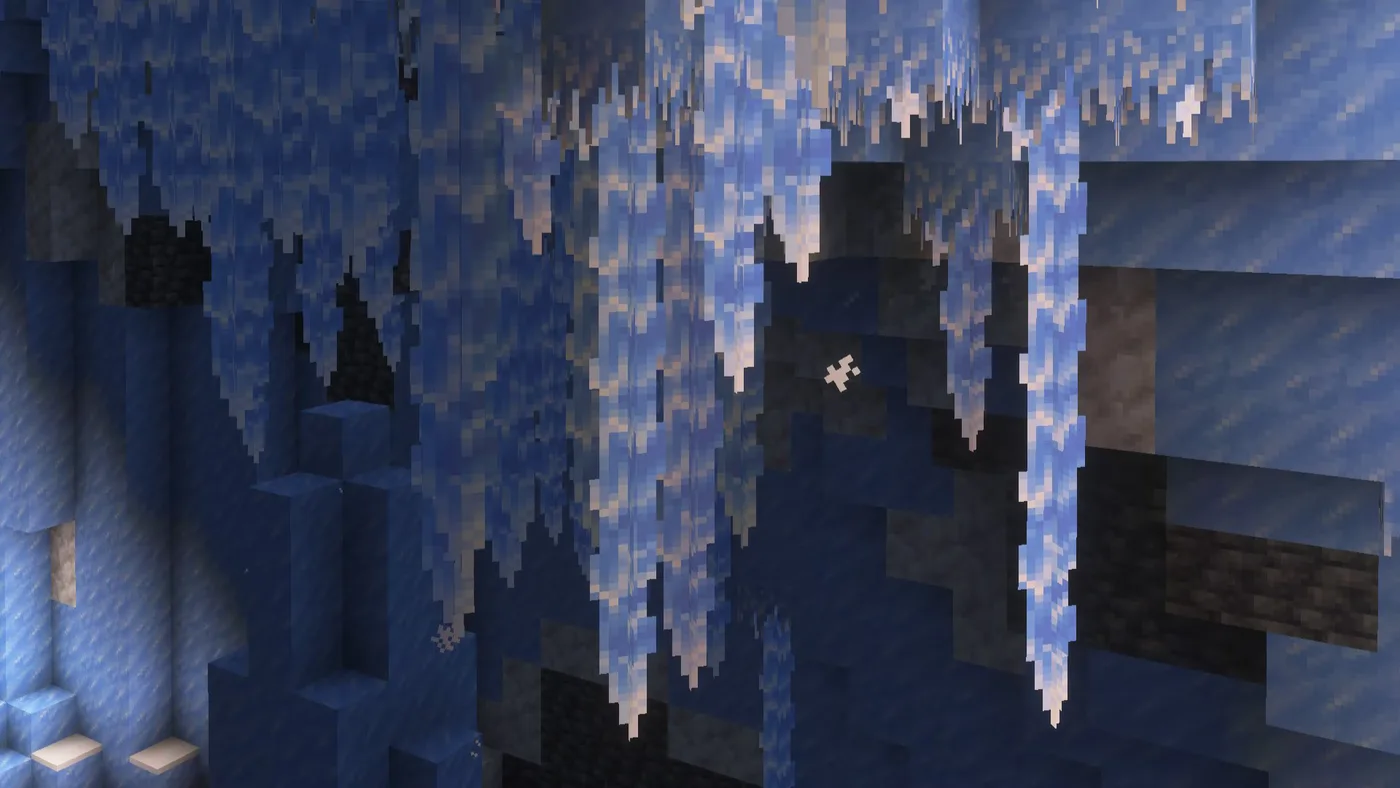
Mojang's own description of the icicle is a "speleothem-like block similar to Dripstone and Sulfur Spikes". It keeps pointed dripstone's falling and its stalagmite fall damage, and adds a trigger of its own: light.
| Pointed dripstone | Sulfur spike | Icicle | |
|---|---|---|---|
| Grows hanging under | A dripstone block with water above | A sulfur block | Packed ice |
| Longest stalactite it grows | 8 blocks | 3 blocks | 5 blocks |
| Grows stalagmites below | Yes | Yes | No |
| Extra fall damage on a stalagmite | Yes | No | Yes |
Light is the rule that changes how you build. Mojang's notes say icicles only grow where there is no nearby light source and outside the Nether, and that if light levels get high enough there is a chance they drop and hit whatever is underneath, with only the base block staying put. In the Nether they break too. A falling icicle damages entities the way a falling dripstone stalactite does. So the reflex of torching up a new cave works against you here: light the room, and you are the thing standing under the ceiling.
Floor icicles are a working spike trap. Icicles cannot grow stalagmites, and the wiki says icicle stalagmites do not generate naturally, so an upward-pointing icicle is one a player put there. Landing on one doubles your fall distance in the wiki's damage formula, ceil(fall distance × 2 − 2), exactly like pointed dripstone, with the death message "impaled on a stalagmite". Sulfur spikes skip that bonus entirely, so an icicle floor punishes a fall where a sulfur spike floor does not.
Ice crystals: light level 4 and fragile
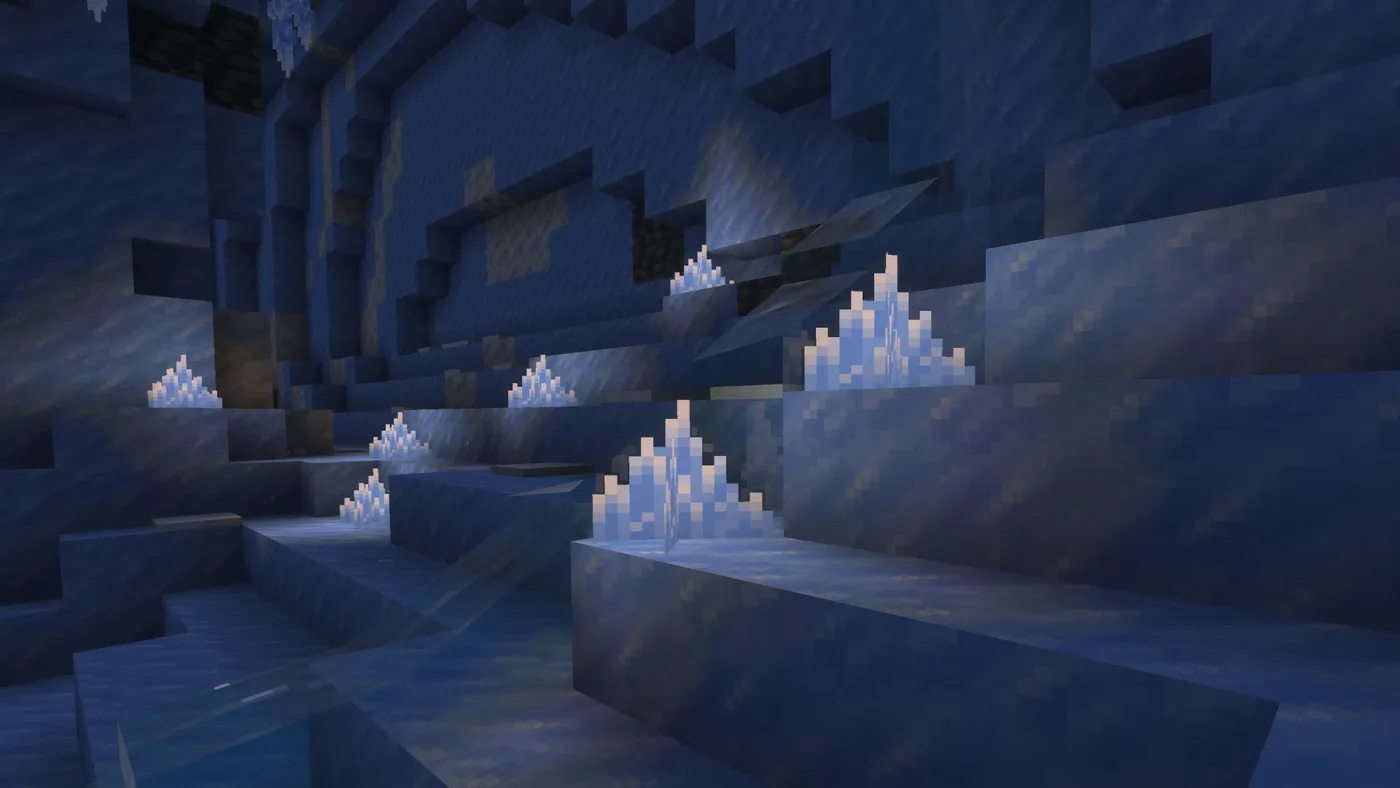
Mojang compares the ice crystal to an amethyst cluster. It generates on top of packed ice, can be placed facing any direction, breaks if you remove the block it sits on, and gives off light. The wiki puts that light at level 4. With glow lichen absent, Mojang's notes call the crystals the only light source in ice caves; the lava in Mojang's own screenshots is the exception you will notice first.
Light 4 is dim, but it does something. Most Overworld monsters in both editions now need a block light of exactly 0 to spawn, as our mob spawning guide explains, so a crystal keeps monsters off the small patch of floor its light reaches. It will not light a cave.
Two caveats from the sources. Mojang lists a known issue that crystals are currently smaller than intended, so the model in today's preview is not final. And the wiki lists them as non-renewable, so the ones that generate are the ones you get. Any tool mines them; a pickaxe is fastest.
The frostbite: a zombie built for powder snow
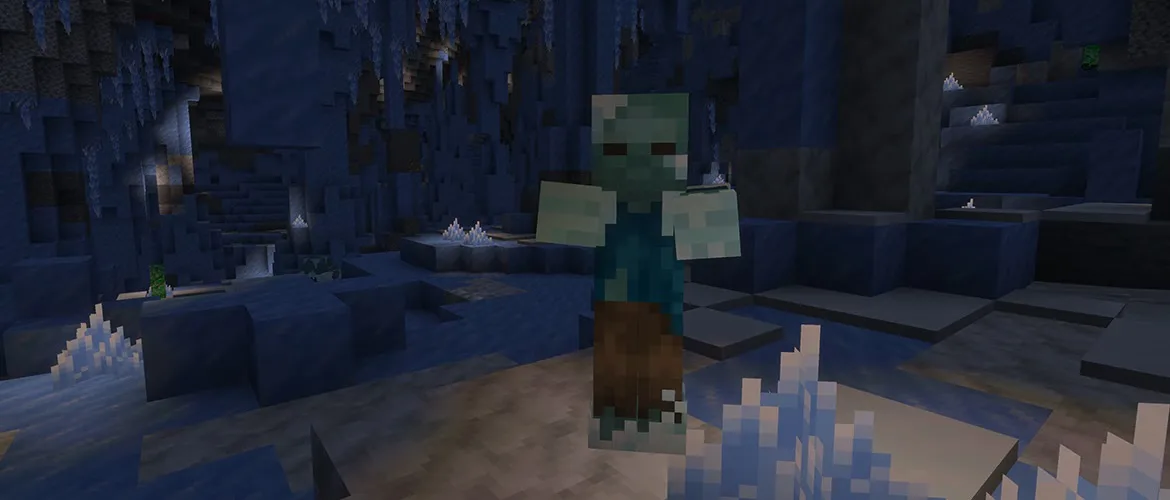
At Minecraft LIVE it was "the frozen zombie variant" with no name. By the September 30 preview it was the frostbite. Mojang's summary is that it can throw ice balls, but what it really wants is to get close and hit you with melee attacks that apply Freezing.
| Frostbite (Bedrock preview) | |
|---|---|
| Health | 24 (wiki) |
| Armor | 2 (wiki) |
| Melee damage | 1 / 2 / 3 on Easy / Normal / Hard (wiki), plus 3 seconds of Freezing |
| Ranged attack | Throws ice balls if it spawned holding them or picks some up |
| Spawns | Ice caves, plus snowy surface biomes such as snowy plains and ice spikes at night or in thunderstorms |
| Sunlight | Burns, like a zombie |
| Powder snow | Stands on top of it; not slowed by it |
| Freezing | Immune |
| Drops | 0-2 rotten flesh and 0-3 ice balls, each up to 1 more per level of Looting (wiki) |
| Mob type | Undead: Smite works on it, and Instant Health harms it |
The combat logic, per Mojang's notes and the wiki, is a range switch. A frostbite carrying ice balls throws them while it closes the distance, then swaps to melee once it is near. Per the wiki, most frostbites use the melee attack and only some spawn holding ice balls. On Bedrock, the wiki also notes that 15% of naturally spawned baby frostbites can turn into jockeys and ride another mob.
Powder snow makes them, water unmakes them
The frostbite slots into the zombie family's conversion chain:
- A zombie or husk left inside powder snow converts into a frostbite. Mojang's notes confirm the conversion. The wiki's frostbite page says 30 seconds and its damage page says 45, so treat the timer as unsettled.
- A frostbite whose head stays underwater for over 30 seconds starts converting into a zombie, per the wiki's zombie page.
- That zombie, left underwater, goes on to become a drowned. The drowned cannot turn back into a frostbite.
The first line matters most. Frostbites are the only ice ball source the sources list, and ice balls are the only Freezing ingredient, so powder snow doubles as a frostbite converter. Turning a zombie farm into an ice ball farm is the obvious build once the drop ships, but with the conversion timer unsettled and no Java build to test, any rate quoted now would be a guess.
Freezing: powder snow as a status effect
Freezing does to you what standing in powder snow does, wherever you are: Mojang's changelog says those affected "slowly become frozen as if in Powdered Snow". The wiki spells out the powder snow numbers it borrows. You slow down gradually, to half your normal speed over 7 seconds, and once fully frozen you take 1 damage every 2 seconds until you stop freezing. Mojang adds that it makes players shake and lowers jump height; the wiki reports the jump-height part is not working in the current preview because of a bug.
Read against those timings, a single frostbite hit is mostly a slow. Its 3 seconds of Freezing do not reach the 7-second mark where freeze damage begins. A frostbite that keeps hitting keeps the effect topped up, though, and that is how the damage arrives. On the wiki's numbers, the danger is the slow setting up the next hit.
The counter is leather. Any single piece of leather armor stops you freezing, as it already does in powder snow. Mojang's notes are careful about what it does not do: leather does not stop the effect being applied and does not remove it. The wiki's summaries disagree on whether the slowdown still applies under leather, so until that is settled, test it before you rely on it. A pair of leather boots kept for frostbite-heavy caves is cheap insurance either way, and the armor guide covers where leather fits.
Two more rules from the wiki: standing in fire or lava nullifies the effect, but being on fire does not, and freezing damage to players can be switched off with the existing game rule (freeze_damage on Java, freezedamage on Bedrock), covered in our game rules list.
Who shrugs it off, and who takes five times the damage
Per the wiki, these ignore Freezing:
- Immune: withers, ender dragons and frostbites.
- Cannot be frozen: polar bears, snow golems and strays.
- Cannot take damage: creakings spawned by a creaking heart.
- Protected: anything wearing leather armor, including a horse in leather horse armor.
The other end is more interesting. Mojang's notes say mobs that are vulnerable to freezing take five times the damage. The wiki's list of mobs that take extra freezing damage is short: blazes, magma cubes and striders. That makes a splash Potion of Freezing a Nether-mob weapon on paper. For the effects already in the released game, see our status effects guide.
Ice balls and the Potion of Freezing
Ice balls are the frostbite's projectile and the drop's one new brewing ingredient. Mojang's numbers: an ice ball deals 4 damage, scaling down with its velocity, carries knockback, and breaks on impact with a block or an entity. The wiki adds that it decelerates sharply, so it hits hardest up close; that it stacks to 16; and that, unlike a snowball, it deals no extra damage to blazes. The wiki lists it as a throwable item, like a snowball.
Brewing follows the standard chain from our potion brewing guide:
| Step | Ingredient | Result |
|---|---|---|
| 1 | Ice ball into an Awkward Potion | Potion of Freezing |
| 2 | Redstone | Extended Potion of Freezing |
| 3 | Gunpowder | Splash Potion of Freezing |
| 4 | Dragon's breath into the splash potion | Lingering Potion of Freezing |
| 5 | Dip arrows in a cauldron of Potion of Freezing (Mojang's method), or craft 8 arrows around a lingering potion | Arrow of Freezing |
The durations, per the wiki's preview data, which lists only a level I potion:
| Source | Freezing duration | Extended |
|---|---|---|
| Potion of Freezing | 0:45 | 1:30 |
| Splash Potion of Freezing | 0:45 | 1:30 |
| Lingering Potion of Freezing | 0:11 | 0:22 |
| Arrow of Freezing | 0:05 | 0:11 |
| Frostbite melee hit | 0:03 | — |
The arrow row is short, but the cauldron method makes arrows cheap. On Bedrock, the wiki's tipped arrow page says a full cauldron of potion tips up to 64 arrows, against 8 per lingering potion through the crafting grid.
What else Minecraft LIVE announced
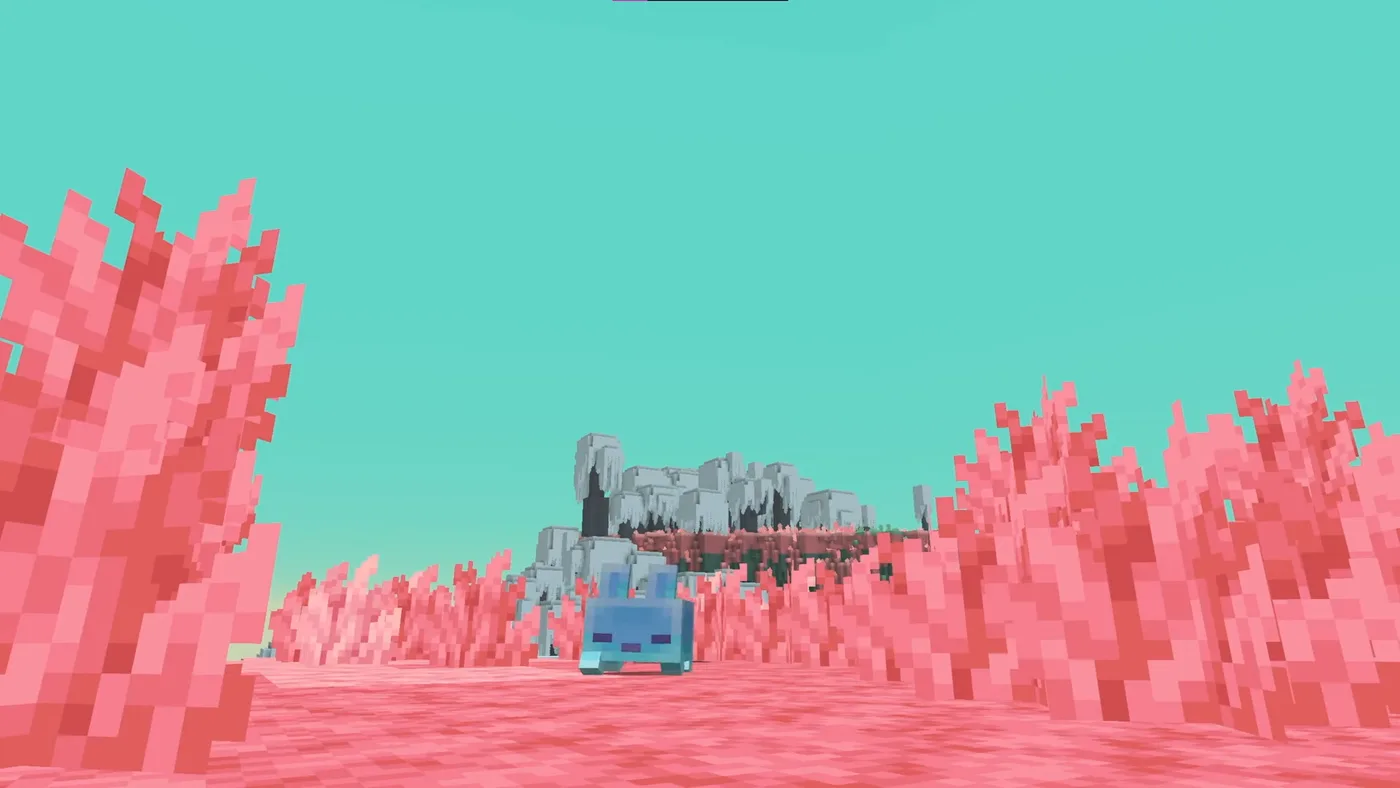
The ice caves were the near-term base-game news. The rest of the September 26 show, from Mojang's recap:
| Announcement | What it is | When |
|---|---|---|
| The Sift | A new dimension, debuting in Minecraft Dungeons II and coming to Java and Bedrock as the fourth dimension; Mojang calls it the first new dimension in over 14 years | "Next year" (2027) |
| Sound Effects Packs | The sound effects packs shown during the broadcast, coming to Minecraft Marketplace | No date given |
| Creator platform | Tools and systems to make creating, managing and sharing content easier | No date given |
| Minecraft for Nintendo Switch 2 | Switch 2 version with Vibrant Visuals as the default visuals | October 27, 2026 |
| Minecraft Dungeons II | The sequel, with an interconnected world, jumping, and rifts into the Sift | Launched September 29, 2026 |
| Minecraft World | Themed land at Chessington World of Adventures Resort in London, with a Minecraft World Hotel and the Escape the Nether roller coaster | 2027 |
| Minecraft Education | Tenth birthday | — |
The Sift is the one to watch for the base game. During the broadcast Mojang showed a glimpse of it in Minecraft itself, with pink grass, white-canopied trees and one of its mobs, the rabbit-like creature in the shot above, which the wiki lists as the blub. Beyond that glimpse, most of what is known about the Sift comes from Dungeons II, and the wiki marks its list of the dimension's blocks as conjecture: per the wiki, only the blub has been officially named so far.
What could still change before release
Preview content is a draft. Here is what is already visibly moving:
- Names. The frostbite went from unnamed at LIVE to named in the September 30 changelog. Other names could change too.
- Ice crystal size. Mojang lists the current model as smaller than intended.
- Freezing and jump height. Mojang says the effect lowers it; the wiki says that part is bugged in this build.
- Conversion timing. The wiki gives two different powder snow timers for zombies becoming frostbites.
- Java behaviour. Every number here comes from Bedrock's preview. Java has edition differences in plenty of existing mechanics, and none of this has been in a Java snapshot yet.
- Release date. Mojang has not announced one, and the version numbers in the table above are the wiki's.
For scale, the previous drop, Wilderness Bound, shipped on September 15 after its own run of previews and snapshots. Check the last-updated date on this page before you build around any number in it.
Quick Action Checklist
- Want it now? Install Bedrock Preview or Beta 26.60.29+, make a new world, and switch on Drop 4 of 2026. Use a throwaway world: experimental Bedrock worlds cannot earn achievements.
- Find it under snow. Snowy plains, snowy taigas, frozen oceans and ice spikes are where to dig; per the wiki, ice caves sit on the other side of a river from sulfur caves.
- Pack Silk Touch. The walls are packed ice, which drops nothing without it, and nine packed ice craft one blue ice.
- Do not torch the ceiling. Enough light can drop icicles on you; only their base block stays.
- Do not fall onto an icicle. Floor icicles double your fall distance for damage, unlike sulfur spikes.
- Wear one piece of leather. Per Mojang it stops you freezing from frostbite hits and Freezing potions, though it does not clear the effect.
- Keep frostbites at range where you can. Ice ball carriers throw on approach, but it is the melee hit that adds 3 seconds of Freezing.
- Keep the ice balls. They are the only Freezing ingredient listed: awkward potion, then gunpowder, then dragon's breath, and on Bedrock a cauldron tips up to 64 arrows.
- Recheck before you build around a number. It is a preview; crystal size, conversion timing and Java behaviour are all still open.
Frequently Asked Questions
When do ice caves come out in Minecraft?
What is a frostbite in Minecraft?
What does the Freezing effect do in Minecraft?
How do you make a Potion of Freezing in Minecraft?
Where do ice caves generate in Minecraft?
What is the Sift in Minecraft?
Keep Reading
- Mythras blog
- Minecraft coverage hub
- Sulfur caves guide (the previous new cave biome)
- Wilderness Bound guide (the previous game drop)
- Transportation guide (blue ice boat roads)
- Mining guide (ore Y levels)
- Mob spawning guide (block light 0 rule)
- Armor guide
- Game rules list (freeze damage)
- Status effects guide
- Potion brewing guide
- Minecraft Feedback — Minecraft Beta & Preview 26.60.29 (September 30, 2026): Drop 4 of 2026 experiment, ice caves, frostbite, Freezing, ice balls
- Minecraft.net — Minecraft Live: September 2026 Recap (September 26, 2026)
- Minecraft.net — Everything you can test from the upcoming game drop (September 30, 2026)
- Minecraft.net — Minecraft 26.4 Snapshot 1 (September 22, 2026)
- Minecraft.net — Minecraft 26.4 Snapshot 2 (September 29, 2026)
- Minecraft.net — Minecraft for Nintendo Switch 2 is coming October 27th
- Minecraft Wiki — Fourth Drop 2026: planned Java 26.4 and Bedrock 26.70 contents
- Minecraft Wiki — Ice caves: generation, terrain and Bedrock preview spawn table
- Minecraft Wiki — Frostbite: stats, spawning, conversion and drops
- Minecraft Wiki — Freezing (effect): timings, potion durations and immune mobs
- Minecraft Wiki — Icicle: growth, falling and stalagmite fall damage
- Minecraft Wiki — Ice crystal: light level and generation
- Minecraft Wiki — Ice ball: projectile behaviour and brewing
- Minecraft Wiki — Damage: freezing mechanics and mobs that take extra freezing damage
- Minecraft Wiki — Packed ice: Silk Touch requirement and generation
- Minecraft Wiki — Experiments: Bedrock achievements and experiment toggles
- Minecraft Wiki — The Sift: planned dimension shown at Minecraft LIVE September 2026
Related Guides
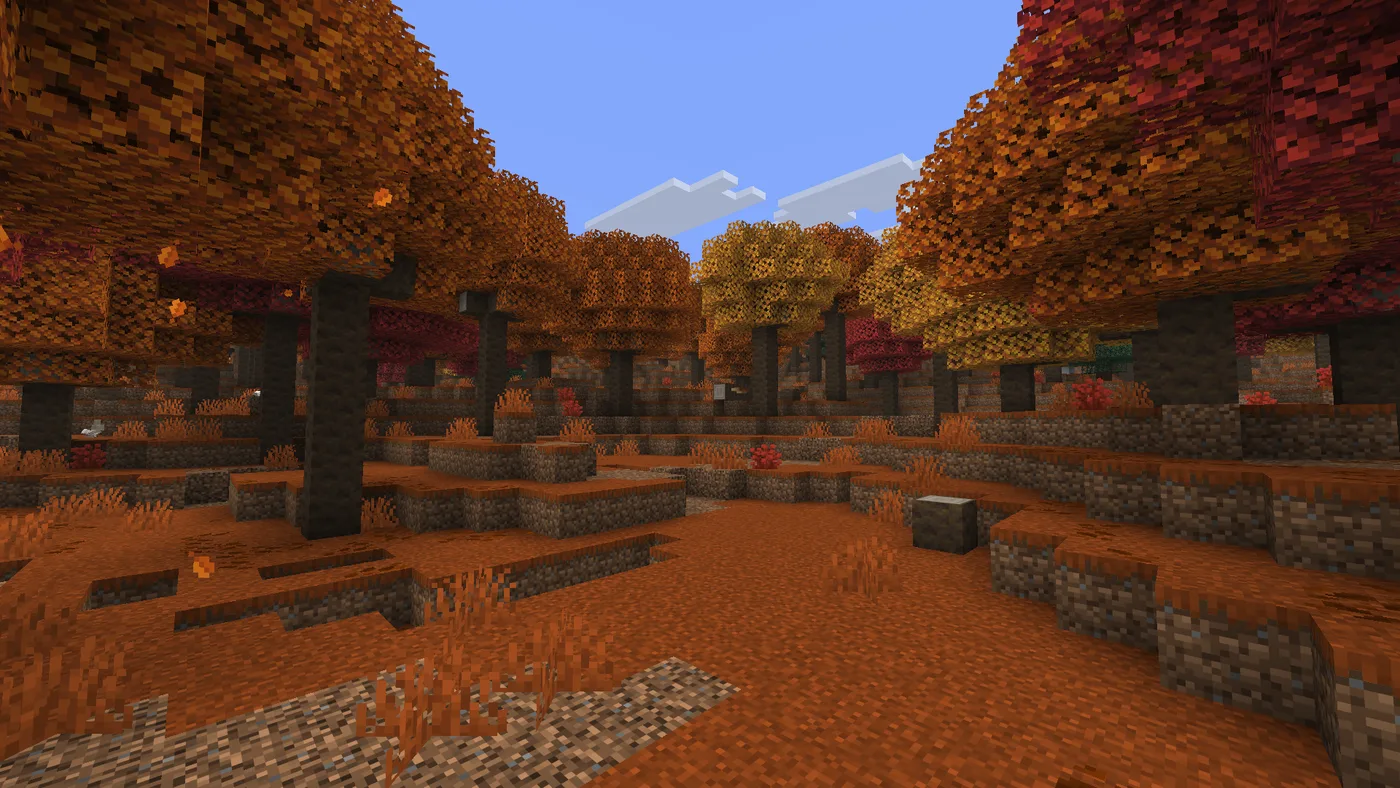
Minecraft Wilderness Bound Guide: Dappled Forest and Camps
Minecraft quietly swapped its whole version-numbering scheme and shipped a full content drop the same week — a new autumn biome, camping structures with a chest that hides in a different spot every time, and the game's first real sit-down furniture. Here is every number from Wilderness Bound, checked against the wiki the day after launch.
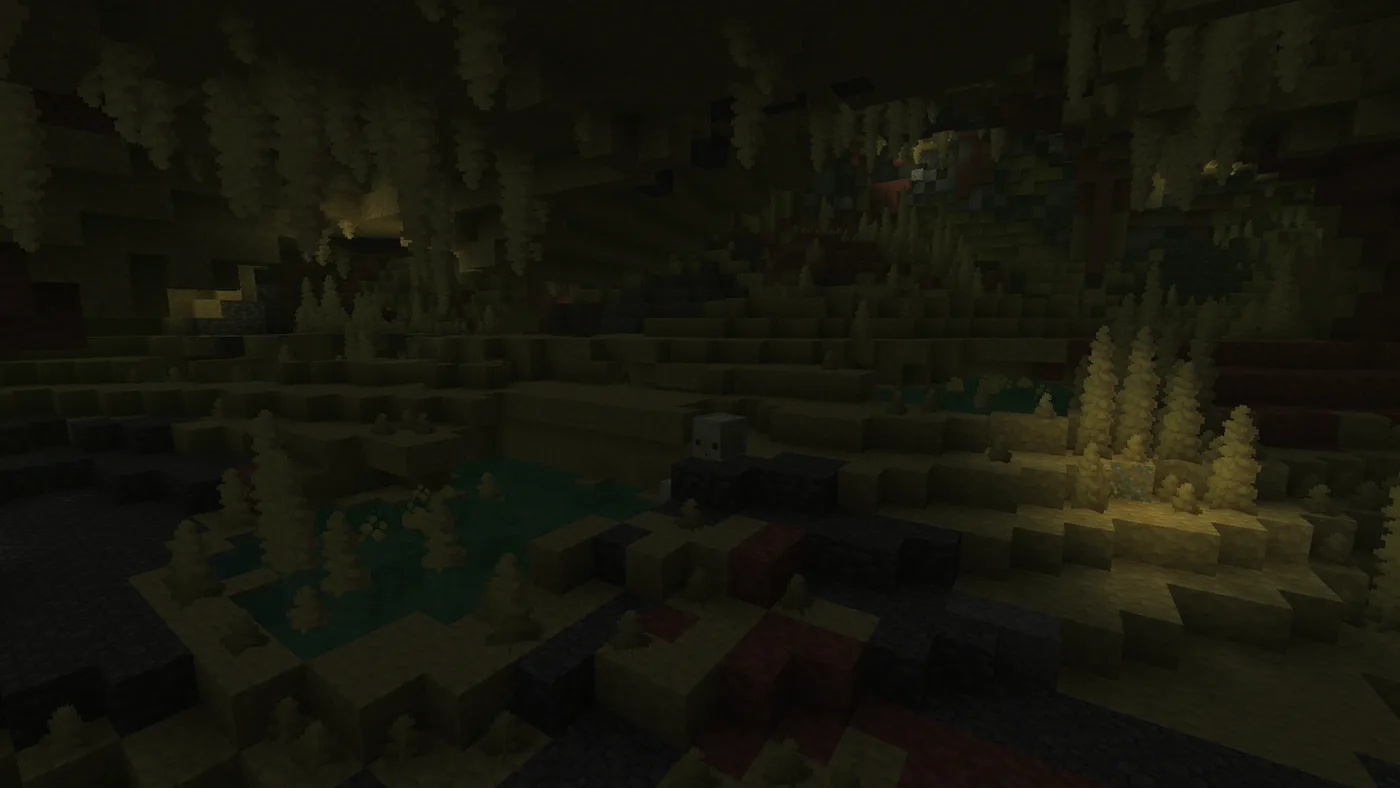
Minecraft Sulfur Caves: Geysers, Cinnabar, and Sulfur Cubes
Java 26.2 dropped a cave biome that does not reward you with a mob you fight, or loot you carry home. It rewards you with a ball. The sulfur cube takes on the physics of whatever block you feed it, and the game ships twelve different physics profiles to choose from — bounciness, friction and air drag, all published numbers. Here is the whole biome, including the geyser maths.
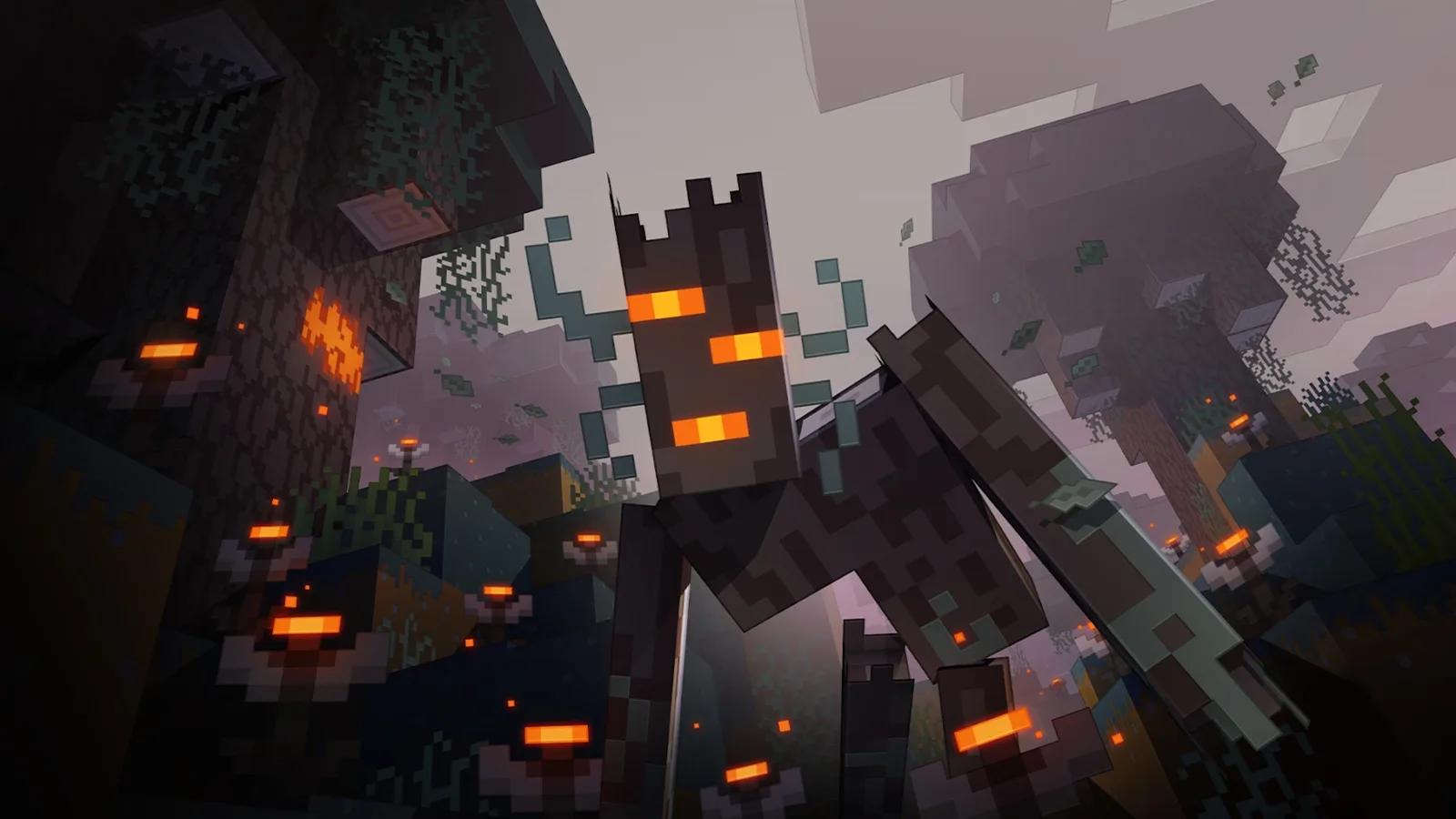
Minecraft Pale Garden Guide: Creaking, Resin, and Pale Oak
The pale garden is the only biome in Minecraft that turns your music off on purpose, and it guards the only mob in the game you cannot damage. Here is how the creaking staring contest actually works, how to turn its heart into a renewable resin farm, and every Java/Bedrock number that matters.
Minecraft Cherry Grove Guide: Wood, Pink Petals, and Mobs
The cherry grove is the prettiest biome in Minecraft and one of the most underrated places to start a world. It's a meadow with pink trees on paper, but it quietly hands you a whole salmon-colored wood set, a renewable decoration block, emeralds in the hills, and bees on the branches.
Minecraft Survival Guide for Beginners: Your First Days
You have about ten minutes of daylight before the sun sets and the world tries to kill you. Here is exactly what to do with them — punch a tree, build a tool chain, and get a roof over your head before the zombies arrive.

Best Minecraft Enchantments, Ranked — The Ones Worth Your XP
Mending is the enchantment that ends the grind — gear that repairs itself forever. Everything else is a fight over your XP and anvil uses. Here is what actually earns a slot, ranked, with the real max levels.