Minecraft Wilderness Bound Guide: Dappled Forest and Camps
Minecraft quietly swapped its whole version-numbering scheme and shipped a full content drop the same week — a new autumn biome, camping structures with a chest that hides in a different spot every time, and the game's first real sit-down furniture. Here is every number from Wilderness Bound, checked against the wiki the day after launch.
Minecraft's version number stopped making sense this week, and that is the least interesting thing that happened. If your mental model is still "1.21-something," the build that shipped on September 15, 2026 is officially Java Edition 26.3 — the result of a year-based renumbering scheme Mojang locked in back in December 2025, where Bedrock switched first at 26.0 in February and Java followed at 26.1. That housekeeping detail is burying the actual news: 26.3 is Wilderness Bound, a full game drop released the same day as Bedrock Edition 26.50, and it's the first new thing to explore in the Overworld since the pale garden. A new autumn-toned biome, a camping structure whose best loot chest hides in a different spot depending on the layout you roll, and the game's first piece of genuine sit-down furniture. Here's everything in it, checked against the wiki the day after launch.
Wilderness Bound, at a glance
| Thing | Detail |
|---|---|
| Release date | September 15, 2026 |
| Java Edition version | 26.3 |
| Bedrock Edition version | 26.50 |
| Headline biome | Dappled forest |
| Headline structure | Abandoned camp |
| New wood set | Poplar (full block family, three leaf colors) |
| New furniture | Cushions, all 16 wool colors |
| New utility block | Straw bed (single-use, no spawn reset) |
| Other new blocks | Wool and concrete stairs/slabs, all 16 colors each |
Java and Bedrock got this one on the same day with the same content — Mojang now ships three to four numbered drops a year to both editions together, so the old "Bedrock is a patch behind" complaint mostly doesn't apply to Wilderness Bound. The one edition split worth knowing: cushions went through Bedrock's preview channel (26.40) before landing in the synced 26.50 release, while Java tested the same content through Snapshot 3 and a run of release candidates.
The dappled forest: how to actually find one
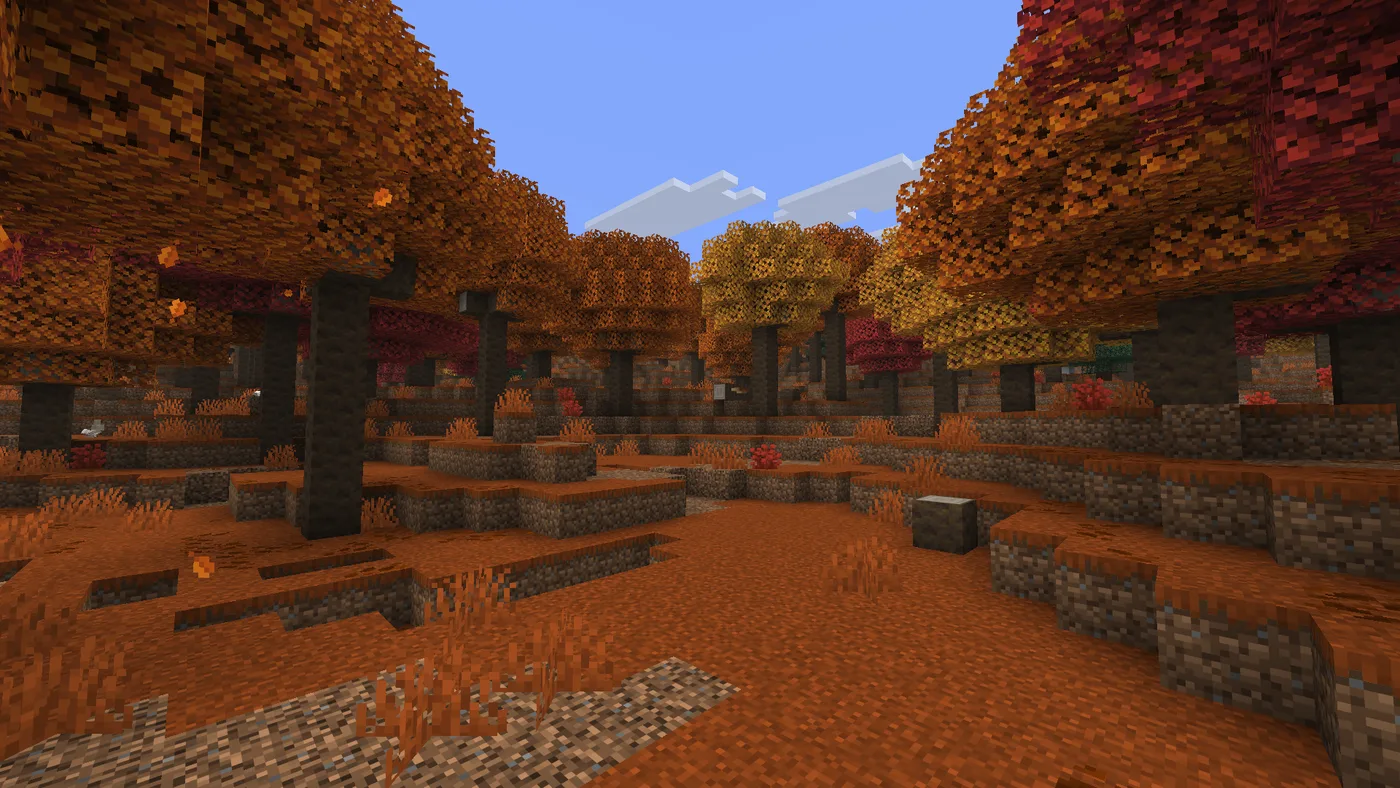
The dappled forest is a genuinely new biome, not a recolor of an existing one. It generates in cold, low-humidity regions with high weirdness — in practice, look near ice spikes, cold oceans, windswept gravelly hills, or mountains close to frozen peaks. It never borders other woodland biomes, but it does border plains, sunflower plains, ice spikes, and cherry groves, so an orange forest sitting next to a pink cherry grove or a spike of ice is the biome working as designed, not a seed glitch. Size varies wildly — the wiki notes it can generate as a microbiome of a few trees or stretch for hundreds of blocks.
You'll know it by the palette before you know it by the trees: grass renders at a saturated orange (#df6827), foliage at a bright orange (#e68e30), and the water goes almost black (#375154) with underwater fog twice as dense as normal. The dominant tree is the poplar — red, orange, or yellow leaves depending on the individual tree — with sparse spruce trees mixed in and coarse dirt patches covered in leaf litter underfoot.
Mob spawns lean normal with one genuine oddity. Hostiles are the standard set — creepers, skeletons, spiders, zombies, endermen, witches, zombie villagers. Passives are cold-climate farm animals, foxes, rabbits, sheep, bats, and glow squids. The oddity: this is the only biome in the game where foxes spawn but wolves can't, which makes it the one reliable spot to farm foxes without a wolf wandering in to complicate things — a detail our biomes guide doesn't cover yet, since it predates this drop.
Poplar wood: the full block family
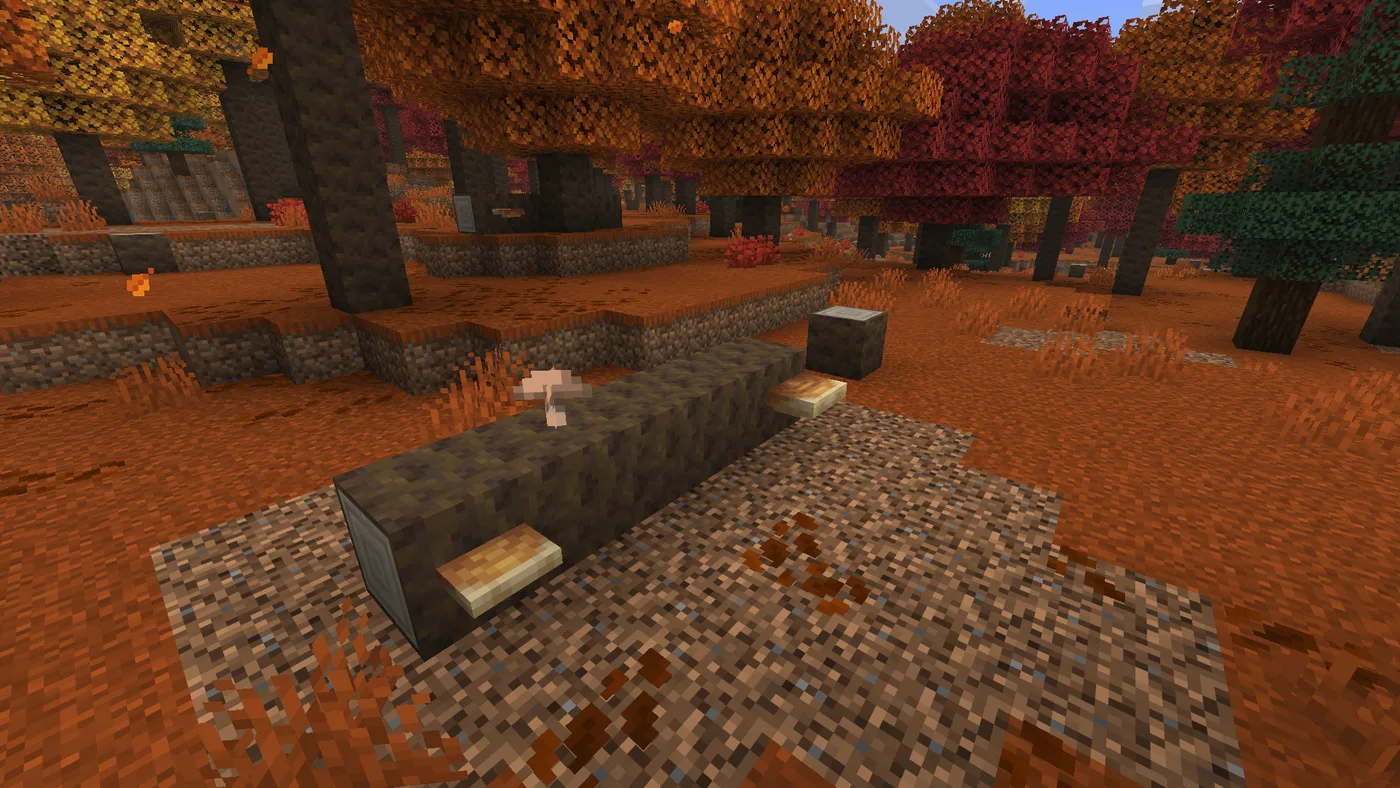
Poplar ships as a complete wood set from day one, not a partial rollout: sapling, three leaf-color variants, logs, stripped logs, wood, stripped wood, planks, stairs, slabs, signs, hanging signs, buttons, pressure plates, doors, fences, fence gates, trapdoors, a shelf block, and poplar boats (including the boat-with-chest variant). Chop down a tree and you get whichever leaf color it generated with — the color is fixed per tree, not random per log.
Fallen poplar logs generate commonly across the biome, lying flat on the ground, and they're the preferred host for shelf mushrooms — a new small/large mushroom variant with a bouncy top surface. If you want the gray-white pale oak look from the last drop next to something warmer, poplar is the wood family that finally gives builders a proper autumn palette without dyeing terracotta. Our building tips piece has more on working a limited palette if you're planning a poplar build.
Abandoned camps: where they spawn and how rare they are
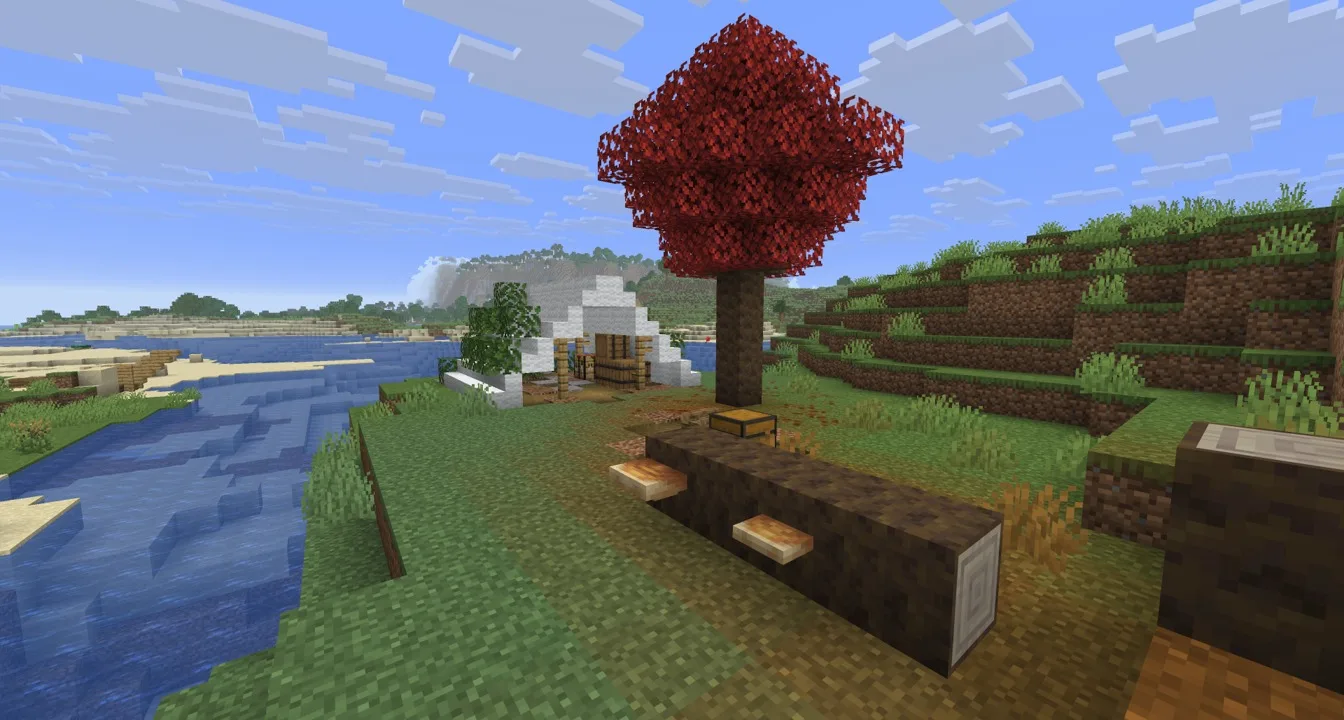
Abandoned camps are the drop's other headline feature, and they are not exclusive to the dappled forest — they generate across 18 surface biomes: Bamboo Jungle, Birch Forest, Cherry Grove, Dappled Forest, Flower Forest, Forest, Meadow, Old Growth Birch Forest, Old Growth Pine Taiga, Old Growth Spruce Taiga, Pale Garden, Savanna, Snowy Taiga, Sparse Jungle, Swamp, Taiga, Windswept Forest, and Wooded Badlands. If you've already cleared a pale garden or a cherry grove, there's a decent chance a camp is sitting somewhere on the edge of it.
Generation follows a region-based grid rather than pure chance per chunk:
| Generation stat | Number |
|---|---|
| Eligible biomes | 18 |
| Region size | 37×37 chunks, one placement attempt per region |
| Closest two camps can be | 8 chunks apart |
| Farthest apart in adjacent regions | 60 chunks |
| Average distance to the nearest camp | ~34 chunks |
| Tent layout variants per biome | 10, equal 10% weight each |
| Campsite layout variants | 45 shared, plus up to 4 biome-exclusive (~2.22% each) |
Tents vs. campsites: the two layouts
Every camp is built from two separately rolled components. The tent uses white wool stairs framed by fences in whichever wood the local biome favors, with straw beds, chests, barrels, and — on the more weathered rolls — cobwebs or scattered leaves inside for an abandoned look. The campsite sits out front: dirt, gravel, and path-block flooring around an unlit campfire, with extra storage nearby. Because the two components roll independently, no two camps you find will look quite the same, even within one biome.
Loot and the hidden copper chest
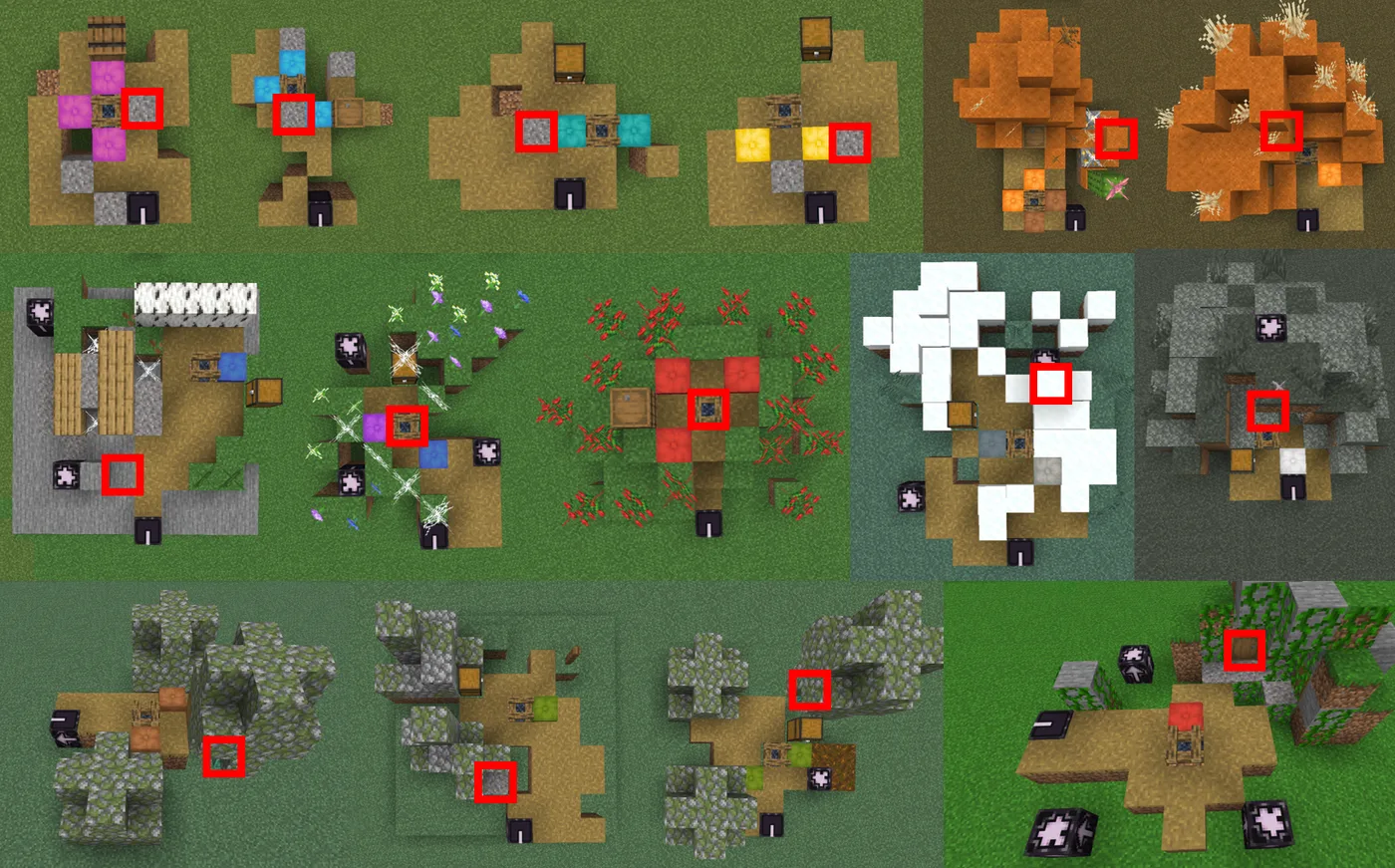
Camp loot comes in three tiers: barrels, common chests, and — the one worth hunting for — secret chests. The wiki describes the secret chest as a rare roll: occasionally it generates as an oxidized copper chest with a noticeably better loot pool than the barrels and common chests sitting in plain sight, and it isn't in a fixed spot. Its position moves with the tent layout you rolled, tucked into the floor, a wall cavity, or under debris depending on which of the 10 tent variants generated. The wiki's own location diagram marks it across more than a dozen layouts, so when one does spawn it's genuinely in a different corner almost every time — worth pulling up the floorboards to check, since there's no way to tell from outside whether this camp rolled one.
Camps also carry two new map types instead of raw loot: eight biome-specific abandoned camp maps that point at other camps (an abandoned camp never generates a map pointing at another camp of its own biome), and seven structure explorer maps — buried ancient city, buried mineshaft, desert pyramid, jungle pyramid, buried trial chambers, warm ocean ruins, and woodland mansion — each with an equal 1-in-7 chance in a secret chest. If maps are your thing, our maps and cartography guide covers the rest of the system, though one section of it is now out of date — more on that below.
Straw beds: a bed that isn't a bed
Straw beds solve a real problem: sleeping through the night on an expedition without resetting your spawn point to some random hillside. Craft 3 hay bales into 4 straw beds, and they behave nothing like the bed you've used since day one:
| Straw bed | Regular bed | |
|---|---|---|
| Craft | 3 hay bales → 4 beds | 3 wool + 3 planks → 1 bed |
| Stackable | Yes, up to 16 | No |
| Uses before breaking | 1 (breaks on waking or leaving early, drops nothing) | Unlimited |
| Sets your spawn point | No | Yes |
| Cushions fall damage | No | Yes |
| In the Nether or End | Destroys itself, drops nothing | Explodes |
| Counts for villager breeding | No | Yes |
The practical read: pack straw beds for a trip, keep one real bed at home. And despite being crafted from hay bales, a straw bed doesn't inherit the bale's fall-damage cushioning — it's purely a sleep-through-the-night item, not a landing pad.
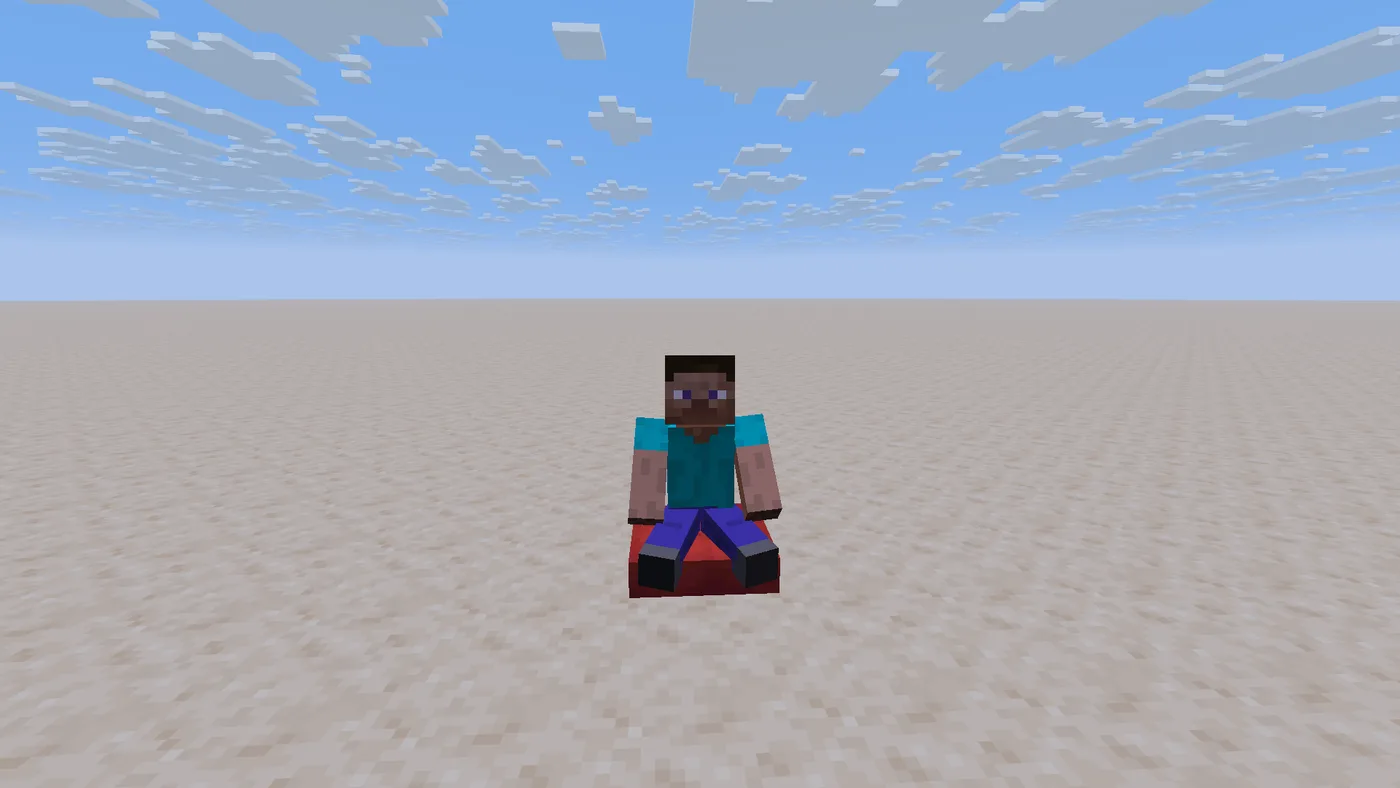
Cushions: Minecraft's first real furniture
Cushions give Minecraft a real way to sit down. Craft 3 wool slabs of the same color into 1 cushion, and you get a genuine decorative seat in all 16 wool colors; combine any cushion with a matching dye to recolor it later without wasting wool.
Right-click to sit, and only one player fits per cushion — no piling up a group on the same block. The interesting side effect: while seated, you're immune to knockback, pistons, and geyser or portal displacement, which is a real utility for AFK spots or a base you don't want randomly nudging you out of your chair. The wiki also documents a genuine movement trick: line up cushions two blocks apart and use-key down the row and you'll hit roughly 45 m/s — faster than a horse or minecart rails — and remapping "use" to its own key pushes that past 60 m/s, in blue-ice-boat territory.
Four small changes worth knowing
- Mushroom stew's recipe loosened. It now accepts any combination of mushrooms instead of requiring one red and one brown specifically.
- Spruce leaves stopped shedding particles, Java only. Cosmetic, but if you build with spruce, the ambient falling-leaf effect near those trees is gone.
- Explorer and buried treasure maps can no longer be zoomed — not in a crafting grid, not at a cartography table. Only maps in the game's
#minecraft:extendable_mapstag (your own regular and locator maps) still zoom; pre-marked structure maps are locked at whatever detail they spawn with. This directly affects a claim in our own maps and cartography guide, which describes the cartography table's cheap zoom without carving out this new exception — we're flagging it for a refresh pass rather than editing it here. - Wool and concrete now have stairs and slabs in all 16 colors, and the wool versions dampen vibrations exactly like full wool blocks — useful if you're building a sculk-adjacent base and wanted stair-shaped soundproofing.
Quick Action Checklist
- Confirm your version first: you want Java 26.3 or Bedrock 26.50 — anything older doesn't have this content.
- Hunt dappled forests in cold, low-humidity, high-weirdness terrain near ice spikes or frozen mountains; they border plains, sunflower plains, ice spikes, and cherry groves, never other forests.
- Remember foxes but not wolves spawn there — plan fox farming accordingly.
- Chop poplar for the full 3-color wood set, and check fallen logs for shelf mushrooms.
- Search all 18 eligible biomes for abandoned camps, not just the dappled forest — average spacing is ~34 chunks between camps.
- Don't stop at the visible barrels and chests: a camp can rarely hide an oxidized copper chest with better loot, and when one spawns, its location changes with the tent layout.
- Craft straw beds (3 hay bales → 4) for expedition sleep that skips the spawn reset — but keep a real bed at home for fall-damage cushioning and villager breeding.
- Craft cushions (3 wool slabs, same color → 1) for real seating, and remember you're immune to knockback and portals while sitting.
- If you use explorer or treasure maps, know that zoom is gone for those specific map types as of this update.
Frequently Asked Questions
What is Minecraft's Wilderness Bound update and when did it release?
How do you find the dappled forest biome in Minecraft?
How do you craft a cushion in Minecraft?
What's the difference between a straw bed and a regular bed in Minecraft?
Where do abandoned camps generate and what is the hidden copper chest?
Did Minecraft change its version numbering system in 2026?
Keep Reading
- Minecraft Wiki — Wilderness Bound drop overview and version numbers
- Minecraft Wiki — dappled forest generation, colors, and mob spawns
- Minecraft Wiki — abandoned camp generation, layout variants, and loot
- Minecraft Wiki — straw bed crafting recipe and sleep mechanics
- Minecraft Wiki — cushion crafting recipe and sitting mechanics
- Minecraft Wiki — poplar wood block family
- Minecraft Wiki — Java Edition 26.3 changelog, including the map zoom change
- Minecraft.net — official announcement of the year-based version numbering system
Related Guides
Minecraft Ice Caves Guide: Frostbite, Icicles and Freezing
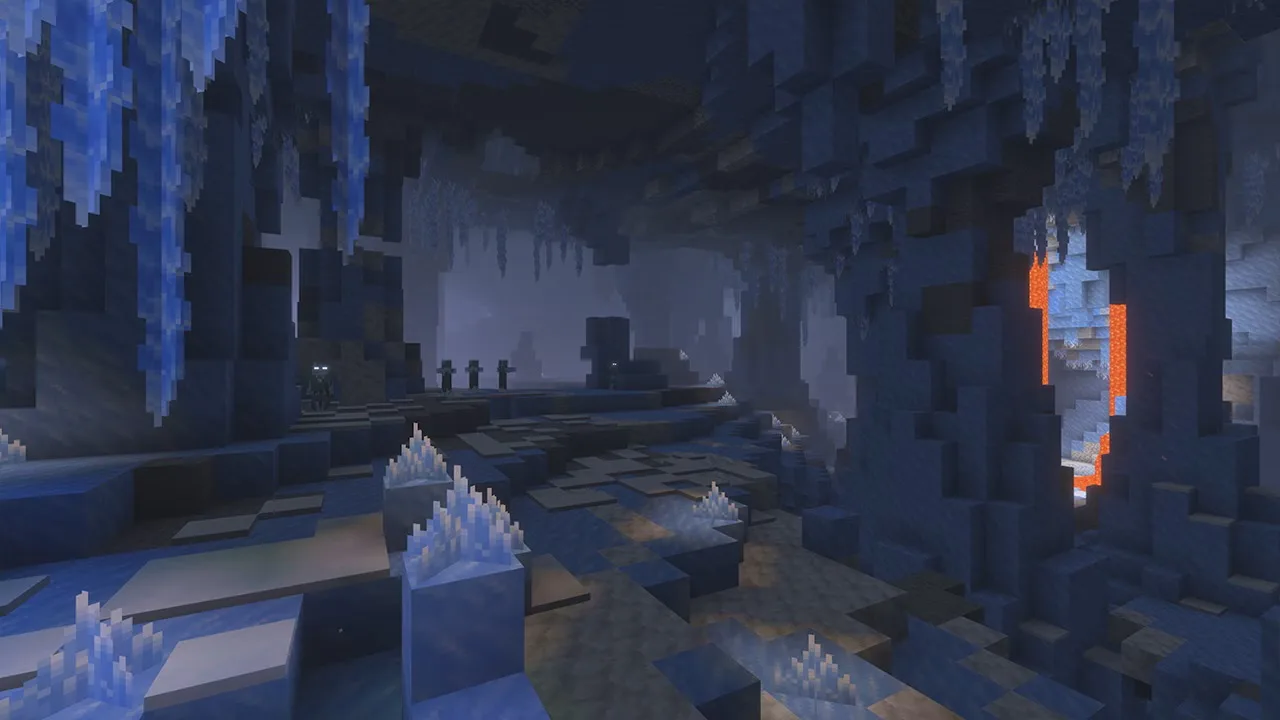
Minecraft's fifth cave biome is mostly packed ice, its icicles drop when you light them, and its new zombie variant applies a brand-new Freezing effect with its melee hits. The ice caves drop is playable today in Bedrock Preview 26.60.29 and not yet in Java. Here is what is in it, with the numbers, and what could still change.
Minecraft Sulfur Caves: Geysers, Cinnabar, and Sulfur Cubes
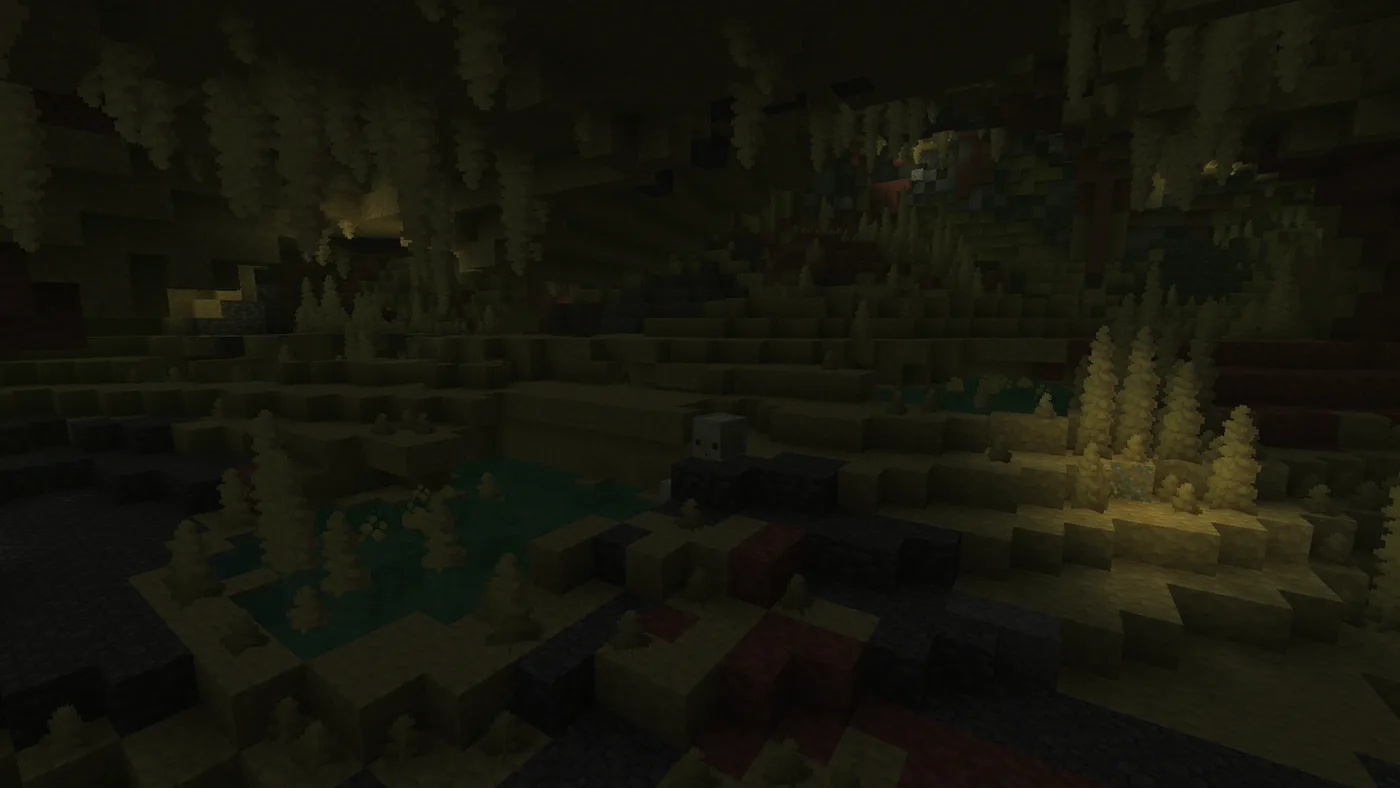
Java 26.2 dropped a cave biome that does not reward you with a mob you fight, or loot you carry home. It rewards you with a ball. The sulfur cube takes on the physics of whatever block you feed it, and the game ships twelve different physics profiles to choose from — bounciness, friction and air drag, all published numbers. Here is the whole biome, including the geyser maths.

Minecraft Pale Garden Guide: Creaking, Resin, and Pale Oak
The pale garden is the only biome in Minecraft that turns your music off on purpose, and it guards the only mob in the game you cannot damage. Here is how the creaking staring contest actually works, how to turn its heart into a renewable resin farm, and every Java/Bedrock number that matters.
Minecraft Cherry Grove Guide: Wood, Pink Petals, and Mobs
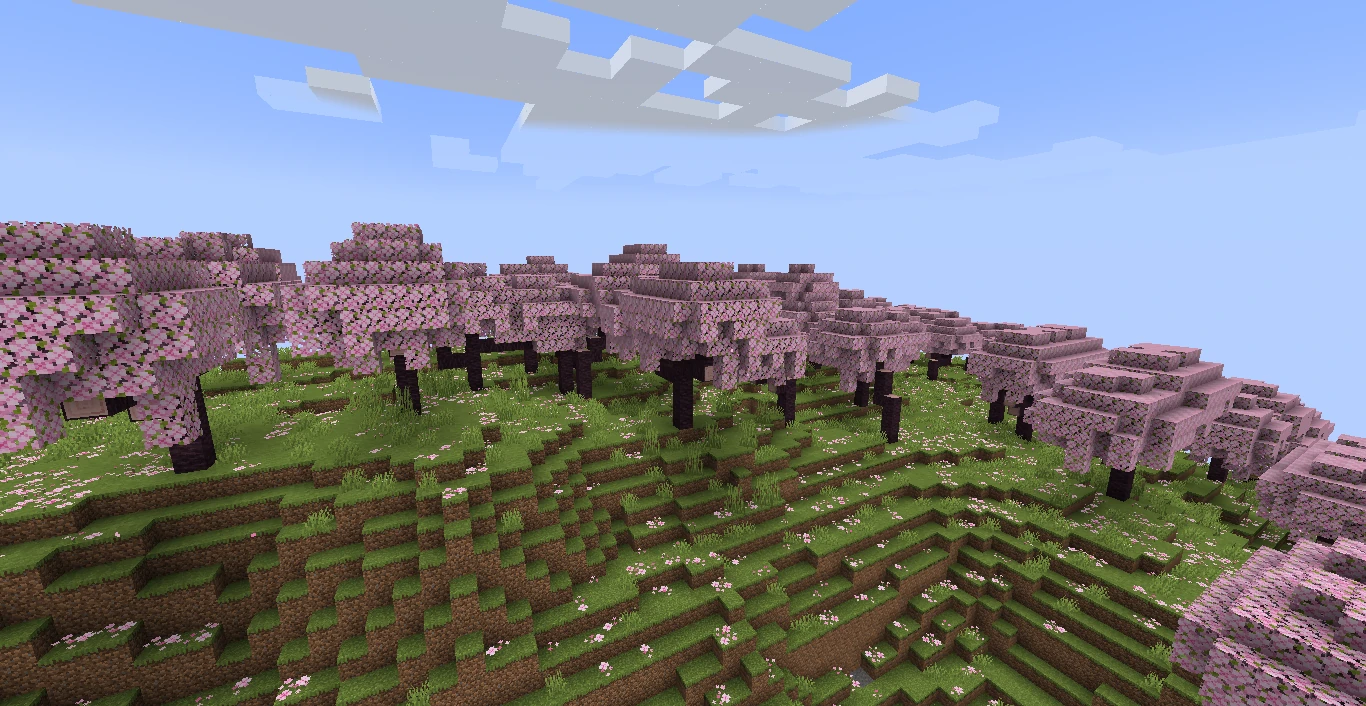
The cherry grove is the prettiest biome in Minecraft and one of the most underrated places to start a world. It's a meadow with pink trees on paper, but it quietly hands you a whole salmon-colored wood set, a renewable decoration block, emeralds in the hills, and bees on the branches.
Minecraft Survival Guide for Beginners: Your First Days
You have about ten minutes of daylight before the sun sets and the world tries to kill you. Here is exactly what to do with them — punch a tree, build a tool chain, and get a roof over your head before the zombies arrive.

Best Minecraft Enchantments, Ranked — The Ones Worth Your XP
Mending is the enchantment that ends the grind — gear that repairs itself forever. Everything else is a fight over your XP and anvil uses. Here is what actually earns a slot, ranked, with the real max levels.