Palworld TCG AUTO, CONT and ACT Abilities Explained
Every ability on a Palworld TCG card opens with one of three tags - AUTO, CONT or ACT - and Comprehensive Rules 10.1 makes that tag the most important word in the text box. It decides whether the ability works on your opponent's turn, whether you are allowed to decline it, and whether a [Once Per Turn] clock applies. I counted all 153 printed abilities across the 157 distinct cards in the launch pool and sorted them by category, trigger and cost.
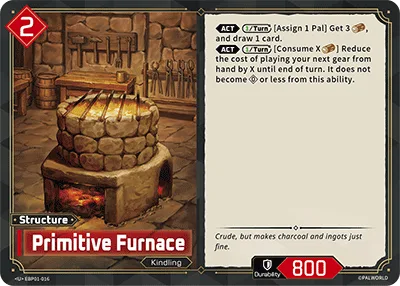
Pick up any Palworld TCG card with text on it and the first thing in the box is a tag in brackets: AUTO, CONT or ACT. It is easy to read past. It is also the single most load-bearing word on the card, because Comprehensive Rules ver. 1.00 hangs three different sets of rules off it - when the ability happens, whether you are allowed to say no, and whether it still works while your opponent is taking their turn.
The ten keyword abilities are the named shorthand printed inside the box. This is the layer underneath them: the category every ability belongs to, including every keyword. I pulled all 256 rows of Bushiroad's official card list - 18 pages at 15 per page - reduced them to the 157 distinct cards behind them, and counted every printed ability line by category, trigger and cost.
Three categories, and why the tag is the answer
Rule 10.1.1 is short and absolute: "Abilities are divided into three categories: activated abilities, automatic abilities, and continuous abilities." The tag on the card is which one you have.
- ACT is an activated ability (10.1.1.1). You choose to play it, during a play timing, by paying the cost. Rule 10.1.1.1.1 spells out the shape: "[(Cost)] (Effect)" - the square brackets are the cost, everything after is what you get.
- AUTO is an automatic ability (10.1.1.2). It plays itself when a designated situation occurs. Rule 10.1.1.2.1 gives the three written forms - "When (Condition)", "At the beginning of (Phase or Step)", "At the end of (Phase or Step)" - and names the situation the trigger condition.
- CONT is a continuous ability (10.1.1.3). It is not played at all. It just applies, for as long as its stated duration lasts, and rule 10.1.1.3.1 notes it is written as bare effect text with no trigger and no cost.
Official Q&A #25 is where this stops being bookkeeping and starts costing games. Asked whether you can play cards, activate abilities or attack during the opponent's turn, Bushiroad answers no - "However, cards with Quick can be played during battle on the opponent's turn. Additionally, automatic and continuous abilities will activate/apply during the opponent's turn as long as their conditions are met."
So the tag tells you what your board is doing while it is not your turn. Your CONT abilities are live. Your AUTO abilities are armed. Your ACT abilities are dead weight until your own main phase comes back around, unless they carry Quick.
Every printed ability in the pool, counted
One bookkeeping note on the denominator, because the official card list counts things three different ways. The API returns 256 rows. Collapse the parallel printings (the SR, TSR, OSR, SP, TSP and SSP suffixes, which are the same card with different art treatment) and you get 166 card numbers. Nine of those are the EPR promo Pals, and every one of them is a reprint of a card that already exists in the booster or a trial deck - Blazehowl, Cryolinx, Lamball and six others. Collapse those too and the launch pool is 157 distinct cards. That is the denominator below.
Across those 157 cards there are 153 printed abilities, carried by 118 cards. Thirty-nine cards print no ability at all.
| Card type | Cards | Cards with an ability | AUTO | CONT | ACT | Abilities |
|---|---|---|---|---|---|---|
| Pal | 91 | 78 | 51 | 26 | 22 | 99 |
| Structure | 26 | 26 | 8 | 3 | 24 | 35 |
| Gear | 14 | 14 | 5 | 0 | 14 | 19 |
| Event | 17 | 0 | 0 | 0 | 0 | 0 |
| Soul | 9 | 0 | 0 | 0 | 0 | 0 |
| Total | 157 | 118 | 64 | 29 | 60 | 153 |
A separate nine abilities are handed out inside angle brackets rather than printed as the card's own - four CONT, four AUTO and one ACT. Seven of the nine last only until end of turn, handed over by cards like Grappling Gun and Cawgnito Hat; No Pals Beyond Sign grants Taunt until the end of the opponent's next turn, and Lamp grants every Pal you control Nocturnal with no duration at all, for as long as Lamp is in the base. Those nine are not in the 153; they are borrowed.
Exactly one card in the pool prints three abilities: Shadowbeak - Seed of Despair (EBP01-074), two CONT and one AUTO. Thirty-three cards print two. The remaining 84 print one.
AUTO: 64 abilities you do not get to decline
Bushiroad answered this one directly, and it is the answer that changes how you sequence a turn. Official Q&A #37: "Can I choose not to activate an automatic ability whose trigger conditions have been met?" Answer: "No, you cannot. It must always be activated."
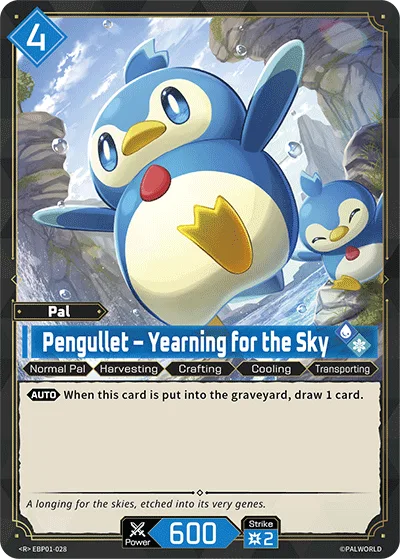
Pengullet - Yearning for the Sky (EBP01-028) is the clean illustration: "AUTO When this card is put into the graveyard, draw 1 card." You draw. You do not get to hold the card back because your deck is thin and you would rather not. Q&A #37 is tagged to 12 cards (19 listings once the parallel printings are counted separately), so this is not an obscure corner.
The Comprehensive Rules do carve out one exception, and it is worth knowing it does not currently apply. Rule 10.7.3 says that if an automatic ability has a limit on the number of times it can be played, its master may choose not to play it and not count that instance toward the limit. No AUTO ability in the launch pool carries a play limit - all 32 of the abilities tagged Once Per Turn are ACT. So today, Q&A #37 is the whole answer.
Mechanically, an AUTO does not resolve the instant it triggers. Rule 10.8.2 puts it into a standby state, and 10.8.3 plays it at the next check timing. When a trigger condition is fulfilled several times, 10.8.2.1 stacks an equal number of standby instances rather than merging them.
Every AUTO trigger condition, counted
Sixty-four AUTO abilities, and half of them fire on the same event.
| Trigger condition | Abilities | Rules reference |
|---|---|---|
| On Deploy | 32 | 12.3 |
| On Attack | 8 | 12.4 |
| When put into the graveyard | 7 | 10.1.1.2.1 |
| On Assign (3 icon, 2 naming a Farming structure) | 5 | 12.5 |
| When another of your cards does something | 3 | 10.1.1.2.1 |
| At the end of your turn | 3 | 10.1.1.2.1 |
| When this card leaves the base | 2 | 10.1.1.2.1 |
| One-offs (attacked, attacks a structure, end of the battle it attacked, death in battle) | 4 | 10.1.1.2.1 |
| Total | 64 |
On Deploy, On Attack and On Assign are not loose description - Comprehensive Rules sections 12.3, 12.4 and 12.5 define each as a keyword that means an automatic ability, and note each may appear as an icon inside the text rather than as a word. That is why the card database stores them as tokens rather than sentences.
The practical read: deployment is the game's dominant trigger, at 32 of 64. If an effect ever cares about your AUTO abilities, it is mostly caring about what happens when Pals hit the board. Attacking is a distant second at 8.
CONT: 29 abilities that never switch off
Twenty-nine CONT abilities, and 16 of them are not keyword abilities at all - they are bespoke static effects. Six are Nocturnal, four Taunt, two Stealth and one Assault.
The bespoke ones are where the format's static rules live. Gobfin Ignis - Blazing Hothead gives all your other red Pals +300 Power. Wumpo - Frostpeak Sentinel drops all opposing Pals by 1 Strike while Wumpo itself is resting. Digtoise - Seismic Drillback gets +1000 Power and +1 Strike once you hold ten or more souls. Lamball - My First Pal cannot be attacked by cost-4-or-greater Pals, and Cattiva - My First Pal cannot be attacked by cost-3-or-less ones - the same protection, aimed at opposite halves of the board.
Two of them are not stat lines at all. Beegarde - Knight of the Flower Garden carries a deckbuilding permission - "you may put any number of cards with the same card name as this card into your deck" - which is a CONT that applies before the game starts. And Suzaku - Hellfire Wings adds +200 to non-battle damage your red cards deal to Pals; official Q&A #53 confirms the reach, answering that the increase applies to damage from red structures, gear and events as well as from Pal abilities, not just to Suzaku's own damage.
CONT is also the category that keeps working while your opponent takes their turn, per Q&A #25. A Taunt is a Taunt on their attack step precisely because Taunt is continuous.
ACT: 60 abilities, and the cost lives in the brackets
Rule 10.1.1.1.1 is the reading key: text inside square brackets is the cost, and you pay it to play the ability. Here is what the 60 ACT abilities actually charge. A single ability can list a compound cost or two alternatives, so these categories overlap and do not sum to 60.
| Cost ingredient | ACT abilities using it |
|---|---|
| Assign a Pal | 17 |
| Discard from hand | 16 |
| Consume Material or Ingredient | 15 |
| Rest this card | 15 |
| Rest souls | 12 |
| Butcher a Pal | 2 |
| Mill from your own deck | 2 |
Ten cards offer two alternative costs joined by OR. Nine of them are the Interrupt Pals, which take either one soul plus discarding themselves, or discarding themselves plus one other card. The tenth is Jormuntide Ignis - Savage Lava Dragon (EBP01-001), which stands itself for either three souls or two discards.
That tenth one produced its own ruling. Official Q&A #52 asks whether, having paid three souls for Jormuntide's Once Per Turn ability, you can fire it a second time by discarding two cards instead. Answer: "No, it cannot be activated. Regardless of which cost you pay, a Once Per Turn ability can only be activated once per turn." Two prices, one clock.
Once Per Turn is counted per card, not per name
Thirty-two of the 60 ACT abilities carry the Once Per Turn restriction, spread across 29 cards. On the card itself the restriction prints as a small 1/Turn badge right after the ACT tag; the English Q&A writes the same thing out as [Once Per Turn], so the two spellings are the same restriction. Rule 10.7 is the general rule; three official rulings pin down how the counting works, and they are easy to get backwards in all three directions.
- Two Once Per Turn abilities on one card each get their own use. Q&A #48: "If a single card has multiple ACT abilities that are Once Per Turn, each one can be activated once." Exactly three cards in the pool are affected - Primitive Furnace, Antique Dresser and Breeding Farm - and they are precisely the three the ruling is tagged to.
- Two copies of the same card each get their own use. Q&A #44 answers it with a worked example: with two Stone Pits in your base, activating the ACT of Stone Pit A still leaves Stone Pit B's available. The restriction attaches to the card, not the card name.
- Alternative costs do not buy a second use. Q&A #52, above.
Put together: the clock is per printed ability, per physical card. Nothing about a shared name, and nothing about which cost you chose.
Every structure ACT is once per turn, and no gear ACT is
Sorting the 32 Once Per Turn abilities by card type turns up a clean design line between the two card types that share the ACT tag.
| Card type | ACT abilities | Tagged Once Per Turn |
|---|---|---|
| Structure | 24 | 24 |
| Pal | 22 | 8 |
| Gear | 14 | 0 |
All 24 structure ACT abilities are Once Per Turn. Not one of the 14 gear ACT abilities is - because every one of those 14 opens with the cost [Rest this card], and a rested card cannot pay that cost again until it stands. (The other five gear abilities are AUTO On Deploy triggers, which have no cost at all.) Gear self-limits through the rest state; structures self-limit through the tag.
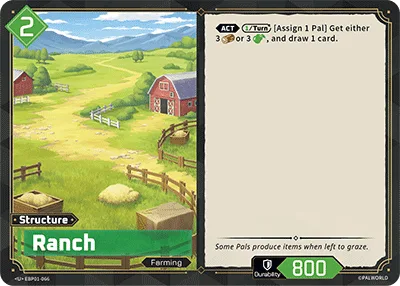
That matters when you are choosing between a second structure and a second piece of gear for the same slot in your curve. Two copies of a structure give you two separate Once Per Turn clocks, per Q&A #44. Two pieces of gear give you two rest-state clocks, and both of them need to stand back up. The structures and assigning guide covers the assignment cost that 17 of the 60 ACT abilities charge, and the gear cards guide covers the rest-to-pump pattern in detail.
Which category each keyword ability belongs to
Section 12 of the Comprehensive Rules defines each keyword by naming its category outright, one subsection at a time. Here are the ten that print as a word in the text box, collected into a single table.
| Keyword ability | Category | Rules section |
|---|---|---|
| Brave | AUTO | 12.6 |
| Serious | AUTO | 12.7 |
| Vigilance | AUTO | 12.9 |
| Retaliate | AUTO | 12.12 |
| Breakthrough | AUTO | 12.14 |
| Taunt | CONT | 12.10 |
| Stealth | CONT | 12.11 |
| Nocturnal | CONT | 12.13 |
| Assault | CONT | 12.15 |
| Interrupt | ACT | 12.8 |
Five automatic, four continuous, one activated. Section 12 runs to 12.15 and covers four more keywords beyond those ten, all of which usually print as icons rather than words: Quick (12.2), which is a keyword but not itself an ability, and On Deploy (12.3), On Attack (12.4) and On Assign (12.5), each of which rule 12.3.1, 12.4.1 and 12.5.1 defines as an automatic ability. Across the whole of section 12, then, Interrupt is the lone ACT - rule 12.8.1 calls it "a quick activated ability that can nullify an attack" - and the only keyword ability in the game that you choose to use.
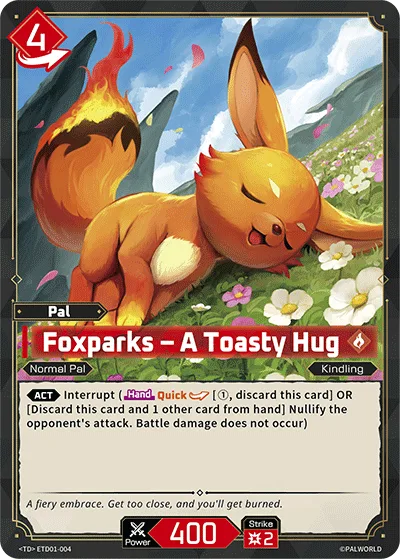
Interrupt also demonstrates the fourth thing an ability tag can carry: a zone. Rule 10.3.4 says abilities with a zone specified are only active in that zone, and 10.3.4.1 covers the zone icon at the start of the ability. Interrupt prints Hand and Quick icons, and official Q&A #51 confirms the consequence - asked whether Interrupt can be activated while the card is in the base, Bushiroad answers "No, it cannot be activated. Interrupt is an ability that can be activated only while the card is in the hand." Nine Pals in the pool print it.
One index quirk worth knowing if you look that ruling up by card: the card numbers attached to Q&A #51 on the official site include ETD02-014 Leezpunk - Treasure Bandit, which has an AUTO graveyard trigger and no Interrupt, and omit ETD02-017 Blazehowl Noct - Darkflame Defender, which does print Interrupt. The ruling text is fine; the card tagging on that one entry is not, so filtering the Q&A by card will not surface it on Blazehowl Noct.
Events and Souls print no abilities at all
Of the 157 cards, 39 print no ability. Thirteen are vanilla Pals. The other 26 are every event card and every Soul in the game.
That is not an oversight, it is the category system working. An event's text is the effect you get for playing it, not an ability the card has - which is why none of the 17 events opens with AUTO, CONT or ACT. Five of them instead open with the Quick icon - Dark Cannon, Aurora Guide, Ignis Breath, Crystal Breath and Stone Blast - which rule 12.2.1.2 defines as letting the event card be played during the Quick Step, as distinct from 12.2.1.1 which covers an activated ability carrying Quick. The event cards guide covers that timing window and the rulings around it.
The Souls are simpler still. The trial-deck Soul, ESOUL-001, prints one line in parentheses about resting three souls to draw a card - and rule 2.12.2 is explicit that text in brackets is reminder text, part of the card but explanatory only. The actual permission is rule 8.5 - "the turn player may pay 3 souls to draw 1 card", once per turn (8.5.2) - a rule of the game that needs no card at all. The other eight Souls, which drop the reminder text entirely, are identical in play; only ESOUL-002 is from the booster set, the remaining seven are promos.
The reason this is worth knowing rather than trivia: effects that reference abilities do not reach cards that have none. If an effect doubles your AUTO abilities, your events are not AUTO abilities. Shadowbeak - Seed of Despair sits at the centre of that interaction, and the rulings breakdown walks through the official Q&A entries Bushiroad published about it.
Quick reference
| AUTO | CONT | ACT | |
|---|---|---|---|
| Rules section | 10.1.1.2 | 10.1.1.3 | 10.1.1.1 |
| Printed abilities | 64 | 29 | 60 |
| How it starts | a trigger condition is met | nothing, it is always applying | you pay the bracketed cost |
| Can you decline it? | No (Q&A #37) | Not applicable | Yes, it is optional |
| Works on opponent's turn? | Yes (Q&A #25) | Yes (Q&A #25) | Only with Quick |
| Can carry Once Per Turn? | Allowed by 10.7, unused in this pool | No | Yes, 32 of 60 |
| Keyword abilities in it | Brave, Serious, Vigilance, Retaliate, Breakthrough, plus the icon keywords On Deploy, On Attack and On Assign | Taunt, Stealth, Nocturnal, Assault | Interrupt |
Counts are from the official card list as of 12 September 2026: 256 rows, 166 card numbers after parallels, 157 distinct cards after the nine promo reprints. The rulings are the 97 entries published 30 July 2026, none revised since.
Frequently Asked Questions
What do AUTO, CONT and ACT mean on a Palworld TCG card?
Can you choose not to use an automatic ability in the Palworld TCG?
Which Palworld TCG abilities work during your opponent's turn?
Does Once Per Turn in the Palworld TCG apply per card or per card name?
How many Palworld TCG abilities are Once Per Turn?
Which keyword abilities in the Palworld TCG are automatic, continuous or activated?
Why do Palworld TCG event cards have no AUTO, CONT or ACT tag?
What is the most common trigger on Palworld TCG automatic abilities?
Keep Reading
- Palworld Official Card Game Comprehensive Rules ver. 1.00 (Bushiroad, PDF, 30 July 2026) - rules 10.1, 10.3, 10.7, 10.8, 12.2-12.15
- Palworld Official Card Game - Official Card List (256 rows, 166 card numbers)
- Palworld Official Card Game - Official Rules Q&A (entries #25, #37, #44, #48, #51, #52, #53)
- Palworld Official Card Game - Rules and Comprehensive Rules
Related Guides
Palworld TCG Keyword Abilities - 10 Counted, 14 in the Rules
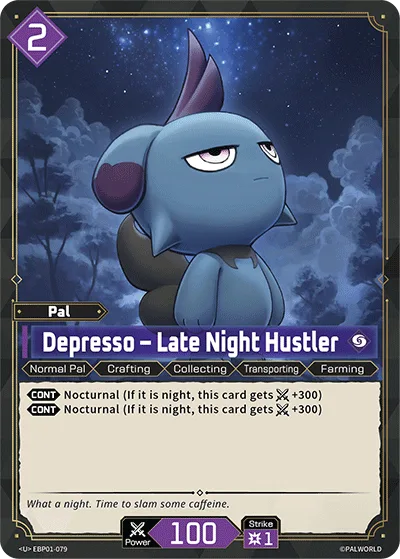
Comprehensive Rules ver. 1.00 defines fourteen keywords in one section, and How to Play the Palworld TCG tables all of them - what Brave does, what Taunt does - and stops there. Nobody has counted how many cards actually carry each one. I pulled every card tagged with one of the ten keyword abilities Bushiroad's official database filters on and cross-referenced all 97 rulings: Interrupt covers nine Pals, Retaliate covers exactly one, and Depresso - Late Night Hustler prints Nocturnal twice on the same card, which the official Q&A confirms stacks to +600 Power.
Palworld TCG Elements - All 9, and Why Only 2 Cards Care
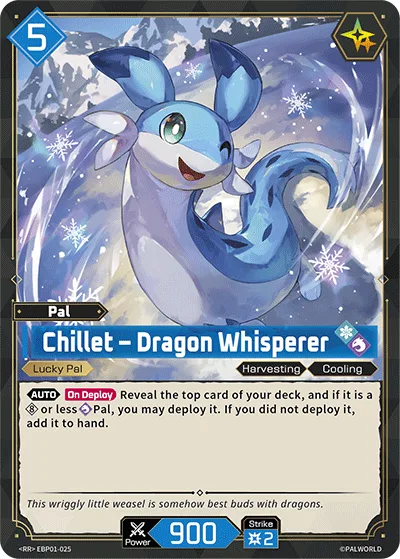
Every Pal card in the Palworld TCG carries an element icon, and the video game trained you to expect that icon to decide fights. It does not. Comprehensive Rules ver. 1.00 spends three sub-rules on elements and never mentions them again, and exactly two of the 166 cards in the launch pool have text that reads an element. Here is the full census of all nine across the 100 Pal cards, and the one element that already has support.
Palworld TCG Rulings - All 97 and the Most-Ruled Cards
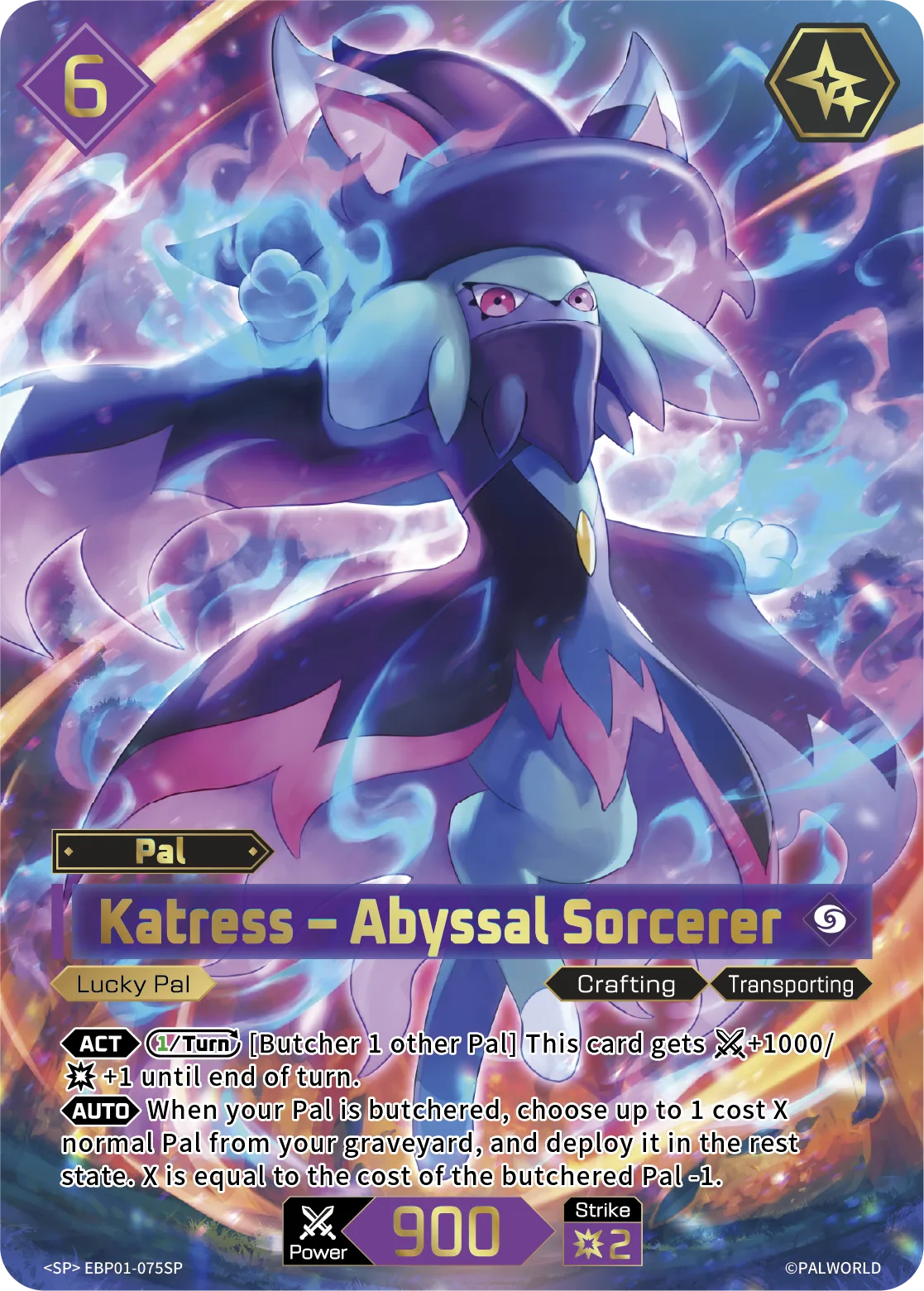
The Palworld TCG shipped with an official Q&A of 97 entries and has not added or revised one since. Pulling the whole database and sorting it by card shows where the game is genuinely hard: 45 of the 97 are wording rules that apply to cards nobody has printed yet, only 26 of the 166 cards ever earned a card-specific answer, and four cards account for 16 of the 32 that exist.
How to Play the Palworld TCG - Souls, Power vs Strike, and How You Actually Win
Bushiroad's Palworld card game launched 30 July 2026, and its comprehensive rules landed the same day. Here is the full walkthrough - the four colours plus colourless, the soul deck, the Power and Strike split that decides every attack, structures and Pal labour, and the Damage Check that turns your own deck into your life total. Everything here is sourced from the official rules, and I flag what Bushiroad has not published.
Palworld TCG Colours Explained - What Red, Green, Blue and Purple Actually Do
Bushiroad has published comprehensive rules for the Palworld TCG, but it has not published a colour-identity document - there is no official page telling you what Red or Purple is supposed to do. So I read the rules for what colour legally means, then went through all 150 unique cards in the launch pool and counted. Here is what colour actually is, the single hard rule it imposes, why souls make it cheaper than you think, and what the card pool says each colour was built for.
Palworld TCG Pal Cards - Power and Strike by Cost
Pals are 100 of the 166 distinct cards in the Palworld TCG launch pool, and the two numbers along the bottom of each one are most of what they do. Sorting all 91 unique Pal designs by cost turns up a ladder: Strike is not a design lever at all, it is a straight function of cost, with three exceptions in the whole set. Power is the only stat Bushiroad negotiates, and the textless Pal at each cost sets the price.