Best Trap Cards in Cookie Run: Braverse, Ranked
Braverse has 120 different Trap cards and 115 of them are Uncommons. There is not a single Ultra Rare Trap in the game. That means the entire interaction layer - the cards that decide close games - is fully available to anyone who owns a starter deck and a fistful of bulk.
Pull up the official Cookie Run: Braverse database, filter to Trap, and you get 147 printings covering 120 different cards. Then check the rarity column and the whole card type stops making sense: 115 of those 120 are Uncommons. One is a Rare. One is a Super Rare. Three are promos. There is no Common Trap, no Ultra Rare Trap, no Secret anything.
That is not an accident of print runs. It is a design decision, and it has a consequence nobody says out loud: the entire interaction layer of this game - every card that lets you do something on your opponent's turn - is bulk. You can own a competitive Trap suite for the price of a sandwich while the Beast Cookies that headline the sets are pulling three figures. This guide ranks the ten best of them, quotes their real database text, and points out the clause that quietly makes two of the "removal" Traps worse than they look.
Costs below are quoted off the official database. The {R}/{Y}/{G}/{B}/{P} symbols are each color's resource, {K} is Black, {N} is any color, and "LV." is a Cookie's Level. New to the game? Start with the seven card types explained.
What a Trap actually does in Braverse
A Trap is set face-down and activated reactively, usually on your opponent's turn, by paying a cost printed on the card. It is the only card type in Braverse built to act while it is not your turn - Items are proactive, Stages are persistent, Cookies fight. Traps interrupt.
Ninety of the 120 Traps do the same core thing: reduce an opposing Cookie's attack damage for the turn. Twenty deal direct damage instead. Only four remove a Cookie from the battle area outright. So when a Braverse player says "interaction," they overwhelmingly mean shrinking one attack, not killing a body.
Here is why that is stronger than it sounds. Of the 738 printed attack values across the game's 1,004 base Cookie and EXTRA printings, 700 of them - 94.9% - deal 3 damage or less, and 500 deal 2 or less. A Trap that strips 3 attack damage does not weaken an attack. It deletes it.
Costs stay tiny to match: 62 Traps cost a single resource, 45 cost two, 13 cost three, and no Trap in the game costs more than three resources - they are priced to be castable on the turn you are tapped out defending. (The exact trigger window and which zone a set Trap occupies are worth confirming against the current official rulebook before a sanctioned event. The card text is not ambiguous, and that is what this ranking is built on.)
Every Trap in the game is an Uncommon
The rarity spread across all 120 base Trap printings:
| Rarity | Trap count |
|---|---|
| Uncommon | 115 |
| Rare | 1 (Abandoned Cloud Nest, BS2-080) |
| Super Rare | 1 (Arena of Glory, BS7-108) |
| Promotion | 3 |
| Ultra Rare / Secret | 0 |
Zero chase Traps. The color spread is nearly even too - Green 26, Yellow 24, Purple 23, Red 22, Blue 22, plus two Black and the single Pure card. Every color got the same amount of defense, all of it priced at the bottom of the ladder.
One wrinkle if you collect: alternate printings do not follow the base card's rarity. Arena of Glory is a Super Rare at BS7-108 and an Extra Rare at BS7-108@1. The other 26 parallel Trap printings are all promos. Check the suffix, not just the name - our rarities and collecting guide covers the ladder.
How we ranked these
Three axes: rate (effect per resource, because a Trap you cannot afford is a dead card), reliability (half this pool is gated on a break-area total or a trash count, and a card that is blank for six turns is not a staple), and ceiling (can it change a game or only shave a point off one). This is our read - Devsisters publishes no tier list and nothing in the Trap pool is banned.
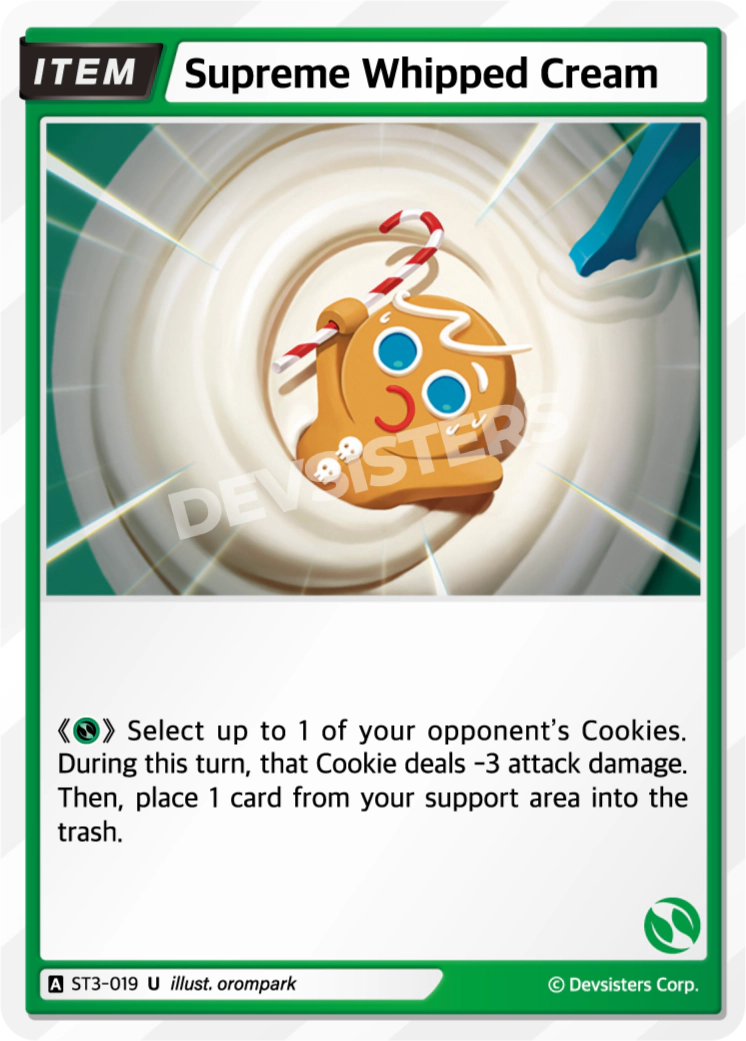
1. Supreme Whipped Cream (ST3-019, Green)
The card in the header above, and the best rate on any Trap in the game. Full text: "Select up to 1 of your opponent's Cookies. During this turn, that Cookie deals -3 attack damage. Then, place 1 card from your support area into the trash." Cost: one {G}.
One resource for -3 with no board-state condition attached. Every other -3 in the pool costs more, demands a discard, or gates itself behind a break-area total or an empty hand. This one works on turn two and turn twelve, and against the 94.9% of attacks dealing 3 or less it turns the swing into nothing.
The cost is real: trashing a support card permanently shrinks your resource base, and Green's whole identity is a fat support area. Take the trade anyway. Blanking an attack that would have killed a LV.3 Cookie saves two Levels of break-area progress, and Level math is how Braverse games are actually decided.
2. Hidden Warpgate (ST5-021, Purple)
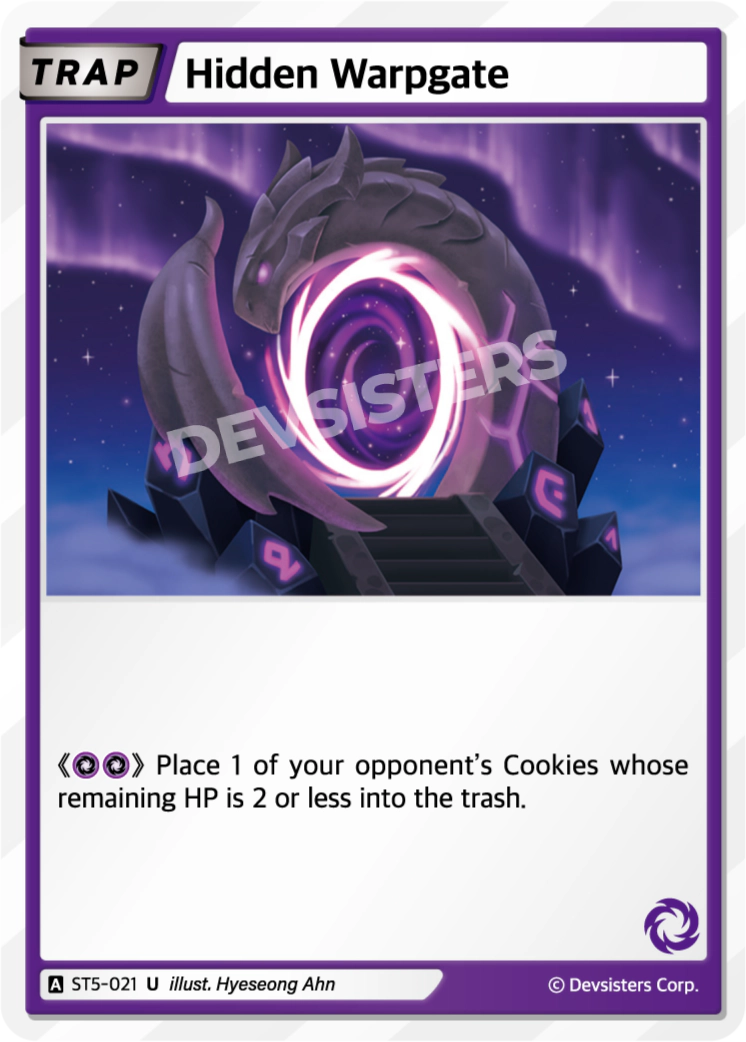
"Place 1 of your opponent's Cookies whose remaining HP is 2 or less into the trash." Two Purple. No trash-count condition, no break-area threshold, no discard - the only unconditional hard removal in the Trap pool, and it is an Uncommon in a starter deck.
Two-or-less remaining HP is a wider window than it reads. HP is a face-down stack that shrinks as a Cookie takes damage, so almost anything that has been in a fight is a legal target, including the LV.3 bombs you spent the game chipping at. Answering a Beast Cookie with a two-resource Uncommon is the most lopsided exchange available.
It ranks second, not first, because of the word "trash" - see the section below on what that clause costs you.
3. Divine Light Crystal (ST3-020, Green)
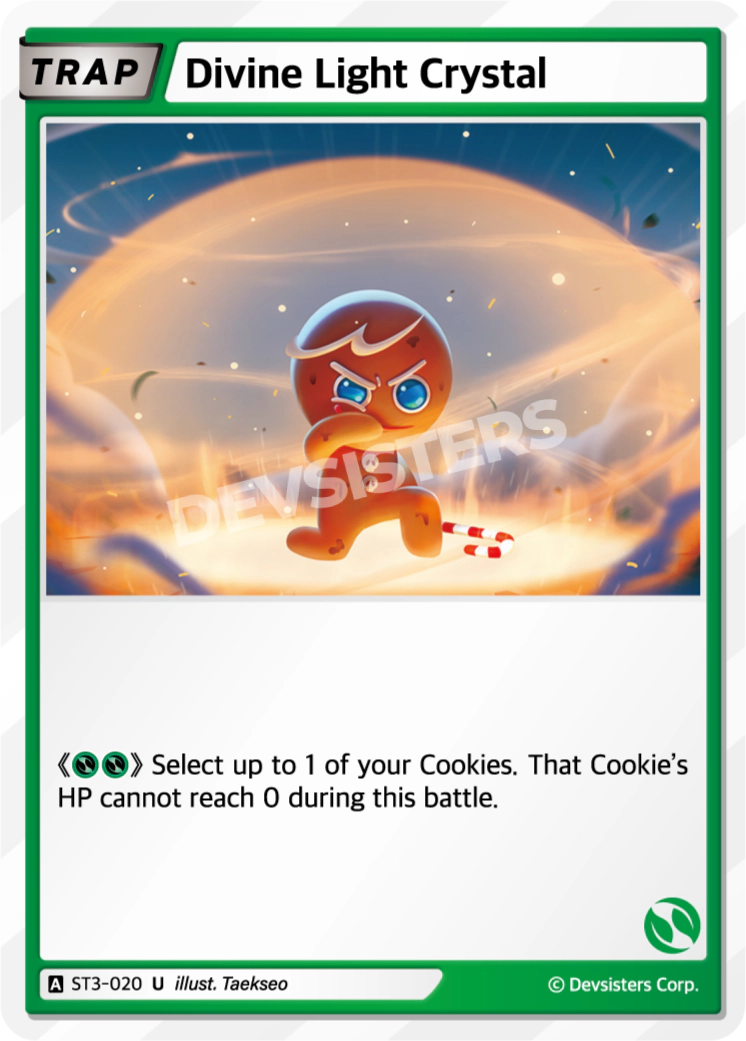
"Select up to 1 of your Cookies. That Cookie's HP cannot reach 0 during this battle." Two Green, no conditions.
Every other defensive Trap does math - shave 1, shave 2, hope it is enough. This one refuses the math. It does not matter whether the incoming attack deals 3 or 7; your Cookie survives. It is the only Trap that says "cannot reach 0," and across the whole 2,092-card database only one other card carries that wording at all (Squid Ink Cookie, BS5-081, which protects itself for a four-card discard).
That is what earns the slot. The biggest printed attack in the game is 7 damage, and against a swing like that the -1 and -2 Traps filling most of the pool are decoration. The catch: it protects, it does not progress. Great when the Cookie you are saving is your engine, a waste on a LV.1 body you would happily have traded.
4. Arena of Glory (BS7-108, Pure)
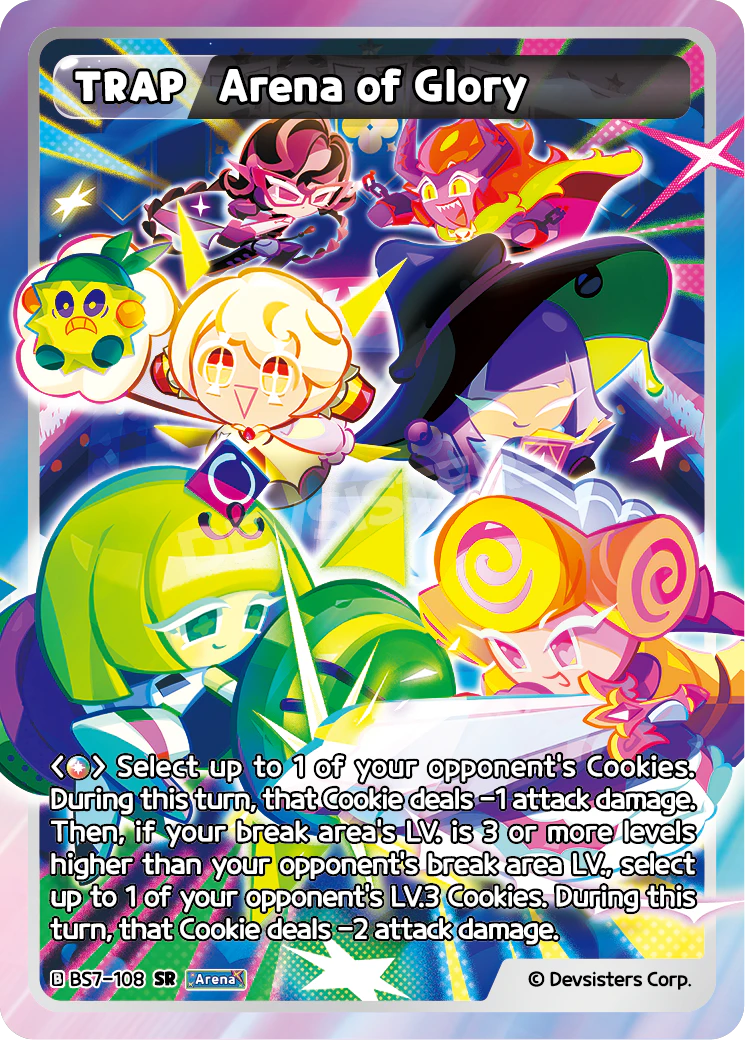
The only Pure Trap in the game and the only Super Rare one. For {N} - a single resource of any color - it takes 1 attack damage off an opposing Cookie. Then, if your break area's LV. is 3 or more Levels higher than your opponent's, it takes another 2 off one of their LV.3 Cookies.
Being Pure is the whole pitch. Color costs gate everything in Braverse, and this is the one Trap that slots into a mono-Red aggro list, a Blue-Purple mill pile and a five-color pet deck without a second thought.
It is not top three because the payoff clause is backwards. Needing your break area three Levels ahead means you have lost more Cookies than your opponent - and since your break area hitting LV.10 is how you lose, "ahead" here means closer to death. Treat the -1 as the real card. Our break area guide explains why that counter is a resource and a doom clock at once.
5. Shadow of the Destroyer (BS8-023, Red)
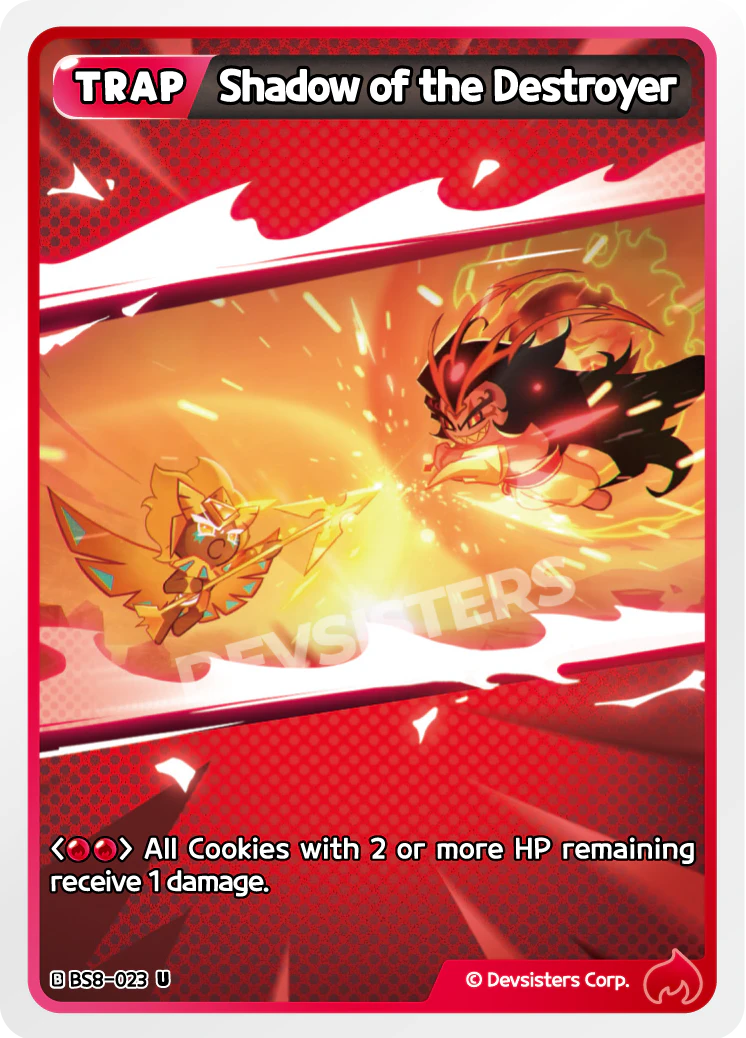
"All Cookies with 2 or more HP remaining receive 1 damage." Two Red. That is the entire card, and it is the only board-wide damage Trap in the game.
The condition is the clever part: it only hits Cookies with 2 or more HP left, so your chipped-down 1-HP attackers are immune. Red aggro spends every game with a board of half-dead bodies, which makes a symmetrical sweeper quietly one-sided in the deck that wants it.
The honest downside: damage flips HP cards, and a flipped FLIP card fires for that Cookie's controller. Sweeping the table can hand your opponent four free triggers they had no way to unlock. Against a heavy FLIP deck this is a liability, not a sweeper - read the FLIP mechanic guide if that risk is news to you.
6. Broken Signpost (BS1-050, Yellow)
"Redirect your opponent's attack to a different Cookie of your own." One Yellow. Nine words, and the only Trap in the game that does this.
Blocker Cookies redirect attacks to themselves - that is a printed keyword on a couple of dozen bodies. Broken Signpost redirects to any Cookie of yours, no Blocker required and nothing rested.
What you are buying is Level arbitrage. A lethal swing headed at your LV.3 gets pointed at a LV.1 chump instead: you still lose a body, but you feed your own break area 1 Level instead of 3. That is 20% of the LV.10 loss counter you refused to hand over, for one resource, on an Uncommon from the game's first set. It sits sixth only because it needs a spare Cookie you are willing to lose.
7. Passion Escaping Paradise (BS11-027, Yellow)
"During this turn, all of your opponent's Cookies deal -1 attack damage. Then, select up to 1 of your opponent's Cookies. During this turn, the attack cost of that Cookie is increased by 1 {N}." Two Yellow, no conditions.
Almost every Trap targets one Cookie. This one hits the whole opposing board, unconditionally, then taxes their best attacker an extra resource on top. Against a wide board of LV.1 bodies swinging for 1 each - and 32.8% of printed attacks deal exactly 1 - that is a full turn deleted for two resources.
The tax rider is the underrated half: attacks cost resources to activate, so +1 {N} often means the opponent simply cannot afford to swing with their top end this turn. Against a single big attacker it is worse than a -3, which is why it is not higher.
8. Chocolate Altar of the Fallen (BS3-117, Purple)
Three Purple: -3 attack damage, "Then, if your trash contains 15 cards or more, select up to 1 of your opponent's Cookies whose remaining HP is 2 or less. Place that Cookie in the trash."
This turns Purple's grind into an execution. The -3 half is unconditional and blanks nearly any attack in the game; the second half is a kill shot bolted on, and Purple self-mills on purpose, so a 15-card trash is not a hoop - it is turn five.
Three resources is genuinely expensive for a reactive card, and that is the whole reason it is not top five. Holding three Purple open means a turn where you did far less on yours.
9. Weeping Cries of the Deep (BS4-086, Blue)
"If your hand contains 2 cards or less, select up to 1 of your opponent's Cookies. During this turn, that Cookie deals -3 attack damage." Two Blue.
The most efficient conditional -3 in the game, and the condition is one Blue is already chasing - the color discards aggressively to fuel its own effects, so "if you are hellbent, blank an attack" is functionally free in the deck that wants it. Outside Blue it is unplayable, and that is the ranking. Pair it with Octo-Ink Spray (ST4-020), which gets -3 for a single Blue if you discard 2 cards, and the shell is genuinely hard to attack into.
10. Seal Tree of the Fallen Emissaries (BS10-116, Purple)
Two Purple for -2, then one more {P}: "Select up to 1 【Beast】 Cookie in your opponent's battle area. Place that Cookie in the trash."
A sideboard card that made the list because of what it answers. The five Beast Cookies are the game's marquee finishers - one per color, all Ultra Rare or Secret Ultra Rare. This Uncommon deletes one for three Purple total, with no HP condition and no trash threshold.
It is also the cleanest evidence for this guide's whole thesis: the answer to the most expensive cards in the game is a bulk Uncommon out of a Paradise of Passion & Sloth pack. Against a Beast-free deck it is an overpriced -2, so treat it as a tech card rather than a staple.
Honorable mentions
- Pasta Spring Shoes (BS1-024, Red). Two Red, and if one of your Cookies is at 1 HP, an opposing Cookie deals -4 attack damage - the largest single reduction printed on any Trap. It is only live when you are already being taken apart.
- Abandoned Cloud Nest (BS2-080, Purple). The only Rare Trap in the game. Two Purple for -3 if your trash has 15 or more cards.
- Radiant Light of Protection (BS9-068, Green). One {G}: if you have fewer support cards than your opponent, all of their Cookies deal -1 this turn. A board-wide fog for one resource, gated on being behind.
- Heaven-Splitting Lightning (BS4-043, Yellow). Three Yellow and a discard: damage equal to the difference between your break area LV. and theirs. Uncapped, and the biggest number in the pool inside a Yellow break-area deck.
- Silver Fork Judgment (BS10-114, Purple). Three Purple for -3 and mill 3 - defense that advances a mill clock.
The trash clause nobody warns you about
Braverse has two separate discard zones: the break area and the trash. Fainted Cookies go to their owner's break area, and when a player's break area reaches a combined LV.10 they lose - that is the game's primary win condition. The trash is a different pile entirely; the database contains cards that explicitly move a Cookie from the break area into the trash, a sentence that is unwriteable if the zones are the same.
Now re-read the removal. Hidden Warpgate says "into the trash." Chocolate Altar of the Fallen and Seal Tree of the Fallen Emissaries both say "Place that Cookie in the trash." Hermit Crab's Shell (BS2-050, Blue) puts the Cookie on the bottom of the deck.
All four of the game's hard-removal Traps take the body off the board without putting it in the opponent's break area. You get the tempo and none of the Level credit toward actually winning.
That is not a reason to cut them - removing a Beast Cookie is worth doing whether or not the counter moves. It is a reason to stop assuming your removal is also your clock.
This reading comes off the card text plus the fact that Braverse treats break area and trash as different zones. Zone-transition edge cases are worth confirming against the official rulebook before you build a tournament list around one.
How many Traps should you actually run
There is no published ratio, and the right number swings hard by archetype:
| Archetype | Trap count | Why |
|---|---|---|
| Aggro | 0-3 | You are racing. A card that does nothing on your turn is a card that is not attacking. |
| Tempo / midrange | 4-6 | Enough to protect a board you have invested in, not so many you stall out. |
| Control / mill | 6-9 | Your whole plan is surviving to the late game. Traps are how you get there. |
Two habits matter more than the count. Keep the resources open - a Trap you cannot pay for is a blank, which is why the one-resource cards beat the three-resource ones in practice. And weight toward unconditional cards, because half this pool is gated on a break-area total, a trash count or an empty hand, and you want cards that work on turn three of game one.
Worth remembering too: a set Trap works even when it is a bluff. A face-down card the opponent has to respect changes how they attack whether or not it is what they fear. If you are building cheap, this is the best news in Braverse - your interaction suite is complete for pocket change. See the budget deck guide for where to spend what you saved.
Quick Action Checklist
- There are 120 different Trap cards (147 printings with parallels) and 115 are Uncommons. No Trap has ever been printed at Ultra Rare.
- -3 is the magic number. 700 of the 738 printed attack values - 94.9% - deal 3 or less, so a -3 Trap blanks an attack rather than shrinking it.
- Supreme Whipped Cream (ST3-019) is the best rate in the type: one {G} for an unconditional -3, out of the Green starter deck.
- Hidden Warpgate (ST5-021) is the only unconditional hard removal - two {P} to trash any Cookie with 2 or less remaining HP.
- Arena of Glory (BS7-108) is the only Pure Trap and goes in any deck, but its bonus clause only turns on when your own break area is dangerously ahead.
- Watch the word "trash." All four hard-removal Traps take the Cookie off the board without adding it to the opponent's break area - tempo, not Level progress toward the LV.10 win.
- No Trap costs more than three resources, and 62 of 120 cost exactly one. Build so you can always keep one live.
Frequently Asked Questions
How many Trap cards are in Cookie Run: Braverse?
What is the best Trap card in Cookie Run: Braverse?
Why are all Cookie Run: Braverse Trap cards Uncommon?
Do Trap cards in Braverse kill Cookies?
How much do Trap cards cost to activate in Braverse?
How many Traps should a Braverse deck run?
Keep Reading
Related Guides

Best FLIP Cards in Cookie Run: Braverse, Ranked
FLIP is the signature Braverse mechanic where your own hit points punch back, and here is the strange part: the best FLIP cards are all cheap. Not one is above Rare. These are the standout FLIP Cookies ranked by color and role, with the exact flip text off the official database.
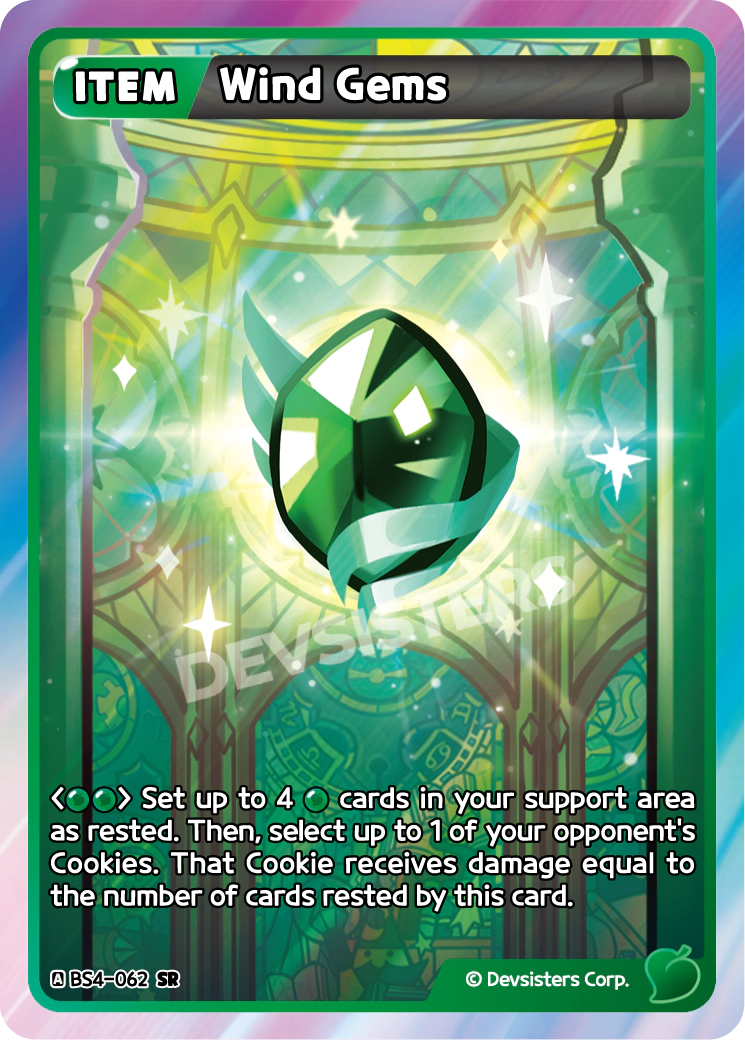
Best Cookie Run: Braverse Item, Trap & Stage Cards, Ranked
Everyone chases the splashy Ultra Rare Cookies. But the cards that decide tight games are the support pieces - the Items that swing a combat, the Traps that tax a turn, the Stages that bend the rules. Here's the non-Cookie pool, ranked.
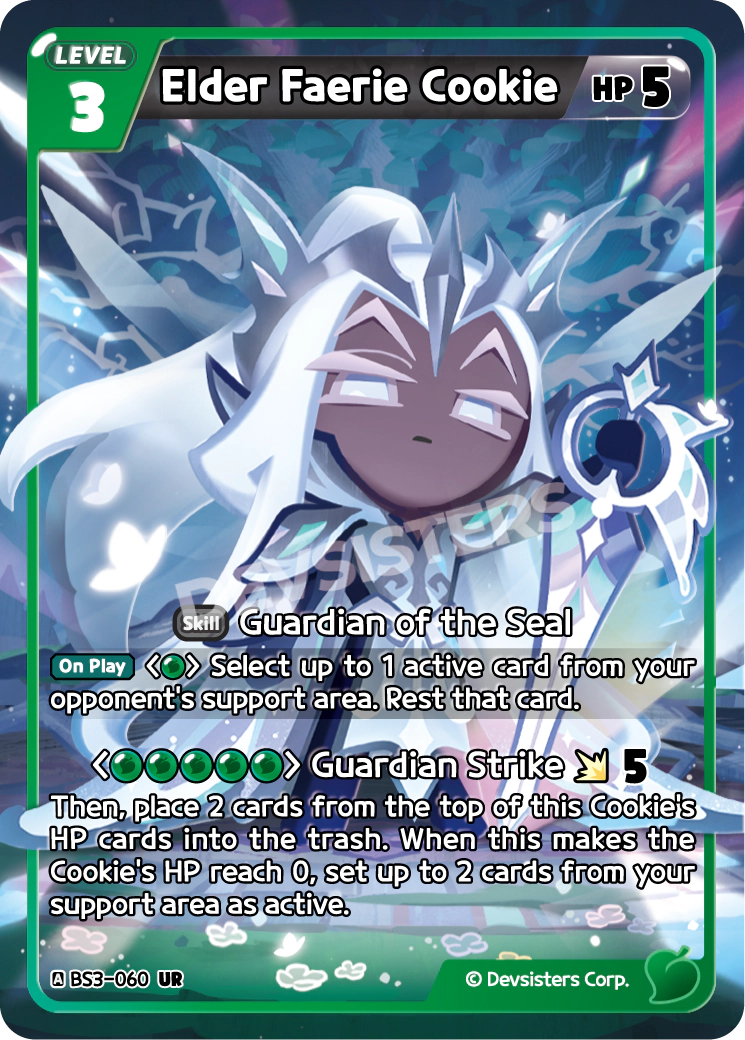
Cookie Run: Braverse Stat Curve: The HP, Cost and Damage Math Behind Every Cookie
Nobody can tell you if a Braverse card is good, because nobody knows what average looks like. So I parsed all 992 unique LV.1-LV.3 Cookies out of the official database and built the curve: what HP, energy cost and damage you should expect at every level, and which cards actually beat it.
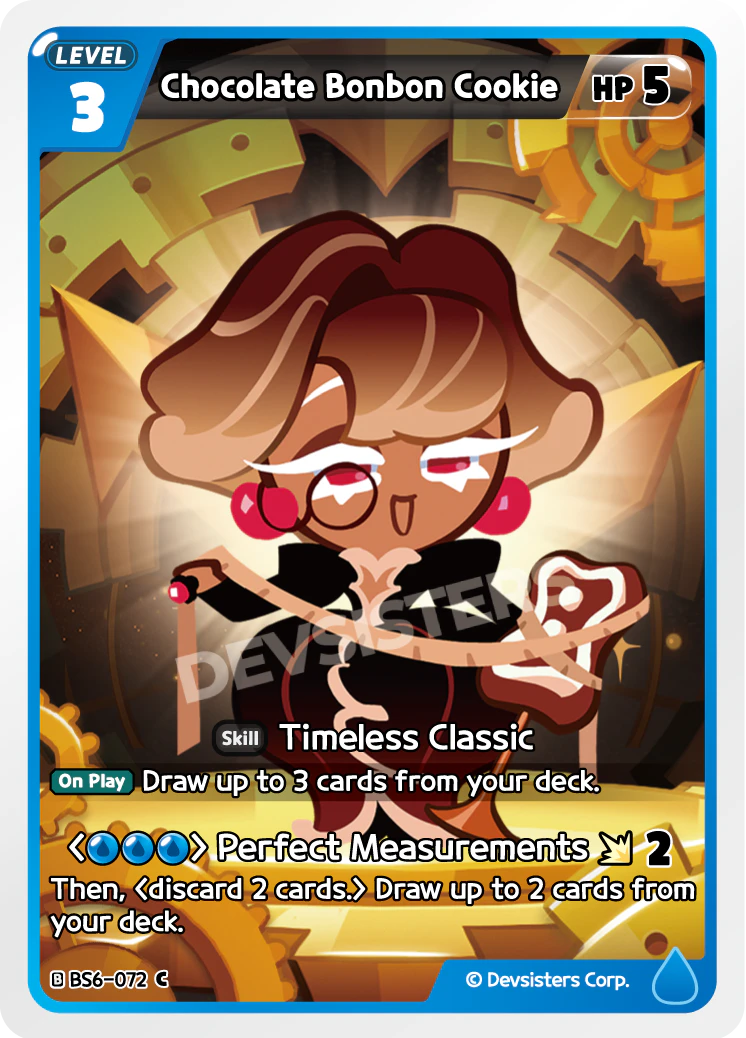
Best Draw and Search Cards in Cookie Run: Braverse
Search the official Braverse database for skills that draw two or more cards and you get 61 hits. Sixty of them charge you something - a discard, a mill, a hand-size cap, a body that has to die first. Exactly one doesn't, and it's a Common. Here's the full draw and search pool, color by color.

How to Play Cookie Run: Braverse - A Complete Beginner Guide
Cookie Run: Braverse is the rare TCG you can teach in a single match. This guide covers everything a first-time player needs: card types, setup, turn structure, how you pay for cards, the FLIP mechanic, and how to win.
Cookie Run: Braverse Meta Tier List — Best Decks & Archetypes Ranked
Which Cookie Run: Braverse decks are actually carrying right now? Here's a meta tier list of the strongest archetypes - the real cards that anchor each one, why they rank where they do, and what's overrated.