Cookie Run: Braverse Mono-Color Decks: When One Color Wins
Single-color decks aren't the training wheels version of Braverse - they're the only decks that reliably cast the triple-pip payoffs the game is built around. Here's how to pick your color and build the base.
Silent Salt Cookie's attack costs {P}{P}{P}{P}. Four Purple pips, no generic, no wiggle room. That single line on one Level-3 card tells you everything about why mono-color decks are good in Braverse: the strongest payoffs in the game are priced in a single color's currency, and a deck that produces only that color is the only deck that pays for them on schedule. Two-color decks look flexible on paper. Mono decks actually cast their bombs.
There's a lazy version of the mono argument that goes "single color is for beginners, real players splash." That's backwards. Splashing is the training-wheels instinct - jam every shiny card together, ignore the resource cost, and hope the top decks. The disciplined move is picking one color, learning exactly what it does, and building a base that never fails it. If you're still fuzzy on how energy and the Support Area work, read the energy guide first, because this whole post rides on it.
Why mono decks are a weapon, not a beginner crutch
Braverse ships five colors - Red, Yellow, Green, Blue, and Purple - and the card pool is split almost perfectly evenly between them. Each color has somewhere in the neighborhood of 380 to 390 cards to build from, so "mono" never means "starved for options." It means you've chosen a lane deep enough to fill a deck three times over.
The payoff for choosing that lane is consistency, and consistency is the single most undervalued stat in a young card game. A mono deck casts every card it draws. It mulligans toward one color instead of praying for a split. It never has the loss where you drew the perfect answer in the wrong energy. In a format where a lot of games come down to whether you could deploy your Level-3 on curve, "I always can" is a real edge, not a participation trophy.
The one-Support-a-turn rule does the heavy lifting
Here's the mechanical fact the entire argument hangs on: you add exactly one card to your Support Area per turn, and you pay for cards by resting Support cards. You don't get to ramp your resource base faster by playing two colors - you get the same one-card-a-turn drip either way. The only thing a second color changes is what fraction of that drip can pay for what fraction of your hand.
Run one color and the math is trivial: every Support card fuels every card in the deck. There is no "wrong color" draw because there is only one color. That's the quiet superpower. Two-color decks spend deckbuilding effort managing a split resource base; mono decks spend zero, and reinvest all of it into raw card quality and a tighter mulligan plan. The deck building basics guide covers the Support-card mechanic in full if you want the long version.
The triple-pip tax only mono can pay
Look at the best Level-3 attacks in the game and you'll notice a pattern: the biggest ones are priced in pure colored pips. Choco Drizzle Cookie's Thick Choco Syrup is {G}{G}{G}. Lychee Dragon Cookie's Dragon Enchantment is {P}{P}{P}. Millennial Tree Cookie's World Tree Shield is {Y}{Y}{Y}. Silent Salt Cookie's Be silent. climbs all the way to {P}{P}{P}{P}. None of these carry a single generic pip. They are, by design, unfriendly to splashing.
That's the triple-pip tax. A two-color deck trying to cast {P}{P}{P} has to draw three Purple sources out of a Support base that's only, say, 60% Purple - and do it by the turn it wants to attack. It whiffs often enough that most pair decks quietly cut those cards or lean on cheaper generic-friendly ones instead. A mono deck pays the tax without noticing it's a tax. Every Support card is on-color, so {P}{P}{P}{P} is just "rest four cards," full stop. The strongest attacks in Braverse were priced by people who assumed you'd commit to a color, and mono is the deck that takes them up on it. The color pairs guide covers the flip side - which cards are generic-light enough to splash - and the two posts are best read together.
Picking your color
Every color can be built mono, but they don't all want the same game. Pick based on how you like to win, not on which card art you opened.
Mono Red: the fastest clock
Red is the aggro color, and aggro is the archetype that benefits most from staying mono because it can least afford a wrong-color turn one. Melted Choco Cookie is a Red Level-1 with a {R}{R} attack that swings for 2, and Candy Apple Cookie is another Level-1 {R}{R} body in the same mold - cheap, on-color, and online the turn you flip your first Support card. You flood the board early and race.
The trick with mono Red is a real top-end so the deck doesn't run out of gas. Flat Tofu Cookie is a Red Level-3 whose Magical Power skill - 【Activate】【Once Per Turn】 for {R}{R} - deals 1 damage to all of your opponent's Cookies. In a mirror or against a wide board, that's a mono-Red reset button you can fire every turn because you'll always have the two Red pips to pay for it. Build the full aggro shell in the aggro deck guide.
Mono Yellow: heal, grind, Ancient top-end
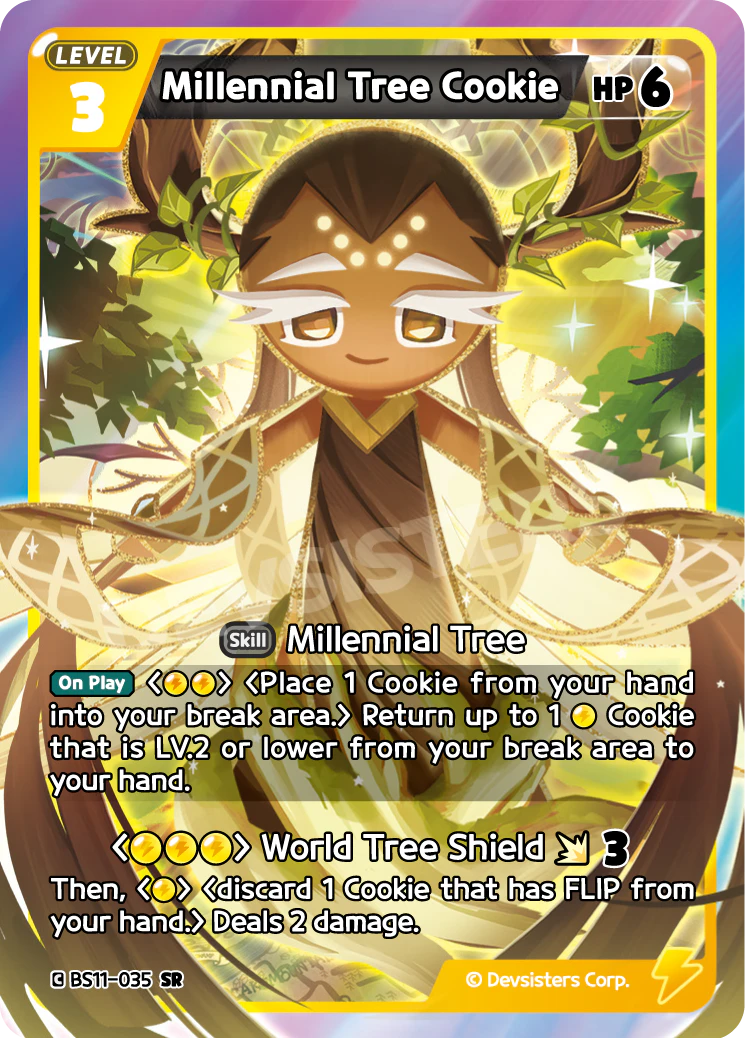
Yellow is the value and attrition color. Millennial Tree Cookie is the poster child: a Level-3 with 6 HP whose On Play skill pays {Y}{Y} to recur a Level-2-or-lower Yellow Cookie from your break area back to hand, and whose World Tree Shield attack ({Y}{Y}{Y}) hits for 3 and can chain extra damage. That's a body that blocks, rebuys your best cards, and closes games - and both of its colored costs are things only a mono-Yellow base guarantees. Yellow rewards the long game, so mono Yellow is the color that most wants to never miss an energy drop.
Mono Green: recursion and HP walls
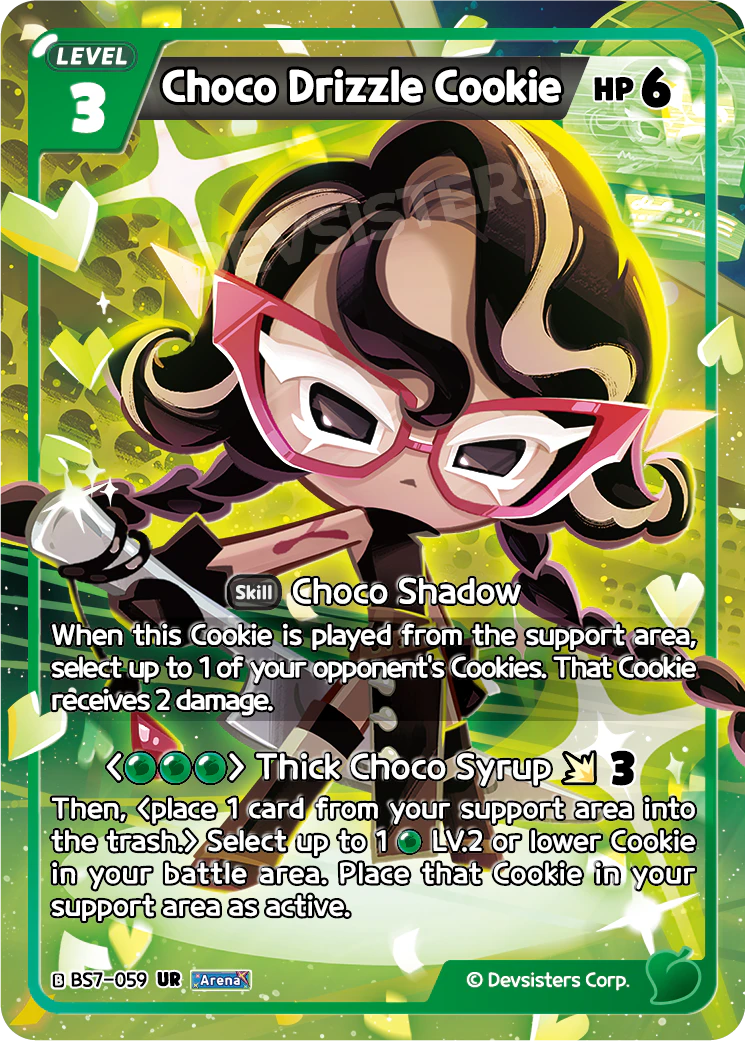
Green plays a board-centric grind, bouncing its own Cookies back to the Support Area and stacking HP. Choco Drizzle Cookie is the marquee Level-3: 6 HP, a Choco Shadow skill that pings an opponent's Cookie for 2 when it's played from the Support Area, and a Thick Choco Syrup attack ({G}{G}{G}) that lets you re-deploy a Green Level-2 as active. The whole engine assumes you can pay triple-Green repeatedly, which is exactly the promise a mono base makes.
Mono Blue: disruption and draw
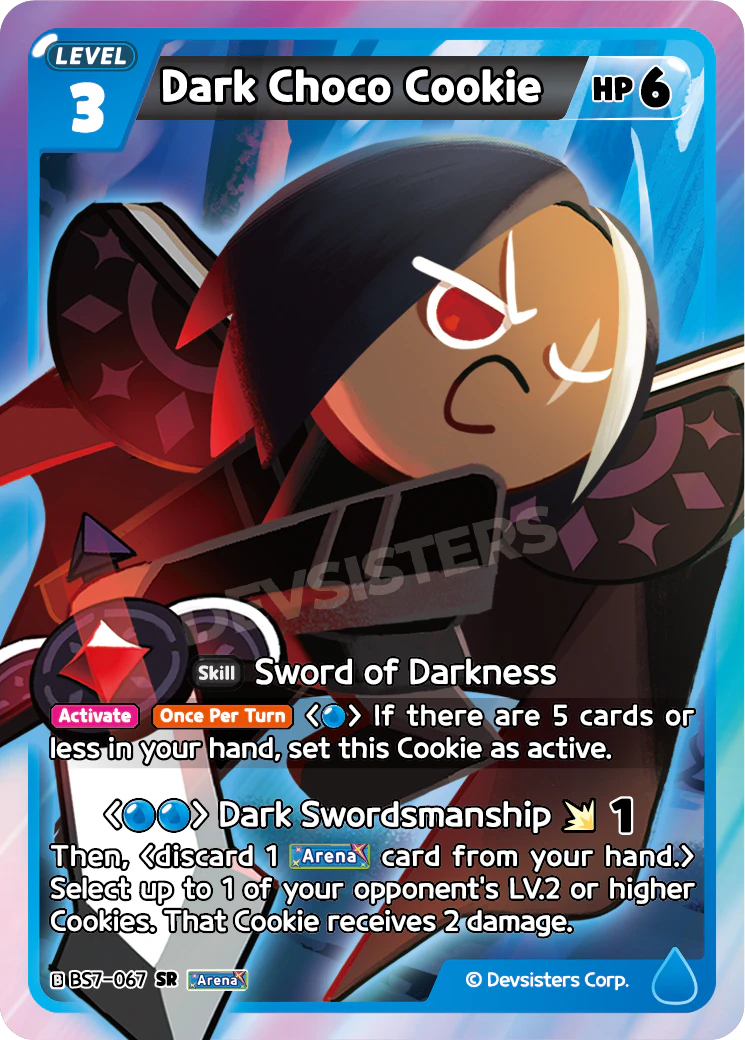
Blue is the tempo-and-disruption color - it slows your opponent down and out-cards them. Dark Choco Cookie is the clean mono-Blue payoff: a Level-3 with 6 HP whose Sword of Darkness skill sets him active for a single {B} when you're low on cards, and whose Dark Swordsmanship attack ({B}{B}) pings an opposing Level-2-or-higher Cookie for 2 after you discard an Arena card. He attacks, untaps, and threatens to do it again - a mono-Blue base keeps the {B} pips flowing so the loop never stalls. Pair the disruption plan with the control deck guide.
Mono Purple: mill and the trash payoff
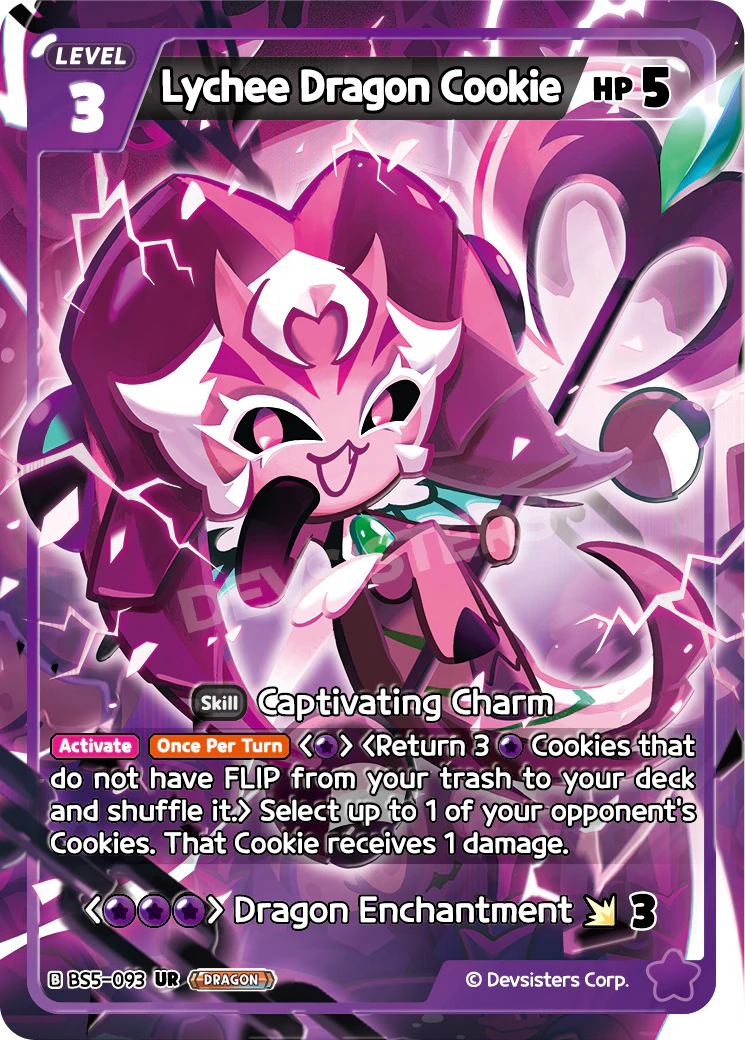
Purple mills your own deck and cashes the trash in for value, which makes it the color most punished by a bad energy base and most rewarded by a mono one. Silent Salt Cookie's On Play dumps five cards off the top of your deck and draws two, and its Be silent. attack costs a brutal {P}{P}{P}{P} to swing for 4 and strip HP off every opposing Cookie if you've refreshed. Lychee Dragon Cookie feeds the same engine in reverse: for {P} it returns three FLIP-less Purple Cookies from your trash into your deck and pings a Cookie for 1, and its Dragon Enchantment attack ({P}{P}{P}) hits for 3. Every important number here is Purple, and the quad-pip finisher is the clearest case in the game for committing to one color. Build the mill shell in the mill deck guide.
Building the base: ratios and mulligans
The good news about a mono resource base is there's almost nothing to tune - every Support card is on-color, so you can't build the base wrong. The work moves to curve and count instead. You want enough Level-1 Cookies that you always have a turn-one play and something to rest for early Support, then a healthy band of Level-2 bodies, then a tight top-end of the Level-3 payoffs your color is built around. Overloading on Level-3s is the classic mono mistake: you draw a hand of bombs with nothing to cast them on turn two and lose the early board before your good turns arrive.
Your mulligan also gets simpler and stricter. You're never keeping a hand for its colors - you're keeping it for its curve. A mono opener with a Level-1, a couple of Support-able cards, and a path to your Level-3 is a snap-keep; a fistful of three-drops is a mulligan even though every card is castable. Because you removed the wrong-color variance entirely, the hands you throw back are only ever about shape, which makes the decision faster and cleaner than any two-color deck gets to enjoy.
When mono is actually the wrong call
Mono isn't a religion, and there are real reasons to splash. If your color has a genuine hole - Red's inability to grind a long game, or a control shell that wants a specific off-color answer it simply doesn't own - a light splash of generic-friendly cards can patch it, and the color pairs guide exists for exactly that. The Ancient keyword also actively pays you to run two colors, so Ancient-centric decks are a legitimate reason to leave the mono lane.
The honest rule is this: splash for a hole, stay mono for everything else. If you can't name the specific thing a second color does that your first color can't, you're not splashing - you're diluting. And if the payoffs you care about are triple-colored-pip, the second color isn't helping you cast them; it's making them harder. When you're unsure, mono is the higher floor. It's the deck that always functions, and "always functions" wins more games in a young meta than "occasionally busted."
Quick Action Checklist
- Pick a color by its game plan. Red to race, Yellow to grind, Green to wall-and-recur, Blue to disrupt-and-draw, Purple to mill. Don't pick on card art.
- Respect the triple-pip payoffs. Cards like Silent Salt Cookie ({P}{P}{P}{P}) and Millennial Tree Cookie ({Y}{Y}{Y}) are the whole reason to go mono - build toward them.
- You can't build the base wrong. Every Support card is on-color, so spend your effort on curve, not colors.
- Don't overload on Level-3s. Keep enough Level-1s and 2s that you always have an on-curve early play.
- Mulligan for shape, not color. A three-drop-heavy hand is a throwback even when every card is castable.
- Splash only for a named hole. If you can't say what the second color does that your first can't, stay mono.
Frequently Asked Questions
Are mono-color decks good in Cookie Run: Braverse?
Which mono color is best for beginners in Braverse?
Do mono decks give up too much power by not splashing?
How do I build the resource base for a mono deck?
When should I splash a second color instead of going mono?
Keep Reading
Related Guides
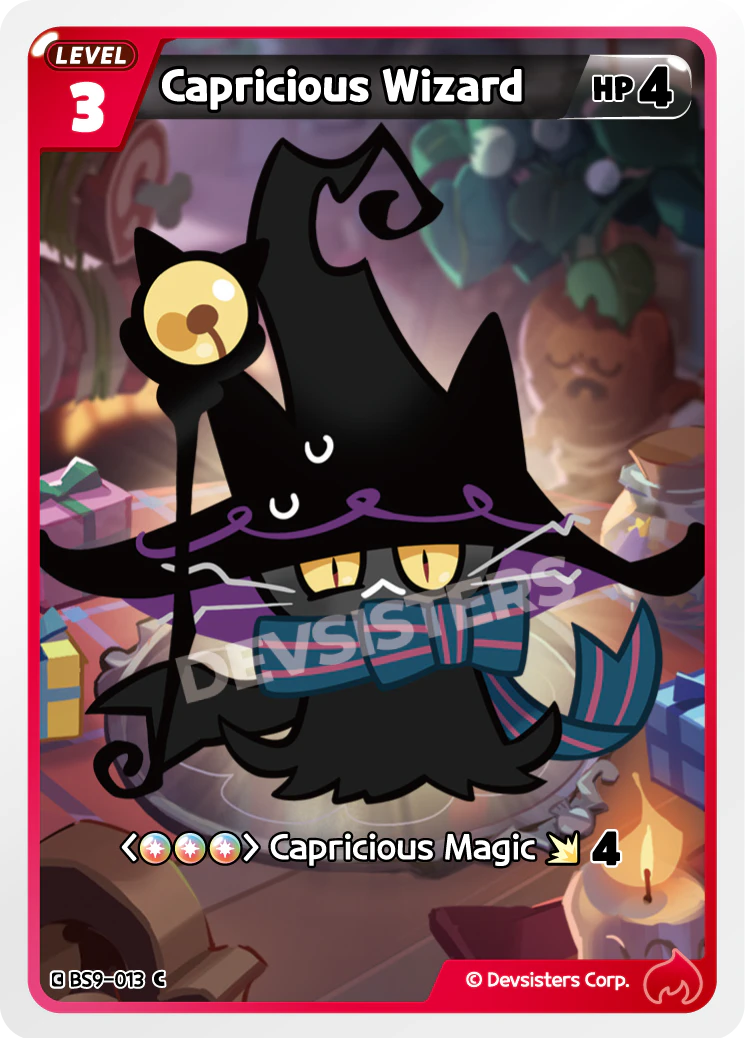
Cookie Run: Braverse Budget Upgrades That Actually Matter
The single best upgrade for the Red starter deck is a common that outdamages the deck's own super-rare at the same energy cost. Here is the full three-wave upgrade path - every card verified against the official database.

Braverse Festival Arena Meta: 22 Winning Decks From Korea
Devsisters has posted the first 22 champion decklists from Korea's Brave League Season 4, the first Brave League events since Festival Arena went on sale there. Fourteen of them play no Festival Arena card. Here is the color split against the 63 Season 3 winners, the six near-identical Arena Green lists the set did change, and whether you can play these lists in English events.
Cookie Run: Braverse Summer Champion Cup 2026: What Won
Devsisters' 2026 Summer Champion Cup report is out, and three of the six champions it covers won with Purple decks built on the same self-milling core. Here are all six winners, each country's field and Top 16 color charts, the card cores the winning lists share, and the numbers behind Green's fall from four winter titles to none.
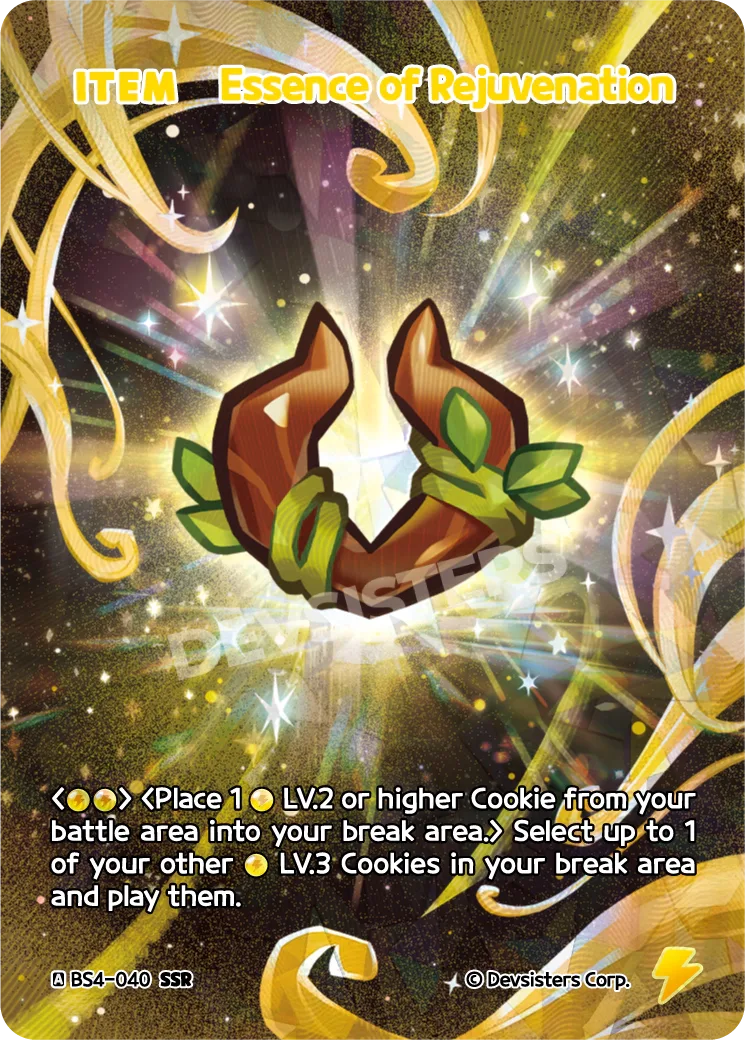
The Cookie Run: Braverse Banned & Restricted List, Explained
Sixteen cards in Cookie Run: Braverse are not legal as a playset in sanctioned English-language events: five are banned outright and eleven are capped at a single copy. The official card database does not flag a single one of them. Here is the whole list, straight from the policy notice.

How to Play Cookie Run: Braverse - A Complete Beginner Guide
Cookie Run: Braverse is the rare TCG you can teach in a single match. This guide covers everything a first-time player needs: card types, setup, turn structure, how you pay for cards, the FLIP mechanic, and how to win.
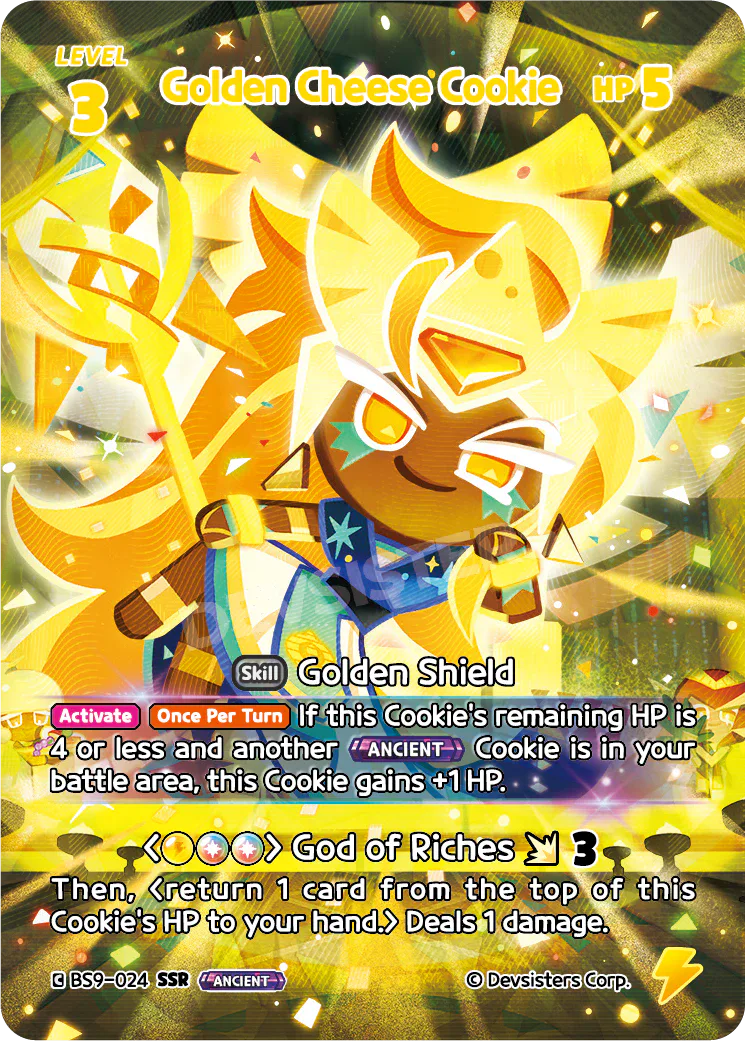
Cookie Run: Braverse Meta Tier List — Best Decks & Archetypes Ranked
Which Cookie Run: Braverse decks are actually carrying right now? Here's a meta tier list of the strongest archetypes - the real cards that anchor each one, why they rank where they do, and what's overrated.