Cookie Run: Braverse Aggro Deck Guide (Build & Pilot Red Aggro)
Red aggro is the deck you hand a new player who wants to win this week, not next month. Here's how to build it, a real Arena-aggro decklist of cards you can actually buy, and how to pilot it without fizzling on turn five.
Every trading card game has a deck that wins by being faster and meaner than yours, and Cookie Run: Braverse is no exception. Red aggro is that deck. It's cheap to build, it's brutally clear to pilot, and it punishes anyone who stumbles in the opening turns. If you're new and you want to actually win games this week instead of theory-crafting a control shell for next month, this is the lane.
The pitch for aggro is simple: Braverse's main win condition is filling your opponent's Break Area to a combined Cookie Level of 10, and a deck full of cheap, hard-hitting Cookies starts chipping toward that the moment the first player's turn-one restriction lifts. You don't out-grind the opponent - you end the game before grinding matters. If you want the format-wide view first, our deck archetypes guide frames where aggro sits against control and combo. One honesty note up front: this is an informed build, not a tournament-proven netdeck. The English meta is young, so treat the list as a strong, fact-checked starting point and verify the current card pool against the official database before an event.
What aggro actually wants to do
Aggro isn't "play all my cards fast and hope." It's a real strategy with a real shape:
- Curve out early. Get a cheap Cookie down on the earliest legal turn and keep adding pressure every turn after. Tempo is the whole game plan.
- Trade up, or don't trade at all. Your Cookies are cheap, so swinging into a removal-heavy board is fine - you'd rather they spend resources answering a common than let it keep hitting.
- Close before the late game. Control and combo decks get stronger every turn. Aggro's edge is front-loaded, so a turn you spend not attacking is a turn you hand the slow deck for free.
- Treat reach as a finisher. When the opponent stabilizes the board, a burn Item that throws damage directly at a Cookie is how you push the last few points of Level into their Break Area.
The aggro truth: you are a clock. Every turn you don't advance damage, the clock runs slower and the slow decks catch up. Play to your speed, not theirs.
Why Red is the aggro color
Braverse's five colors each have an identity (the full rundown is in colors explained), and Red's is aggressive battle pressure and fast damage. That's not flavor text - it shows up in the card pool:
- Red's best aggressive bodies are cheap by design. Low-cost LV.1 Cookies that swing for real damage are common and uncommon, not chase rares, so the deck is affordable as well as fast.
- Red has a deep bench of {R}-only one-cost attackers, which keeps the curve low and the early game consistent.
- Red owns the {Arena} go-wide engine in its color, the synergy package that turns a board of small Cookies into something far scarier than the sum of its parts.
If your goal is the cleanest, cheapest, fastest deck in the game, Red is the answer. For the broader Red toolbox beyond the aggro core, our best Red cards guide goes wider; this guide stays locked on the aggressive build.
The Arena engine that makes Red aggro tick
The reason Red aggro is more than "a pile of small Cookies" is the {Arena} trait - a tribal-synergy keyword that rewards going wide. Several Red Arena cards explicitly check for another Arena Cookie in your battle area and pay you off when they find one. A few real examples from the official database:
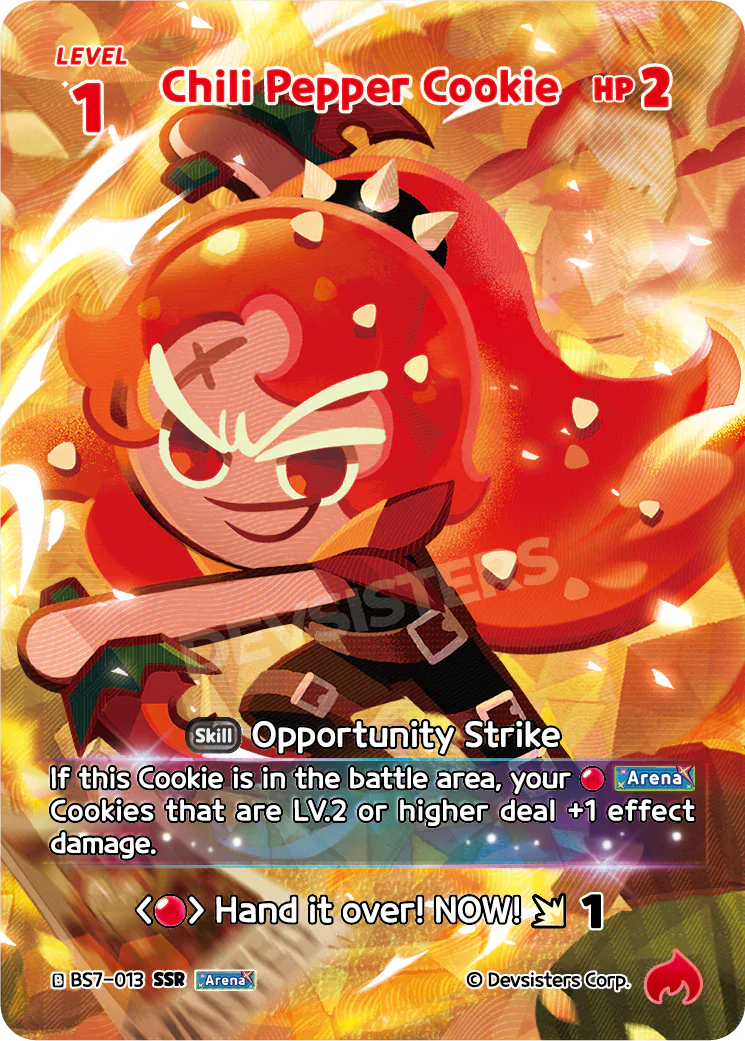
- Chili Pepper Cookie (BS7-013, LV.1 Arena) reads: "If this Cookie is in the battle area, your {R} Arena Cookies that are LV.2 or higher deal +1 effect damage." It's a one-cost lord that buffs your whole top end.
- Raspberry Cookie (BS7-003, LV.1 Arena) has an {On Play}: "If there is another Arena Cookie in your battle area, during this turn, your opponent cannot activate Blocker." That's a one-mana "your attacks can't be redirected" button - exactly what an aggro deck wants when it's trying to push lethal.
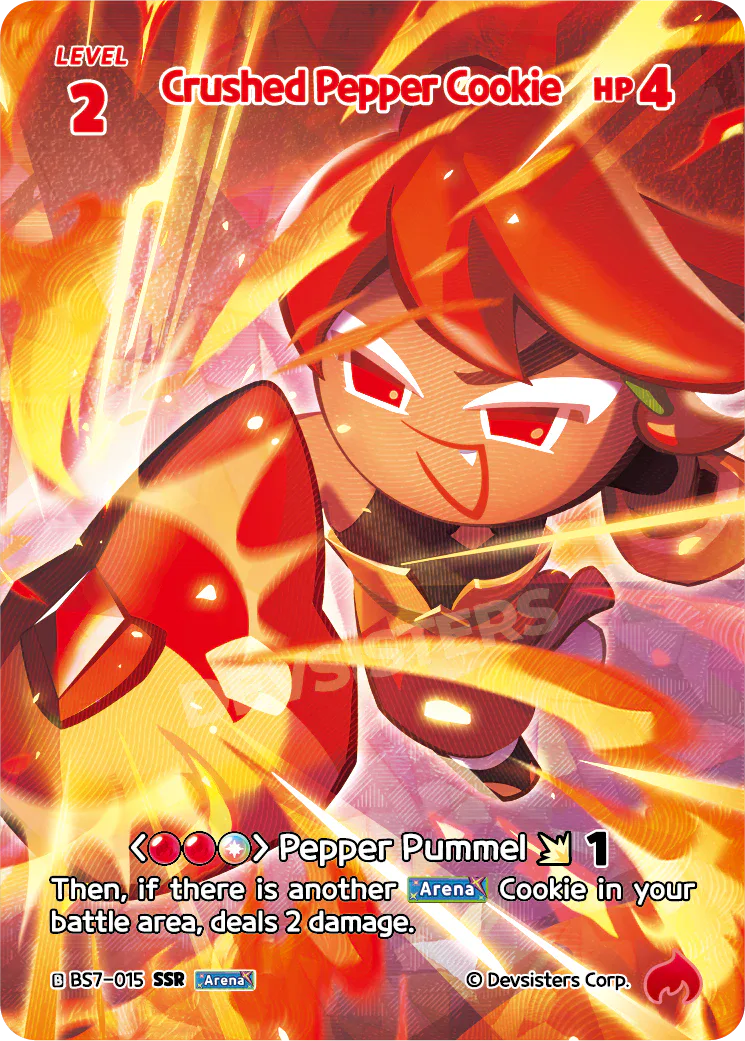
- Crushed Pepper Cookie (BS7-015, LV.2 Arena) scales its attack when another Arena Cookie is present, turning a modest body into a real threat.
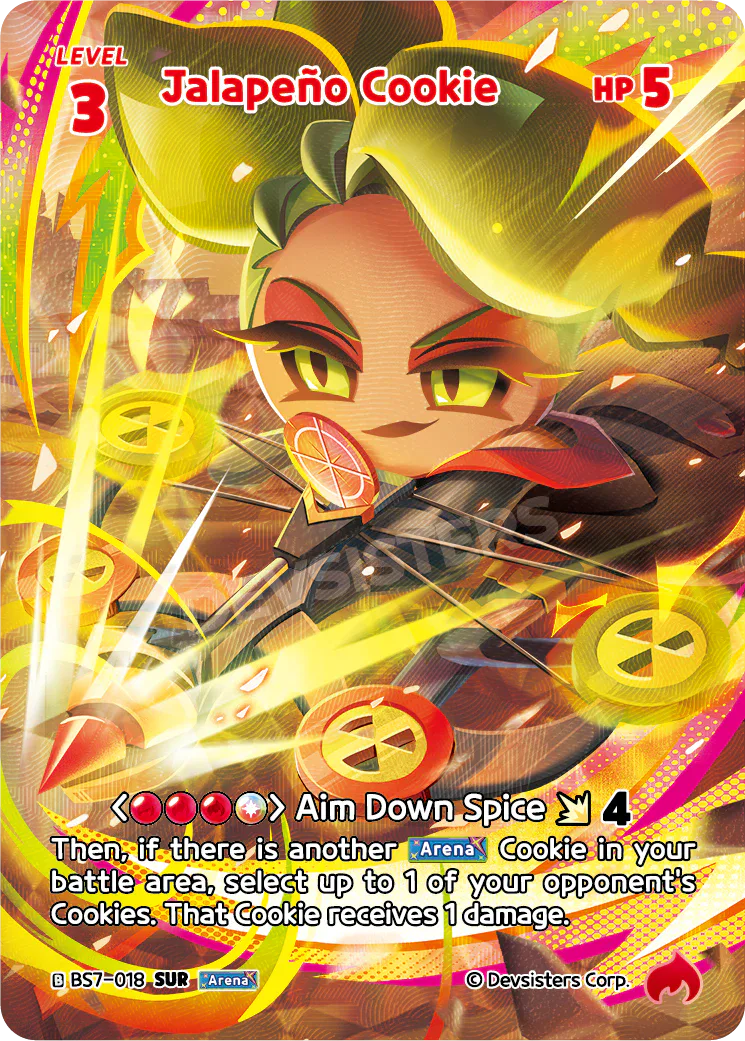
- Jalapeño Cookie (BS7-018, LV.3 Arena) swings for 4 and, with another Arena Cookie out, tacks on extra reach damage to a second target.
The throughline: each Arena card is mediocre alone and excellent alongside friends. That's the engine - you're not just attacking, you're building a board where every new Cookie makes the rest hit harder. It's why the best Arena cards form their own archetype, and why Red aggro leans on the trait so hard.
A sample Red aggro decklist
Here's a complete 60-card Red Arena-aggro shell built entirely from real, verified cards. It respects the construction rules: exactly 60 cards, at least one Cookie, up to 4 copies of any card number, and up to 16 FLIP cards (this list runs none, keeping it pure pressure). Card numbers are cited so you can find each one in the official database.
Cookies - LV.1 (the early pressure):
- 4x Chili Pepper Cookie (BS7-013) - the one-cost Arena lord; buffs your LV.2+ Arena attackers.
- 4x Raspberry Cookie (BS7-003) - one-cost Arena body that shuts off Blocker when you're going wide.
- 4x Rye Cookie (BS7-019) - one-cost Arena attacker that chips extra damage with a friend in play.
- 4x Snapdragon Cookie (BS3-006) - one-cost Cookie that grants your {R} LV.2+ Cookies +1 attack.
- 3x Pink Choco Cookie (BS6-017) - one-cost {On Play} that switches off an opposing Cookie's FLIP effects for the turn, clearing the path for a clean swing.
Cookies - LV.2 (the midgame muscle):
- 4x Crushed Pepper Cookie (BS7-015) - Arena body that scales with the board.
- 3x Olive Cookie (BS7-010) - efficient LV.2 Arena attacker.
- 2x Hero Cookie (BS9-018) - cheap LV.2 that swings for 2 on a two-cost attack.
Cookies - LV.3 (the finishers):
- 3x Jalapeño Cookie (BS7-018) - your big Arena threat with built-in reach.
- 2x Hollyberry Cookie (BS3-017) - the Red Ancient; a durable LV.3 that buffs another Cookie on attack and shrugs off big hits.
- 1x Pitaya Dragon Cookie (BS5-013) - the Red Dragon; an {On Play} ping plus a multi-target reach swing when it's low.
Items (the reach):
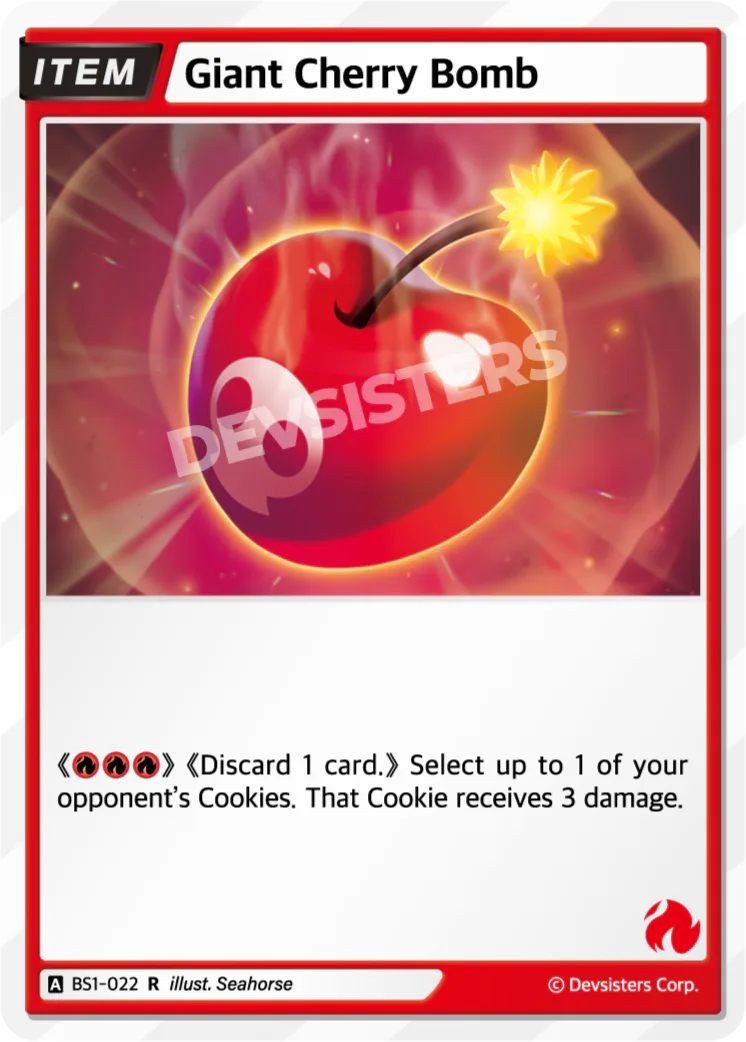
- 4x Giant Cherry Bomb (BS1-022) - "Select up to 1 of your opponent's Cookies. That Cookie receives 3 damage." Your direct-damage finisher.
- 3x Juicy Stamina Jellies (BS9-019) - +1 attack and +1 HP to a Cookie for the turn; pushes lethal or wins a trade.
- 2x Fateful Cookie Cutter (BS9-020) - card advantage that refuels you when a {R} LV.1 Cookie died last turn, which happens constantly in aggro.
Traps (the speed bump):
- 2x Paper Puppet Troupe (BS9-022) - shrinks an attacker's damage and can draw you a card; a cheap way to survive a counter-swing.
That's 4+4+4+4+3 + 4+3+2 + 3+2+1 + 4+3+2 + 2 = 60 cards. It's a coherent, aggressive, all-Red list with a low curve, an Arena go-wide core, and enough reach to close when the board stalls. Swap counts are a matter of taste - which Red staples sit at common or uncommon shifts with the card pool, so confirm current printings against the official database. For the build philosophy behind these ratios, pair this with deck-building basics.
How to pilot the deck
Building the deck is the easy half. Piloting it well is what separates a win streak from a coin flip. The principles:
- Develop early, then never stop attacking. Once the first-player turn-one restriction lifts, every turn should advance damage. If you're "saving up," you're playing the wrong deck. (The phase-by-phase rules are in the turn structure guide - aggro lives and dies by sequencing the Main phase right.)
- Sequence the lord first. Get Chili Pepper or Snapdragon down before the bigger Cookies they buff, so your LV.2 and LV.3 attackers hit for the boosted number the turn they swing.
- Count to 10. The game ends when the combined Level of Cookies in your opponent's Break Area hits 10. A LV.3 Cookie is worth more than a LV.1 when it falls, so target the math: sometimes trading two small Cookies to drop one of theirs advances their Break total, which is the wrong direction. Push your damage onto their Cookies; don't feed your own.
- Hold reach for the kill. Giant Cherry Bomb is tempting to fire early, but it's at its best as the final 3 damage that pushes a Cookie into the Break Area for the win. Bank it until you can see lethal or until the opponent stabilizes a wall you can't punch through.
- Use Raspberry's Blocker-off as a finisher. When you're swinging for what should be lethal and they have a {Blocker} up, a turn-one Raspberry with another Arena Cookie out can turn off the redirect and let your attacks land where you aimed them.
The pilot's mantra: I'm the beatdown. I attack, I push my opponent's Break total toward 10, and I treat every non-attacking turn as a mistake unless I'm setting up a bigger one.
Mulligan and opening hands
Aggro hands are easy to evaluate because the deck wants the same thing every game: a fast, cheap start. Keep hands that can put a Cookie down on curve and keep the pressure flowing. Specifically, you want:
- At least one, ideally two, one-cost LV.1 Cookies. Chili Pepper, Raspberry, Rye, Snapdragon - any of them. A turn-two board is the whole point.
- A follow-up. A LV.2 to play after your openers so you're not out of gas on turn three.
- Not too much top-end. A hand of three LV.3 finishers and no early plays is a mulligan - you'll be dead-on-board while you wait to afford them.
Throw back slow, clunky hands without sentiment; consistency is aggro's best friend, and a fast deck that draws its expensive cards first just loses. Our full mulligan and opening hand guide covers the general framework; for this deck, the short version is "keep the hand that curves out, ship the one that doesn't."
Aggro mistakes to avoid
The classic ways aggro pilots throw away winning positions:
- Slowing down to "play safe." Aggro that hesitates loses to the deck designed to grind it out. If you have a swing, take it.
- Over-committing into open reactive mana. If the opponent has untapped Support and you suspect a Trap, sometimes you hold one Cookie back so a single answer doesn't blow you out. Pressure, but don't walk face-first into a known speed bump.
- Firing reach too early. Burning a Giant Cherry Bomb on a midgame trade you could've won with an attack wastes your closer. Save direct damage for the kill.
- Ignoring the Level math. Trading inefficiently can advance your own Break Area total and hand the opponent the alternate win. Always know whose Break total your trades are feeding.
- Building greedy. Splashing a second color for a couple of "powerful" cards makes your resource base worse and your turn-two starts less reliable. Mono-Red is faster and more consistent, which is what aggro is for.
The cheapest mistake to avoid is patience. Other decks get rewarded for waiting; you get punished for it. When in doubt, attack.
How to tune it as you learn
Once the core is humming, upgrade surgically rather than chasing every shiny new Red card:
- Track which cards you're glad to draw and which feel dead. If a slot consistently underperforms - say a top-end finisher you can never afford - trim it for another one-drop or a reach Item.
- Tune your reach count to the meta. More control and big-HP decks around you means more value in burn Items like Giant Cherry Bomb; a fast field means you want more bodies.
- Watch new sets, but wait. New Red commons can quietly upgrade the deck, but prices and the card pool's verdict take a week or two to settle after a set drops. Track releases via the set release timeline and upgrade one slot at a time so you can actually feel the change.
Aggro is the best deck to learn the game on because its feedback loop is immediate: a misplay loses you tempo you can see, and a good line wins on the spot. Build it, play it, and let the losses teach you exactly which slot to tune next.
Quick Action Checklist
- Build mono-Red and lean on the {Arena} trait - go wide so every new Cookie makes the rest hit harder.
- Run a low curve: load up on one-cost LV.1 Cookies, back them with LV.2 muscle, and cap with a few LV.3 finishers.
- Sequence your lord first - play Chili Pepper or Snapdragon before the Cookies they buff.
- Attack every turn once the first-player restriction lifts - you're the clock; never coast.
- Push your damage onto their Cookies and count to 10 - don't feed your own Break Area with bad trades.
- Hold reach (Giant Cherry Bomb) for the kill - it's a finisher, not a midgame trade.
- Mulligan for a curve-out hand - keep one or two one-drops and a follow-up; ship slow hands.
- Verify current printings against the official database - the English card pool is young and shifts set to set.
Frequently Asked Questions
What is the best aggro deck in Cookie Run: Braverse?
How do you build a Red aggro deck in Braverse?
How do you pilot aggro in Cookie Run: Braverse?
Why is Red the aggro color in Braverse?
What does the Arena keyword do for an aggro deck?
Keep Reading
Related Guides

Cookie Run: Braverse Tempo Deck Guide (Build & Pilot Blue Tempo)
Tempo is aggro that learned to play defense. Here's how to build a Blue-Red tempo shell in Cookie Run: Braverse, a real decklist of cards you can buy, and how to keep the clock running while the other deck flails a turn behind.

Cookie Run: Braverse Combo Deck Guide (Build & Pilot Purple Recursion)
Combo in Braverse isn't a one-card instant-kill - it's a Purple value engine that replays Cookies out of your trash until the opponent runs out of answers. Here's the real decklist, the loop, and how to pilot it without bricking.
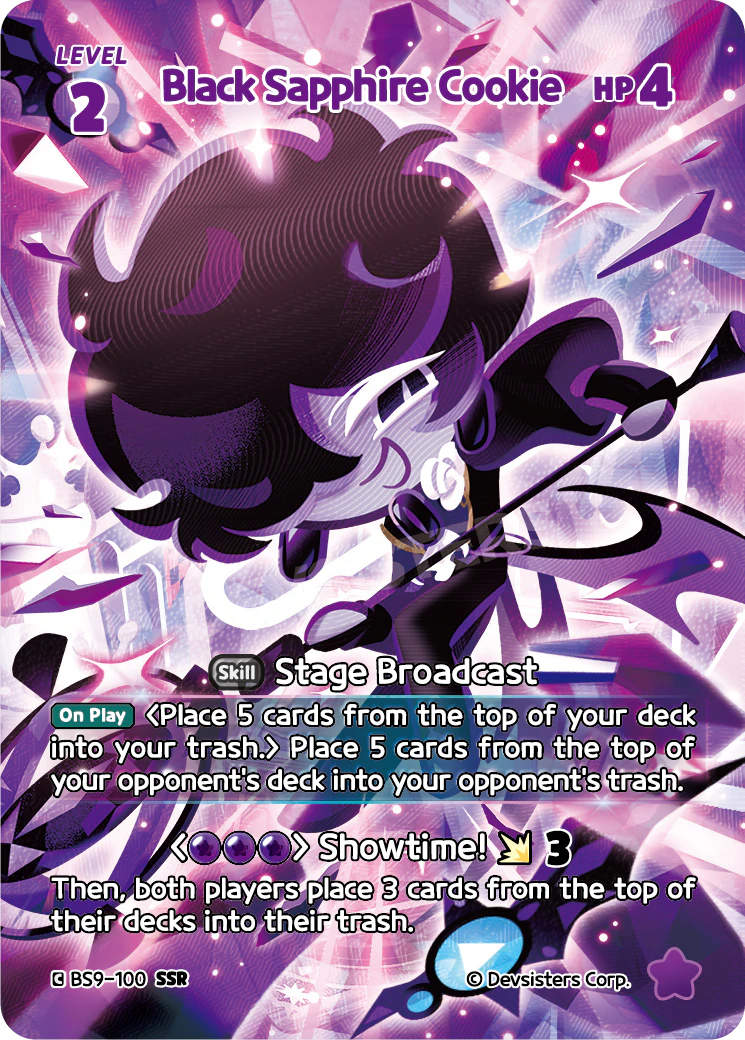
Cookie Run: Braverse Mill Deck Guide (Build & Pilot Purple Deck-Out)
Mill in Braverse won't deck someone to zero for an instant win - the game doesn't work that way. But a Purple deck-out shell weaponizes the opponent's trash, fuels its own payoffs, and starves their Cookie supply. Here's the real list.

Cookie Run: Braverse Control Deck Guide (Build & Pilot Blue/Purple Control)
Control is the deck that says "go ahead, swing" and then makes you regret it. Here's how to build a reactive Blue/Purple control shell in Cookie Run: Braverse, a real 60-card list of cards you can actually buy, and how to pilot it without drowning in your own clever answers.

How to Play Cookie Run: Braverse - A Complete Beginner Guide
Cookie Run: Braverse is the rare TCG you can teach in a single match. This guide covers everything a first-time player needs: card types, setup, turn structure, how you pay for cards, the FLIP mechanic, and how to win.
Cookie Run: Braverse Meta Tier List — Best Decks & Archetypes Ranked
Which Cookie Run: Braverse decks are actually carrying right now? Here's a meta tier list of the strongest archetypes - the real cards that anchor each one, why they rank where they do, and what's overrated.