Fortnite Inventory Management: Slot Order and Drop Rules
Five slots. That's the entire budget, and most players spend two of them on garbage they picked up in the first ninety seconds and never reconsidered. Inventory management is the cheapest skill in Fortnite to fix and the one that quietly decides whether you're ready when the fight starts.
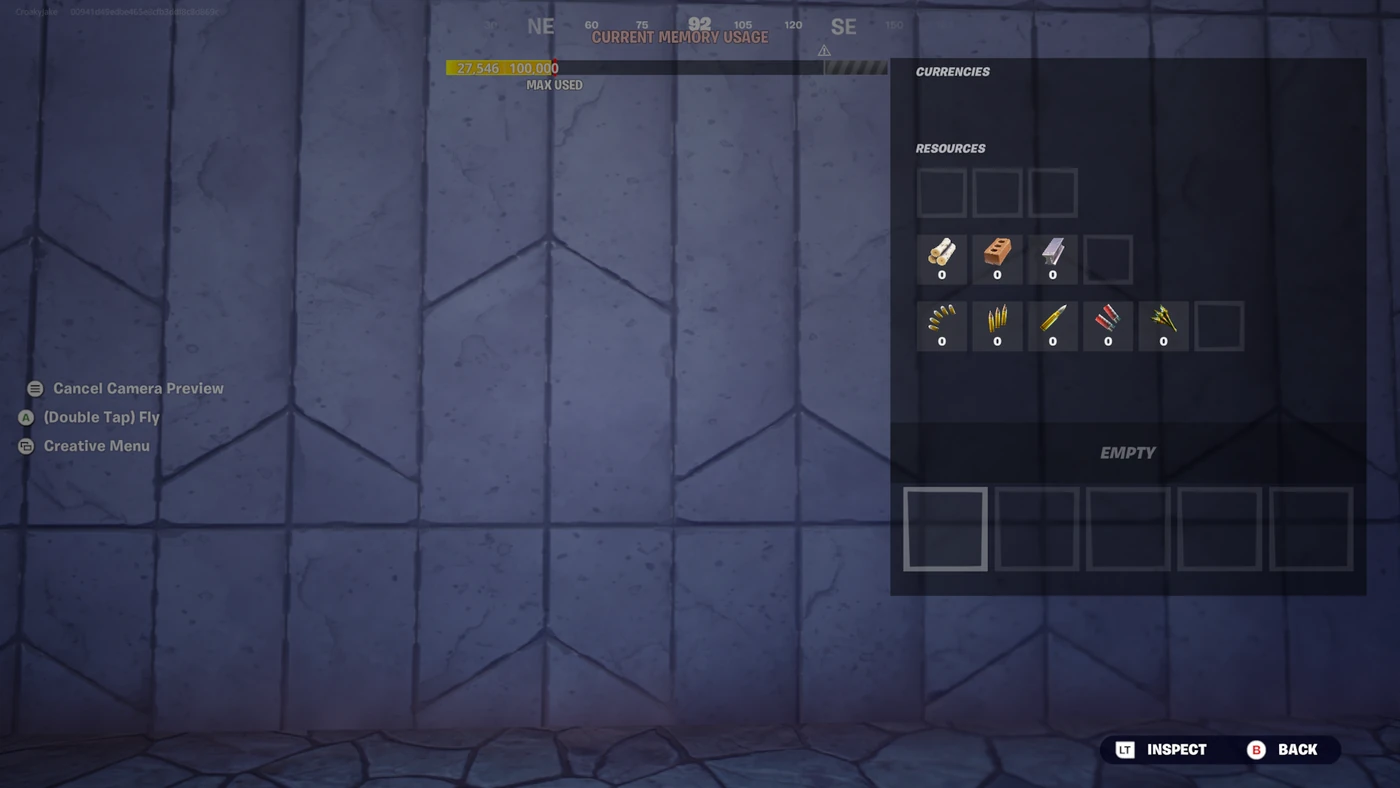
You land, you loot a chest, you grab whatever the floor offers, and by the two-minute mark your five slots are full of a shotgun, an AR, one Mini, a Grenade you will never throw, and a second pistol you forgot you were carrying. Then a fight starts and you spend the first second of it scrolling.
That scroll is the tell. Inventory management is the least glamorous skill in Fortnite and the one with the best return on effort, because it costs you nothing mechanically — no aim, no build speed, no reaction time — and it decides whether your kit is ready the moment a fight begins. Five slots is a hard budget. This guide is how to spend it.
The five slots are the whole game
In most Fortnite modes you carry up to five total weapons or items in your hotbar. That is the ceiling. Not five weapons plus a heal pouch, not five plus a utility bag — five, full stop, and every consumable stack competes for the same real estate as your guns.
The one notable exception is Fortnite Ballistic, where you carry a single primary weapon and a pistol, which is a completely different economy and not what this guide is about. For Battle Royale, Zero Build, Reload, and the rest of the standard modes, five is the number.
Why this matters more than it sounds: five slots means every pickup is a trade, not an addition. Once you are full, there is no such thing as "grabbing" an item — there is only swapping one out. Players who never internalize that keep collecting items reactively and end up with a loadout that was assembled by accident rather than chosen. A kit you chose beats a kit that happened to you, basically every time.
What actually takes a slot (and what doesn't)
Half of inventory anxiety comes from not knowing what is competing for space. Plenty of things you carry live outside the five slots entirely:
- Materials — wood, stone, and metal each sit in their own dedicated storage, capped at 500 apiece. They never touch your hotbar.
- Ammunition — light, medium, and heavy bullets, shells, rockets and the rest are all stored separately. Picking up ammo never costs you a slot.
- Bars — the in-match currency stacks up to 5,000 and lives in its own space.
- Victory Crown — you can hold one, and it does not eat a slot.
- Medallions and Boons — these are stored outside the hotbar too, and in Battle Royale there is no listed cap on how many you can hold.
- Reboot Cards — up to three in team modes, held separately from your weapons.
- Your equipped Sprite — in Chapter 7, the Sprite you equip from the lobby occupies its own dedicated slot and replaces your Back Bling. The equipped one never touches the hotbar — but see below, because spare Sprites do.
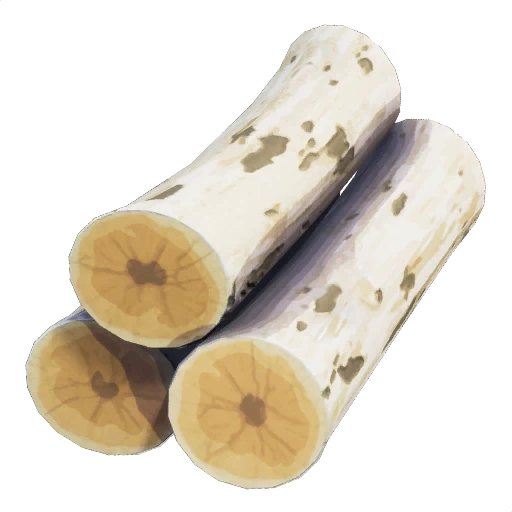
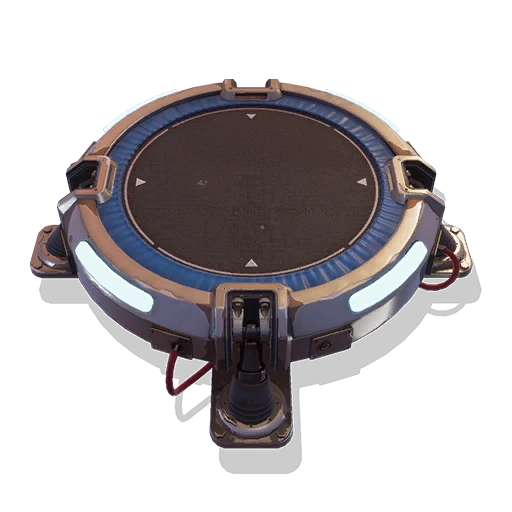
What does take a slot: every weapon, every consumable stack (heals, shields, mobility items), every throwable, and traps like Launch Pads — traps stack, but the stack occupies a slot and each trap type has its own carry limit (you can hold 15 Armored Walls, for example). And in Chapter 7, spare Sprites: beyond the one in your dedicated Sprite slot, any additional Sprites you pick up in a match ride along at one per item slot, up to five — and they grant no passive benefit unless you swap one in for your equipped Sprite. A hotbar full of Sprites is a hotbar with no guns in it.
There is also the Gizmo wrinkle: since Chapter 7 Season 2, the pickaxe slot itself became swappable with certain utility items called Gizmos, which sit outside your five. That is a season-flavored mechanic rather than a foundation, so build your habits around the five and treat anything else as a bonus.
The practical takeaway: stop worrying about ammo and mats, and start worrying about consumable stacks. Ammo is free to carry. A third healing item is not.
The default five-slot loadout
There is no single correct loadout, but there is a correct shape, and it holds up across every season regardless of what is in the loot pool. The template:
- Close-range weapon (shotgun or SMG)
- Mid-to-long-range weapon (AR, DMR, or similar)
- Flex weapon or utility (third gun, or a trap/throwable)
- Healing item
- Mobility item
That is the baseline you should be able to reach by the end of your first rotation. Deviating is fine when the situation calls for it — a third gun instead of mobility in a build-heavy endgame, two heal stacks if you got shredded — but you deviate on purpose, from a known default. Our loadout priority guide goes deeper on how to rank competing pickups when the loot gods are unkind.
Why two guns is the floor, three is standard
You need something that wins the 5-meter fight and something that wins the 100-meter fight. Carrying two shotguns means anyone who refuses to close on you is safe forever; carrying two ARs means you lose every box fight to a player with a pump. Cover both ranges before you cover anything else.
The third gun is where preference lives. A second close-range option (the classic shotgun-plus-SMG pairing) gives you follow-up damage when your first shot connects and your pump is on cooldown. A dedicated long-range option gives you a way to punish rotations. Check the weapon tier list for what is actually worth the slot in the current pool, but the range coverage principle outlives any specific gun.
The utility slots: heals and mobility
The last two slots are where most players leak value. They cram in a third and fourth gun, then die at 40 HP with no way to reposition.
One heal stack minimum, and make it a fast one if you only carry one — you cannot channel a long heal when someone is shooting at you, which the shield and heal management guide breaks down in detail. One mobility item minimum, because a movement tool is simultaneously your rotation plan, your escape button, and your way to buy a healing window. The mobility items guide covers which ones earn their keep.
Slot order: put your kit in muscle memory
Here is the part almost nobody does deliberately, and it is free performance. Keep the same item in the same slot every single game.
Your hands should know that slot 1 is always the shotgun, slot 2 is always the AR, slot 5 is always mobility — so that when a fight starts you press a number, not scroll a wheel looking for a gun. Scrolling is slow, imprecise, and overshoots under pressure. Direct slot binds do not.
The convention that works for most players:
- Slot 1 — close range (the gun you open a box fight with)
- Slot 2 — mid range
- Slot 3 — flex weapon
- Slot 4 — heals
- Slot 5 — mobility
Two rules make it stick. First, rearrange immediately after looting, not later. Fortnite lets you drag items between hotbar slots from the inventory menu, and doing it in the quiet ten seconds after a chest is free. Doing it in the storm with someone pushing you is not. Second, bind your slots to keys you can hit without looking — if you are on keyboard, having slot 5 on the literal 5 key is a stretch you will fumble; see the keybinds guide for layouts that keep everything under your fingers.
The payoff is not theoretical. Fixed slot order removes an entire decision from the opening second of every fight, and the opening second is usually the whole fight.
The swap decision: when to actually pick something up
Once you are full, every pickup is a trade. Run it through three filters, in order:
- Does it cover a range I currently don't? A blue AR when you have zero mid-range is an instant take. A third shotgun when you already have one is usually not.
- Is it a real rarity jump on the same gun? Rarity in Battle Royale runs Common, Uncommon, Rare, Epic, and Legendary, with Mythic and Exotic sitting above as special-case items. Going from Rare to Legendary on the same weapon is worth the pickup animation. Going from Uncommon to Rare on your third gun, in the open, with the storm closing, usually is not — the upgrade is real but the exposure costs more.
- What am I giving up? This is the filter people skip. Swapping your Launch Pad for a marginally better SMG feels like an upgrade and can cost you the game in the final circles.
The hidden cost in all of this is time. Swapping takes an animation, and picking up loot leaves you stationary and often looking at the ground. Doing it in the open, near a fight, or while a third party is inbound is how good loadouts turn into eliminations for someone else. Loot on your terms or don't loot.
Drop discipline: what to throw away and when
Dropping things is a skill, not an admission of failure. The things worth dropping:
- Redundant weapons. Two guns covering the same range is one wasted slot.
- Situational items you never actually use. If you have carried the same throwable for four zones without pulling it out, it is not a weapon, it is decoration.
- Ammo for guns you no longer have. It costs no slot, but dropping it for teammates costs you nothing either.
- Excess mats above what you need. In squads, sharing wood with the teammate who is out is worth more than sitting on your own cap; the mats management guide covers healthy stock levels.
Two habits worth building. Drop for teammates deliberately, especially heals and mats — a squad where everyone is at 200 effective HP is worth far more than one player hoarding six Med Kits. And drop before you loot, not during, so you are not standing over a supply drop juggling items while someone lines you up.
One more: when you eliminate a player, do not vacuum up their entire pile. Take the specific upgrade you identified, take ammo and mats, and leave. Loot piles are bait, and the third-party guide exists mostly because of players who could not walk away from one.
Ammo and material caps you should actually respect
Materials cap at 500 each for wood, stone, and metal, which is the number to keep in your head when deciding whether to keep farming. Note that mats are not part of Zero Build variants or Blitz Royale at all — in those modes, that entire resource layer disappears.
Ammo caps vary wildly by type, and the spread is the useful part:
- Light Bullets — 500 (SMGs, pistols)
- Medium Bullets — 500 (assault rifles, DMRs, revolvers)
- Heavy Bullets — 50 (snipers, some pistols)
- Shells — 150 (shotguns, explosives)
- Rockets — 14 (explosive launchers)
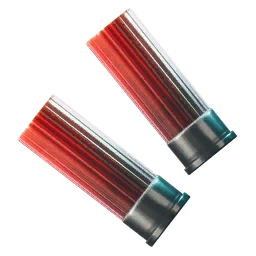
That heavy ammo number is the one to internalize: 50 rounds is a tenth of what you can hold in light or medium, which is exactly why sniper-heavy loadouts run dry. If you are committed to a heavy-ammo weapon, you need to actively pick up heavy ammo rather than assuming you will accumulate it, because you will not.
Shells at 150 sounds generous until you spend a build fight dumping a pump into walls. Treat 60-ish shells as the point where you start looking for more rather than the point where you panic.
Mid-fight inventory: the mistakes that get you killed
Everything above is preparation. In the fight itself, the inventory errors are narrower and more fatal:
- Scrolling instead of pressing. If you are hunting for a gun with the mouse wheel while someone is dumping into your box, you have already lost the trade. This is what fixed slot order solves.
- Opening the inventory menu mid-fight. The full inventory screen is a between-fights tool. Rearranging under fire is how you die looking at a menu.
- Swapping weapons to reload. Weapon-swapping to skip a reload animation is a legitimate technique, but only if your slots are ordered so the swap target is the gun you actually want. Random slot order turns a clever swap into a pistol you did not mean to hold.
- Picking up loot mid-box-fight. The floor loot in a box you just took is not going anywhere. The player rotating toward you is.
The connective tissue between all four: your inventory work should be done before contact. Loot, sort, drop, top off, then fight. If you find yourself managing inventory while taking damage, the mistake happened thirty seconds earlier.
Zero Build changes the math
Strip building out and the slot budget shifts in one clear direction: utility gets more valuable, and mobility gets a lot more valuable.
In Build mode a wall is your cover, your heal window, and your escape plan, all from a resource that costs you no slot. In Zero Build, none of that exists — mats are not in the mode, and the only way to make space between you and someone shooting at you is natural cover or an item you deliberately carried. That makes a mobility item close to mandatory rather than nice-to-have, and it makes fast heals more important than big slow ones, because you rarely get a clean safe window.
Practical adjustment for Zero Build: consider running two utility slots instead of one — mobility plus a second heal or a second mobility option — and accept two guns instead of three. You lose a range option and gain the ability to survive getting caught in the open, which in that mode is the more common way to die.
Quick Action Checklist
Spend your five slots on purpose:
- Know the budget — five hotbar slots total; ammo, mats, Bars, Crowns, Medallions and your equipped Sprite do not count against it, but spare Sprites do
- Cover close and mid range first, then flex, then heals, then mobility
- Never carry two weapons that cover the same range
- Fixed slot order every game so fights start with a keypress, not a scroll
- Rearrange right after looting, in the quiet — never mid-fight
- Filter every pickup: does it cover a gap, is it a real rarity jump, what am I giving up
- Drop redundant guns and dead-weight throwables instead of carrying them to the endgame
- Watch heavy ammo — it caps at 50 versus 500 for light and medium, so restock it on purpose
- Farm to 500 per material and stop; there is no benefit above the cap
- In Zero Build, trade a gun slot for utility — mobility matters more when there are no walls
Frequently Asked Questions
How many inventory slots do you get in Fortnite?
What is the best inventory setup in Fortnite?
What is the material cap in Fortnite?
What are the ammo caps in Fortnite?
Should I keep the same slot order every game in Fortnite?
Keep Reading
Related Guides
Fortnite Sniper Guide: How to Actually Hit Your Shots
You did not miss because your aim is bad. You missed because the bullet was still in the air when they strafed. Fortnite snipers fire physical projectiles that arc and take time to land — here is how to lead them, range them, and stop announcing every shot with Sniper Glare.
Fortnite Shield & Heal Management: When to Pop What
Most fights in Fortnite aren't lost to bad aim — they're lost at 40 HP with a full Med Kit sitting in your inventory. Healing is a resource you manage, not a button you mash when the damage numbers turn red. Here's the durable framework for shields, heals, and the timing that actually keeps you alive.
Fortnite Mythic Weapons Guide: Bosses, Vaults, and Gold Guns
Every named mythic in a Fortnite lobby usually exists exactly once, somebody has to rip it off a boss to get it, and half the server is planning to rip it off them next. Here's how the gold-gun economy actually works — and when chasing it is throwing.
Fortnite Shotgun Guide: Win Every Close-Range Fight
Most Fortnite fights are decided inside ten meters, and the player holding the shotgun almost always wins. Here's how each shotgun archetype actually works and the close-range habits that turn coin-flip brawls into free kills.
Fortnite Weapon Tier List: How to Rank Any Loot Pool
Any Fortnite tier list is stale the second a patch drops. So instead of memorizing this season's gun names, learn how to rank weapons by class and role — the framework that's S-tier in every season.

Best Fortnite Settings for PC & Console
Half your settings menu is noise; a handful of options decide whether you can see, aim, and build. Here's what to change on PC and console, why, and the one number nobody else can pick for you.