Minecraft Desert and Jungle Temples: Traps and Loot Odds
A desert temple has four chests sitting on nine TNT, and a jungle temple has two chests behind arrow traps and a lever puzzle. Here is how to find each one, get in without blowing up the loot, and what the chests actually hold, with the numbers from the game data.
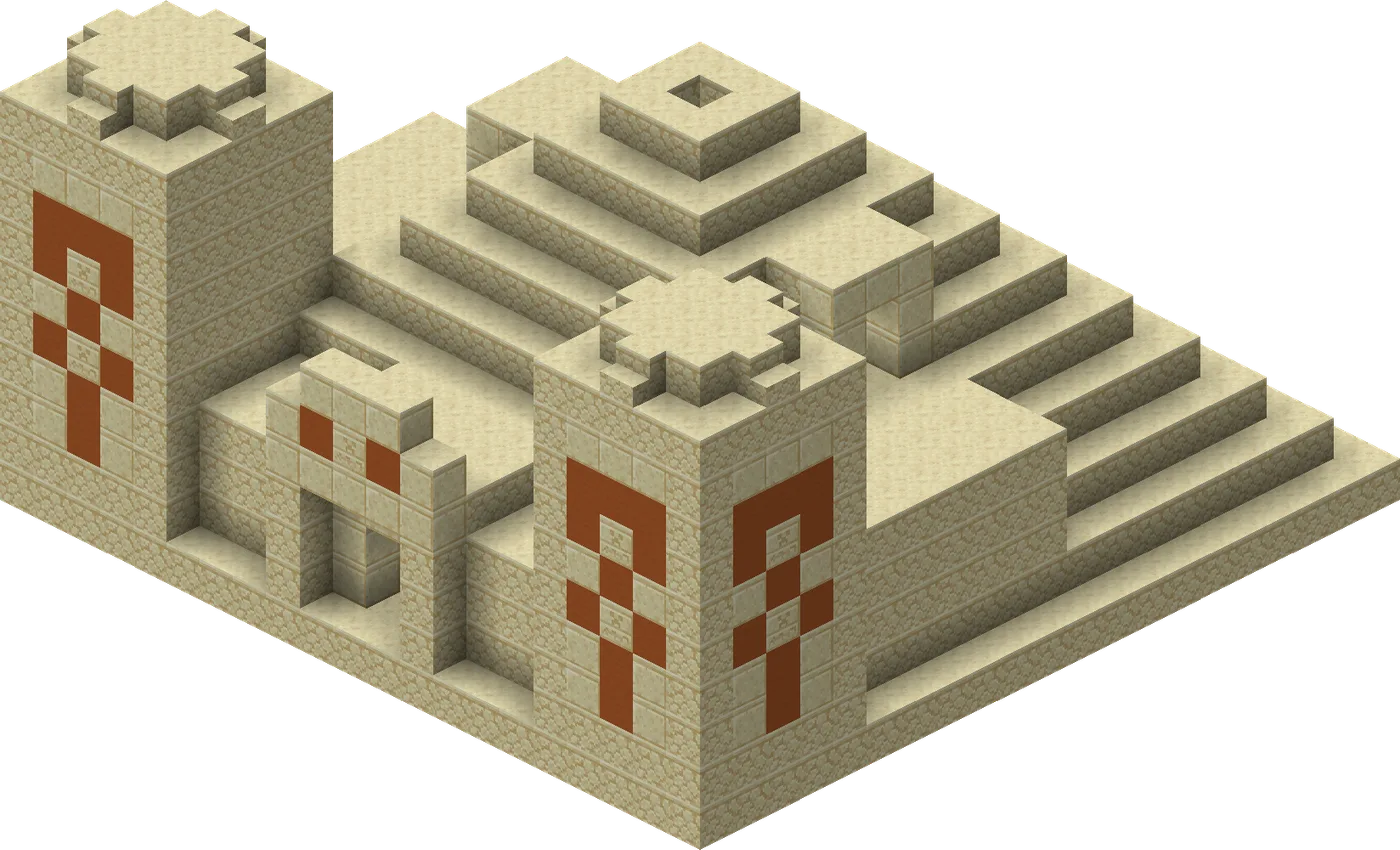
A desert temple is built to blow up its own loot. Four chests sit in a pit above nine blocks of TNT, wired to a pressure plate in the middle of the floor, and a mob that spawns in that unlit pit can set it off before you ever arrive. The jungle temple is gentler: two chests, two arrow tripwires and a three-lever puzzle that has the same solution in every temple. This guide covers how to find both, how to get in without losing anything, and what the chests actually hold.
The loot numbers come from the vanilla data for Java Edition 26.3, the current release, checked against the 26.4 snapshot data (unchanged for these tables) and Mojang's published Bedrock behavior pack. Where Bedrock differs, it says so.
The two temples at a glance
| Desert temple (desert pyramid) | Jungle temple (jungle pyramid) | |
|---|---|---|
| Biome (Java) | Desert | Jungle and bamboo jungle (not sparse jungle) |
| Built from | Sandstone, orange and blue terracotta | Cobblestone, mossy cobblestone, vines |
| Loot chests | 4, in one hidden pit | 2: one behind a tripwire hallway, one behind a lever puzzle |
| Trap | 9 TNT under a stone pressure plate | 2 tripwires wired to arrow dispensers |
| Extra loot | 6 to 8 suspicious sand blocks in a buried back room | 2 dispensers holding 2 to 7 arrows per stack, 1 or 2 stacks each (Java) |
| Exclusive armor trim | Dune, 14.3% per chest, 2 at a time | Wild, 33.3% per chest, 2 at a time |
| Java locate ID | minecraft:desert_pyramid | minecraft:jungle_pyramid |
Java's structure IDs call them pyramids, the Minecraft Wiki gives temple as the other name, and Bedrock's ID is just temple. Same structures.
Finding them
Pick the biome first. In the Java world-gen data, the desert temple only places in the desert biome, and the jungle temple only in jungle and bamboo jungle. The wiki notes sparse jungles do not get one, and Mojang marked that bug report Works As Intended.
Know how rare they are. Both use the same placement rule on Java: one attempt per 32-by-32-chunk region (512 by 512 blocks), with attempts at least 8 chunks apart, and an attempt only becomes a temple if it lands in the right biome. So a large desert can hold more than one, but a small one often holds none. The Minecraft Wiki says desert pyramids generate less often on Java than on Bedrock.
Use a map. Two in-game ways skip the wandering:
- Abandoned camp secret chests (added in the Wilderness Bound drop, Java 26.3 and Bedrock 26.50) roll one of seven explorer maps, each at an equal 1 in 7 in the Java data. The desert pyramid map and the jungle pyramid map are two of the seven. Our Wilderness Bound guide covers where camps generate.
- Java cartographers can sell a jungle pyramid map. It is an apprentice-level trade for 8 emeralds and a compass, offered only by desert, savanna and swamp cartographers, and it is one possible trade among several at that level, so a given villager may not have it. Mojang's Bedrock behavior pack lists that map only in the experimental trade file, so on Bedrock expect it only with the Villager Trade Rebalancing experiment on. No villager sells a desert pyramid map.
Or use cheats. On Java, /locate structure minecraft:desert_pyramid and /locate structure minecraft:jungle_pyramid give you coordinates.
Spotting them by eye. A desert temple's top is almost always above ground even when the rest is buried in sand, so look for the stepped sandstone peak and the two towers. A jungle temple is harder: per the wiki's looting tutorial, the dense jungle foliage tends to hide it from sight.
Desert temple: getting past the TNT
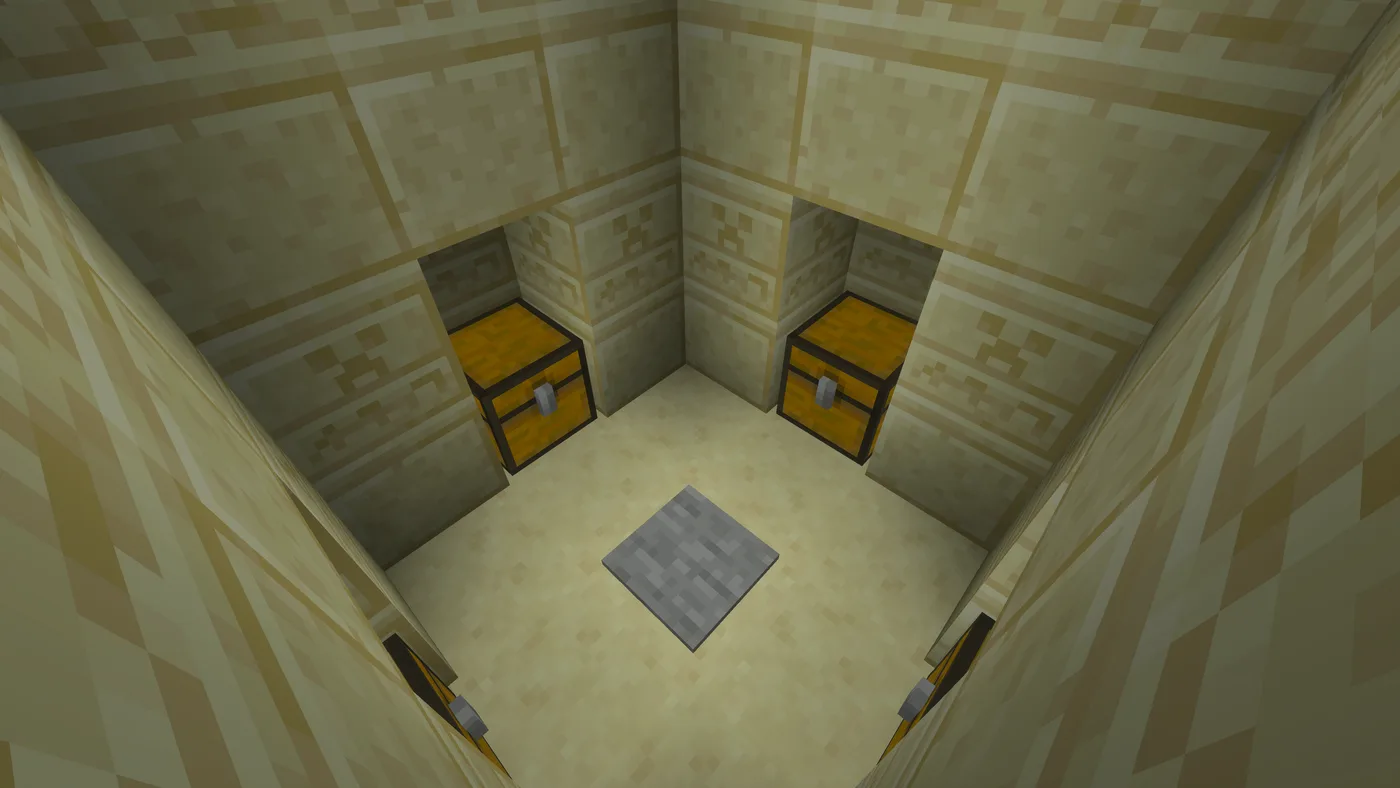
Here is the layout, per the Minecraft Wiki. The ground floor is 21 by 21 blocks with a terracotta pattern in the middle and a single blue terracotta block at its centre. Under that blue block is a shaft down to the treasure room. At the bottom, directly under the blue terracotta, is a stone pressure plate, and under the floor around it is a 3 by 3 grid of TNT. Four chests sit in alcoves, one on each side.
If anything steps on that plate, all nine TNT go off. Per the wiki's looting tutorial, the blast is enough to kill most players; it also destroys the four chests and their loot, and can destroy your own dropped items too. It also means a mob can do it for you: the treasure room has no light, mobs can spawn in it, and the wiki notes they sometimes trigger the trap before a player gets there. If you dig down and find a crater, that is what happened.
The safe approach:
- Do not break the blue terracotta and drop straight down. You land on the plate.
- Dig down beside the centre instead, through any block next to the blue one (straight or diagonal), and come down a wall with a staircase or a water bucket.
- Your first move at the bottom is to break the pressure plate, or the sandstone under it. Now the trap is dead.
- Loot the four chests, then dig up the nine TNT. That is free TNT; the TNT guide covers what to do with it.
A torch at the bottom stops mobs spawning while you work. Removing the blue terracotta in daylight also lets sunlight into the shaft.
Desert temple loot table
Each of the four chests rolls three pools: 2 to 4 rolls from the main pool, 4 rolls of filler, and one roll for the trim. The tables match on Java and Bedrock. "Chance per chest" is the odds of at least one of that item in a single chest; "per temple" is across all four.
| Item | Stack | Chance per chest | Chance per temple (4 chests) |
|---|---|---|---|
| Bone | 4-6 (main), 1-8 (filler) | 70.1% | 99% |
| Rotten flesh | 3-7 (main), 1-8 (filler) | 70.1% | 99% |
| Gunpowder | 1-8 | 59.0% | 97% |
| Sand | 1-8 | 59.0% | 97% |
| String | 1-8 | 59.0% | 97% |
| Spider eye | 1-3 | 27.1% | 72% |
| Enchanted book | 1 | 22.2% | 63% |
| Golden apple | 1 | 22.2% | 63% |
| Leather | 1-5 | 22.2% | 63% |
| Gold ingot | 2-7 | 17.0% | 53% |
| Iron ingot | 1-5 | 17.0% | 53% |
| Emerald | 1-3 | 17.0% | 53% |
| Copper horse armor | 1 | 17.0% | 53% |
| Iron horse armor | 1 | 17.0% | 53% |
| Dune armor trim template | 2 | 14.3% | 46% |
| Golden horse armor | 1 | 11.6% | 39% |
| Diamond | 1-3 | 5.9% | 22% |
| Diamond horse armor | 1 | 5.9% | 22% |
| Enchanted golden apple | 1 | 2.4% | 9% |
What stands out:
- The enchanted book is a wild card. Per the wiki, the desert temple's book picks any enchantment at any level with equal odds, treasure enchantments like Mending included (Soul Speed, Swift Sneak and Wind Burst excluded). With four chests, you get at least one book in about 63% of temples.
- An enchanted golden apple is about a 9% shot per temple. The jungle temple never has one.
- The Dune trim comes as a pair. When the 14.3% roll hits, the chest holds two templates, which saves duplicating one. Odds for every other trim are in the smithing templates guide.
- There are no saddles. Since Java 1.21.6 and Bedrock 1.21.90, the old saddle slot gives 1 to 5 leather instead; the saddle guide has the full story and the recipe. The horse armor is still here, in four tiers, and the horses and mounts guide covers what each one is worth.
One caveat: on Java, the Villager Trade Rebalance experiment swaps in a different version of this table that adds Unbreaking books. The numbers above are the default game.
The buried room at the back
The desert temple has a second, quieter prize. Behind the main floor, on the left or right side, is a 5 by 5 room buried in sand, joined to the main floor by collapsed stairs. Per the wiki, 6 to 8 of those sand blocks are suspicious sand, which you brush rather than mine.
Each suspicious sand block in a desert temple rolls one of eight items at 12.5% each: diamond, emerald, TNT, gunpowder, and the Archer, Miner, Prize and Skull pottery sherds. With 6 to 8 blocks at 1 in 8 each, that room averages close to one diamond on its own, which is more than the four chests average combined (about 0.49 diamonds).
Dig the plain sand out slowly. Per the wiki, suspicious sand drops nothing if you break it, and it is affected by gravity and breaks if it falls, so mining under it is a good way to lose it. The archaeology guide covers brushing and what to do with the sherds.
Jungle temple: the arrow traps
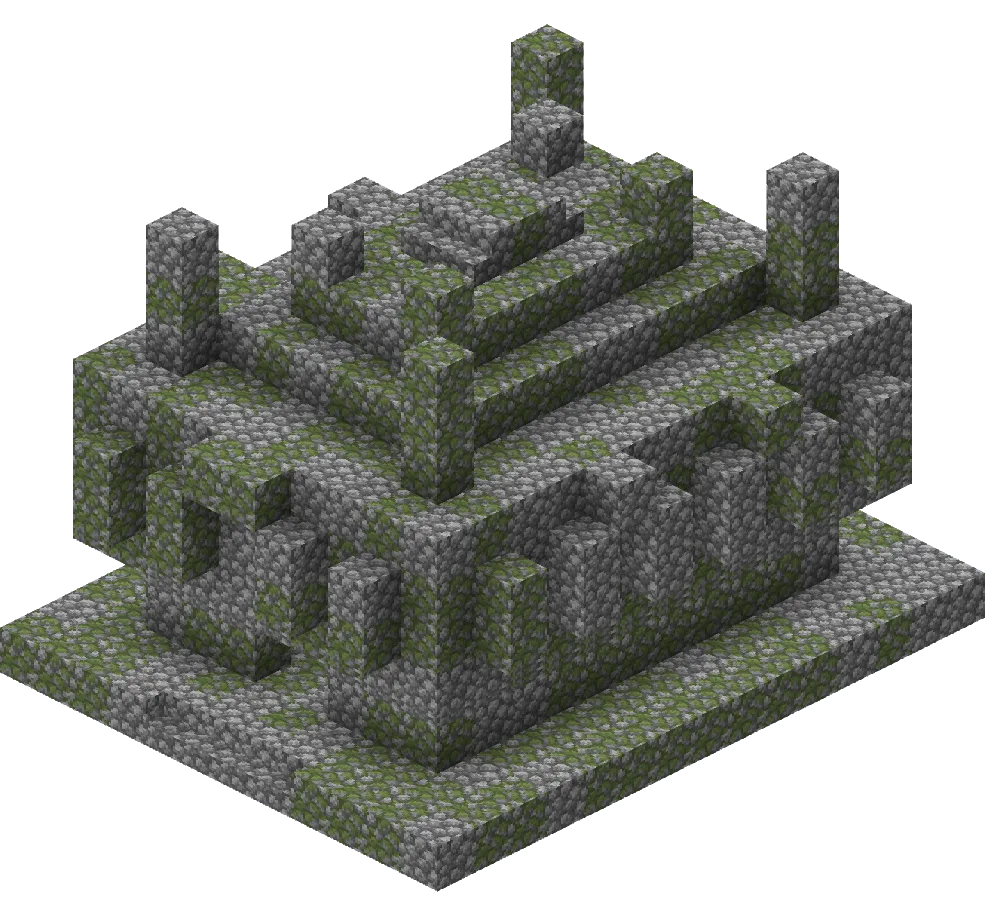
A jungle temple has three floors, and everything worth taking is on the bottom one. The wiki's looting tutorial suggests coming in on the second or third floor and working down, so the first thing you meet is not an arrow, and lighting the place up as you go.
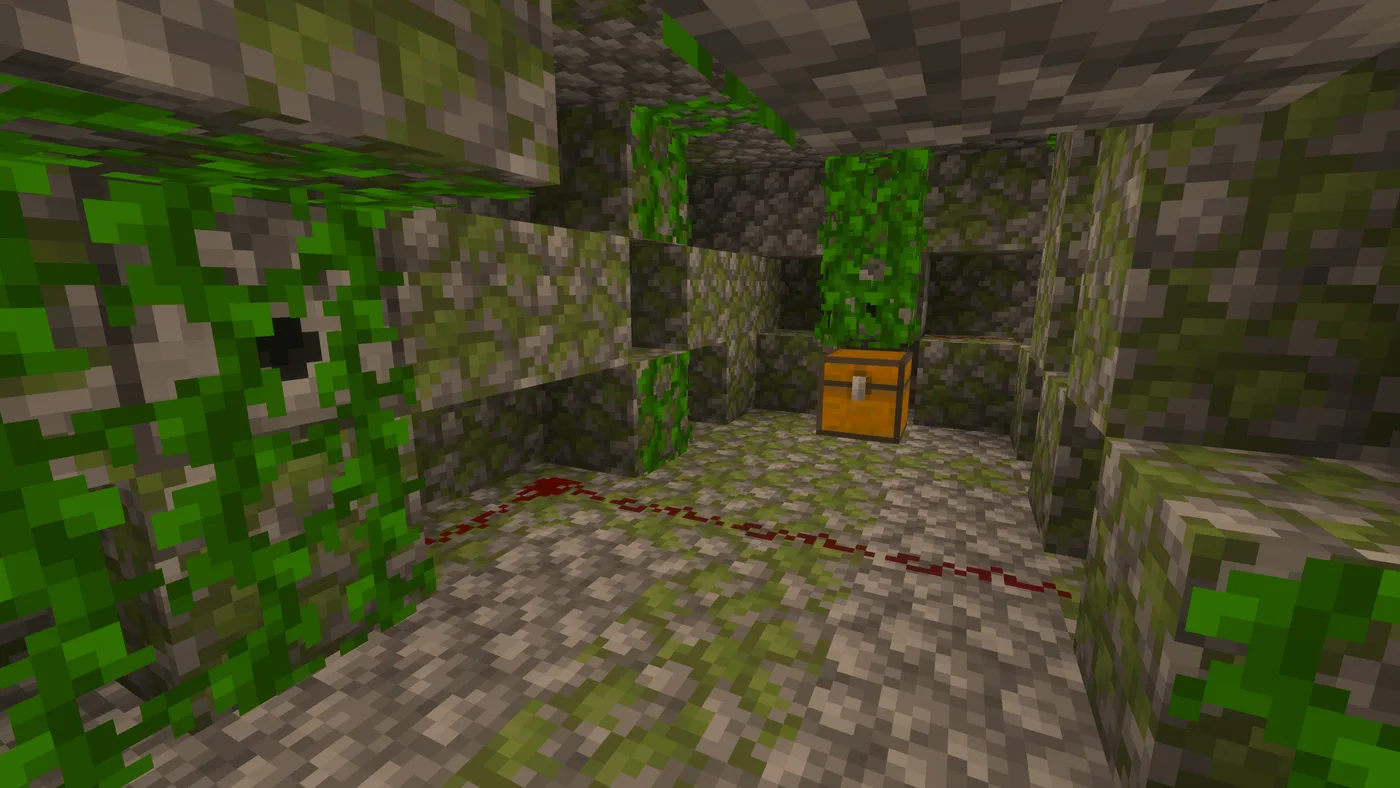
On the bottom floor, a hallway runs to the first chest. Per the Minecraft Wiki, it has two tripwires: one in the middle of the hallway, and one around the corner in front of the chest. Each is wired to a dispenser hidden behind vines. Walking through a tripwire fires the dispenser, and so does breaking the string with anything other than shears.
So:
- Bring shears and cut both strings, and the trap is disarmed with no shots fired.
- No shears? Step over the string carefully; pointing at it highlights it, which makes it easier to spot. The wiki's looting tutorial adds that hugging the right-hand wall lets the arrow fly past you if you do set one off.
- Take the dispensers. On Java each one holds 1 or 2 stacks of 2 to 7 arrows, and the redstone dust, repeaters and sticky piston in the walls are early redstone if you want them.
Jungle temple: the lever puzzle
Three levers sit on the wall near the staircase. Getting the sequence right makes a hidden sticky piston pull a block aside and reveal the second chest. The wiki gives this order, which works in every jungle temple because the layout is only ever mirrored, never changed:
- Flip the lever furthest from the staircase.
- Flip the lever closest to the staircase.
- Flip the closest lever back.
- Flip the furthest lever back.
Or skip it. The wiki's looting tutorial lists breaking through the wall with a pickaxe as another way to the chest. The puzzle is a courtesy, not a lock.
One quirk to watch for: the wiki notes leaves and other outside blocks can generate inside a jungle temple, sometimes blocking a chest, a dispenser or the redstone. If a lever does nothing, check for that first.
Jungle temple loot table
Each of the two chests rolls 2 to 6 times from the main pool and once for the trim. These are Java's numbers; Mojang's Bedrock table uses the same items at the same odds, except the enchanted book, which is a touch more common there (about 5.3% per chest against 4.4%).
| Item | Stack | Chance per chest | Chance per temple (2 chests) |
|---|---|---|---|
| Bone | 4-6 | 61.5% | 85% |
| Rotten flesh | 3-7 | 52.9% | 78% |
| Gold ingot | 2-7 | 50.6% | 76% |
| Bamboo | 1-3 | 50.6% | 76% |
| Iron ingot | 1-5 | 37.0% | 60% |
| Wild armor trim template | 2 | 33.3% | 56% |
| Diamond | 1-3 | 12.7% | 24% |
| Leather | 1-5 | 12.7% | 24% |
| Emerald | 1-3 | 8.6% | 17% |
| Copper, iron, gold or diamond horse armor | 1 | 4.4% each | 9% each |
| Enchanted book | 1 | 4.4% | 9% |
The jungle temple's book works differently from the desert one. Per the wiki, it is enchanted as if at a level 30 enchanting table that can also roll treasure enchantments (again minus Soul Speed, Swift Sneak and Wind Burst), rather than picking any enchantment at any level. At 4.4% per chest you will rarely see one.
Which temple is worth the trip
The headline numbers, averaged from the tables above:
| Per structure | Desert temple | Jungle temple |
|---|---|---|
| Diamonds from chests | about 0.49 | about 0.54 |
| Diamonds from brushing | about 0.9 (6 to 8 suspicious sand) | none |
| Gold ingots | about 3.3 | about 6.1 |
| Emeralds from chests | about 1.5 | about 0.4 |
| Chance of an enchanted book | 63% | 9% |
| Chance of its armor trim | 46% (Dune) | 56% (Wild) |
| Enchanted golden apple | 9% | never |
My take: the desert temple is the better early-game stop. Four chests beat two, the enchanted book shows up in most temples, the brushing room adds roughly another diamond, and nine TNT come free once you have disarmed it. The jungle temple's case is the Wild trim, slightly better per-temple odds than Dune, plus more gold. Bring a brush to the desert, bring shears to the jungle, and loot both if they are on your way, but if you are choosing where to go on day one, go to the sand.
Neither replaces mining for diamonds. Half a diamond per jungle temple is a bonus, not a plan; the diamond guide covers the Y-levels that do the real work.
Quick Action Checklist
- Find one in a desert, jungle or bamboo jungle, or take the desert or jungle pyramid map from an abandoned camp's secret chest (1 in 7 each).
- Desert: never drop through the blue terracotta. Dig down beside it, break the pressure plate first, then loot the four chests and dig up the 9 TNT.
- Desert, part two: find the buried 5 by 5 room at the back and brush the 6 to 8 suspicious sand for sherds, emeralds and about one diamond on average.
- Jungle: cut both tripwires with shears, take the arrows, then solve the levers (far, near, near back, far back) or mine through the wall.
- Expect a Dune trim in about 46% of desert temples and a Wild trim in about 56% of jungle temples, two templates each time.
- Do not expect saddles. They became leather in Java 1.21.6 and Bedrock 1.21.90.
Frequently Asked Questions
How do you avoid the TNT trap in a Minecraft desert temple?
What is the solution to the jungle temple lever puzzle in Minecraft?
What loot is in a Minecraft desert temple?
What loot is in a Minecraft jungle temple?
How do you find a desert or jungle temple in Minecraft?
Do desert and jungle temples still have saddles in Minecraft?
Keep Reading
- Minecraft Wiki — Desert Pyramid: layout, 9-TNT pressure-plate trap, 4 chests, buried room with 6 to 8 suspicious sand
- Minecraft Wiki — Jungle Pyramid: three floors, tripwire arrow traps, lever puzzle solution, loot
- Minecraft Wiki — Tutorial: Looting temples (safe entry routes for both temples)
- Minecraft Wiki — Explorer Map: desert and jungle pyramid maps from abandoned camp secret chests
- Java Edition 26.3 vanilla data (misode/mcmeta): desert pyramid chest loot table
- Java Edition 26.3 vanilla data (misode/mcmeta): jungle temple chest loot table
- Java Edition 26.3 vanilla data (misode/mcmeta): jungle temple dispenser, 1 to 2 stacks of 2 to 7 arrows
- Java Edition 26.3 vanilla data (misode/mcmeta): desert pyramid suspicious sand, 8 items at 1 in 8
- Java Edition 26.3 vanilla data (misode/mcmeta): abandoned camp secret chest, 7 explorer maps at 1 in 7
- Java Edition 26.3 vanilla data (misode/mcmeta): jungle pyramid map trade, 8 emeralds and a compass, desert, savanna and swamp cartographers
- Java Edition 26.3 vanilla data (misode/mcmeta): desert pyramid placement, spacing 32, separation 8
- Java Edition 26.3 vanilla data (misode/mcmeta): jungle pyramid placement, spacing 32, separation 8
- Mojang bedrock-samples: Bedrock desert pyramid chest loot table
- Mojang bedrock-samples: Bedrock jungle temple chest loot table
- Mojang bedrock-samples: Bedrock experimental cartographer trades (jungle temple map)
Related Guides

Minecraft Realms Pro: Price, 50 Players, and Is It Worth It?
Mojang launched Realms Pro on November 9, 2026: a Bedrock-only Realms tier at $29.99 a month (US) that raises the player cap from 10 to 50, puts your world on a non-shared 4-core, 16 GB server and adds sliders, a performance dashboard and live Minecraft Editor access. Here is what it adds over Realms Core and Plus, what it costs per player slot, and who should skip it.
Minecraft Amethyst Geodes: Find, Farm and Use Amethyst
Amethyst geodes are the only renewable source of amethyst shards, and the block that makes them renewable cannot be moved. Here is where geodes generate, how long a cluster takes to grow, what a pickaxe and Fortune do to the drop, and what the shards are actually for.

Minecraft Spawn Point: Beds, Respawn Anchors and World Spawn
You died, clicked Respawn, and landed hundreds of blocks from your base. Here is how a bed, a respawn anchor and the spawnpoint command each set your respawn point, what quietly deletes it, and what to do in the five minutes your items last.

Minecraft Goat Horns: All 8 Sounds and How to Get Them
Eight goat horns exist, and four of them only come from screaming goats. Here is exactly which blocks knock a horn loose, how to breed screaming goats, the pillager outpost chest that can hold a horn, and why blowing one in the Deep Dark is a bad idea.

Minecraft Survival Guide for Beginners: Your First Days
You have about ten minutes of daylight before the sun sets and the world tries to kill you. Here is exactly what to do with them — punch a tree, build a tool chain, and get a roof over your head before the zombies arrive.

Best Minecraft Enchantments, Ranked — The Ones Worth Your XP
Mending is the enchantment that ends the grind — gear that repairs itself forever. Everything else is a fight over your XP and anvil uses. Here is what actually earns a slot, ranked, with the real max levels.