The Witcher 3 New Game Plus Guide: What Carries Over and What You Lose
New Game Plus keeps your gold, your abilities and your armour, then quietly deletes every crafting diagram you own. Here is the full ledger, the scaling maths, and the four things to do before you click start.
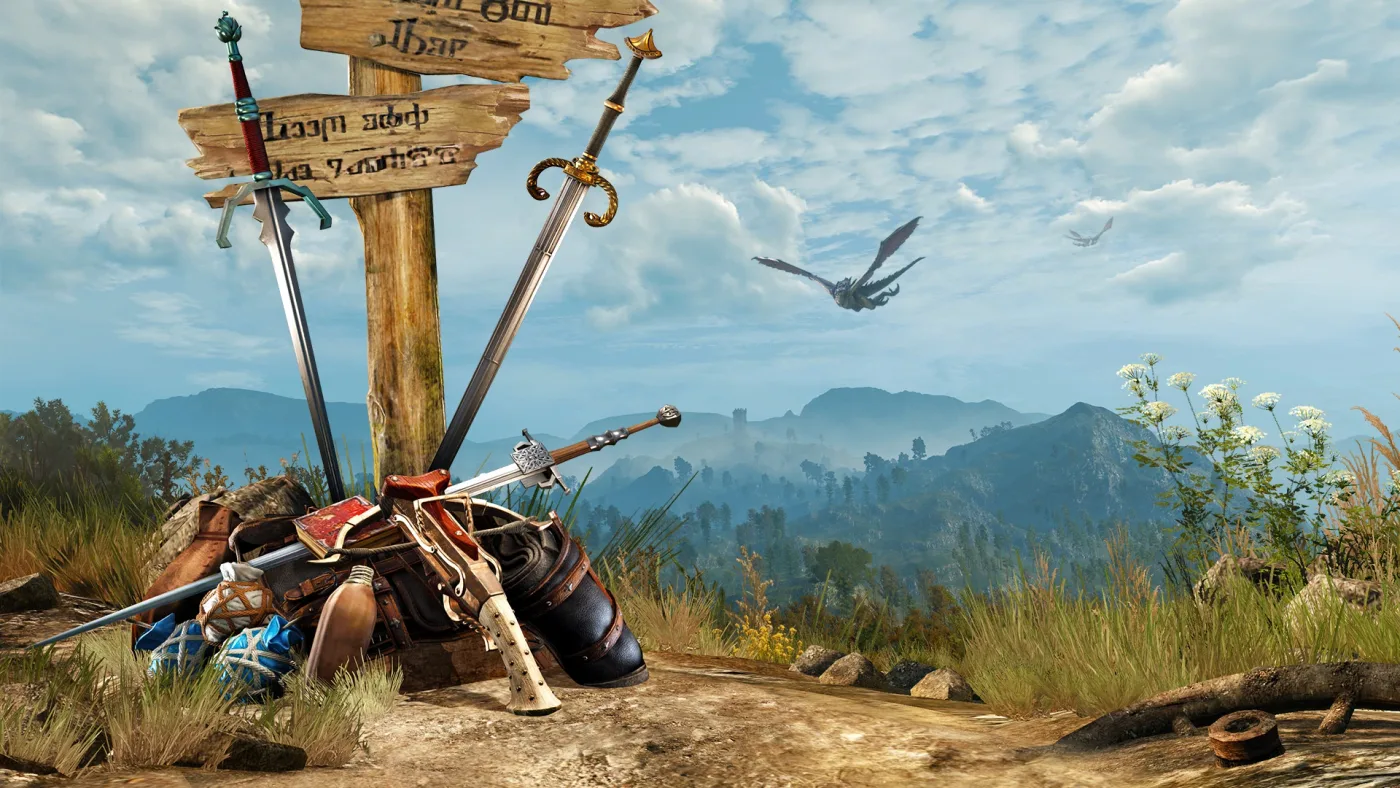
Finish The Witcher 3 at level 53, start New Game +, and the weakest drowner in White Orchard climbs out of the river at level 50. That is the worked example sitting on the wiki's own New Game + page, and it tells you the mode's entire design in one line: nothing gets easier, the floor just moves up to meet you.
What it does not tell you is that the same button deletes every crafting diagram you own. You keep the Grandmaster Griffin armour on your back and lose the piece of paper that lets you make another one. That asymmetry — keep the object, lose the recipe — is why a New Game + run is worth planning before it is started rather than after.
What New Game Plus actually is
New Game + shipped on 17 August 2015 as a free DLC, one of the 16 free packs CD Projekt Red released for the game. It is not a difficulty setting and not a separate campaign. It restarts the story from the prologue with your finished character imported into it.
Two rules gate access. You have to have completed the main storyline, and you start the mode from the main menu rather than from inside a save. There is a wrinkle for anyone coming back to an old file: per the game's own journal entry, if you finished the story before the DLC was installed, that save is not eligible until you load it and re-save it once.
If you own Blood and Wine, the expansion raises the New Game + maximum level to 100. That ceiling applies to item level requirements — the wiki notes that damage and armour values themselves are not capped and keep climbing past 100 toward their theoretical limits. Blood and Wine's own feature list also ties its twelve mutations to the mode directly, describing their true potential as something unlocked by playing NG+.
Everything you keep and everything the game takes
Here is the full ledger.
| You keep | You lose |
|---|---|
| All your gold | All quest items, bar a few minor ones |
| Every ability point and skill you unlocked | Every book, including its journal entry |
| Most gear, including anything in your stash | Every Gwent card except the basic starting Northern Realms deck |
| Some alchemy formulas for potions, bombs and ingredients | Every crafting diagram, including all witcher school gear diagrams |
| Ability points already earned from Places of Power | A number of alchemy formulas |
| — | All trophies, both on Roach and displayed at Corvo Bianco |
| — | All map exploration, points of interest and fast-travel discovery |
| — | Every bestiary entry and character entry |
Three of those need spelling out because they change how you play.
The diagram wipe is the big one. You keep the armour, you lose the means to upgrade or replace it. Until you re-run the Scavenger Hunts, whatever you walked in wearing is what you have.
Gwent resets to a starter deck. Every card you bought, won and hunted across three regions is gone except the base Northern Realms cards. Our Witcher 3 Gwent guide covers which cards go permanently unavailable once quests move on — worth more on a second run, since you already know those quests are coming.
Losing formulas costs you toxicity. Acquired Tolerance raises your maximum toxicity pool by 0.5 for every alchemy formula you know since Patch 4.0, up to 84 points across the game's 168 recipes. Formulas you lose are formulas that stop feeding that pool, which means the Euphoria setup described in our Witcher 3 build guide starts a New Game + run smaller than it finished the last one and has to be rebuilt by re-learning recipes.
One storage trap worth knowing: gear in your stash transfers, but gear you put on display at Corvo Bianco — on the weapon racks and armour stands rather than in the stash — does not. Move anything you actually want into the stash first.
One last quirk: retained items are not available during the tutorial sections, so do not panic when the prologue hands you a plain steel sword and an empty-looking inventory.
How the level scaling works
Quest suggestions and monster levels are pushed up by at least 25 levels. It is live scaling rather than a flat table, keyed to the level you were at on the save you started the mode from — which is why the level-53 example produces level-50 drowners rather than some fixed number.
The practical consequence is that a New Game + started from a low-level finish is a different mode from one started at 53. Finish the base game at 35 without the expansions and your floor sits far lower; finish everything including Blood and Wine and the monsters waiting for you are already well into the forties.
Places of Power are the one part of this that runs in your favour. The ability points you already earned from them carry over, and the Places of Power themselves reset, so you can activate all of them again for another full set of permanent skill points. Given that skill points otherwise arrive at one per level, the White Orchard sweep our Witcher 3 beginner guide recommends pays better on a second run than a first.
Legendary gear versus the grandmaster set you already own
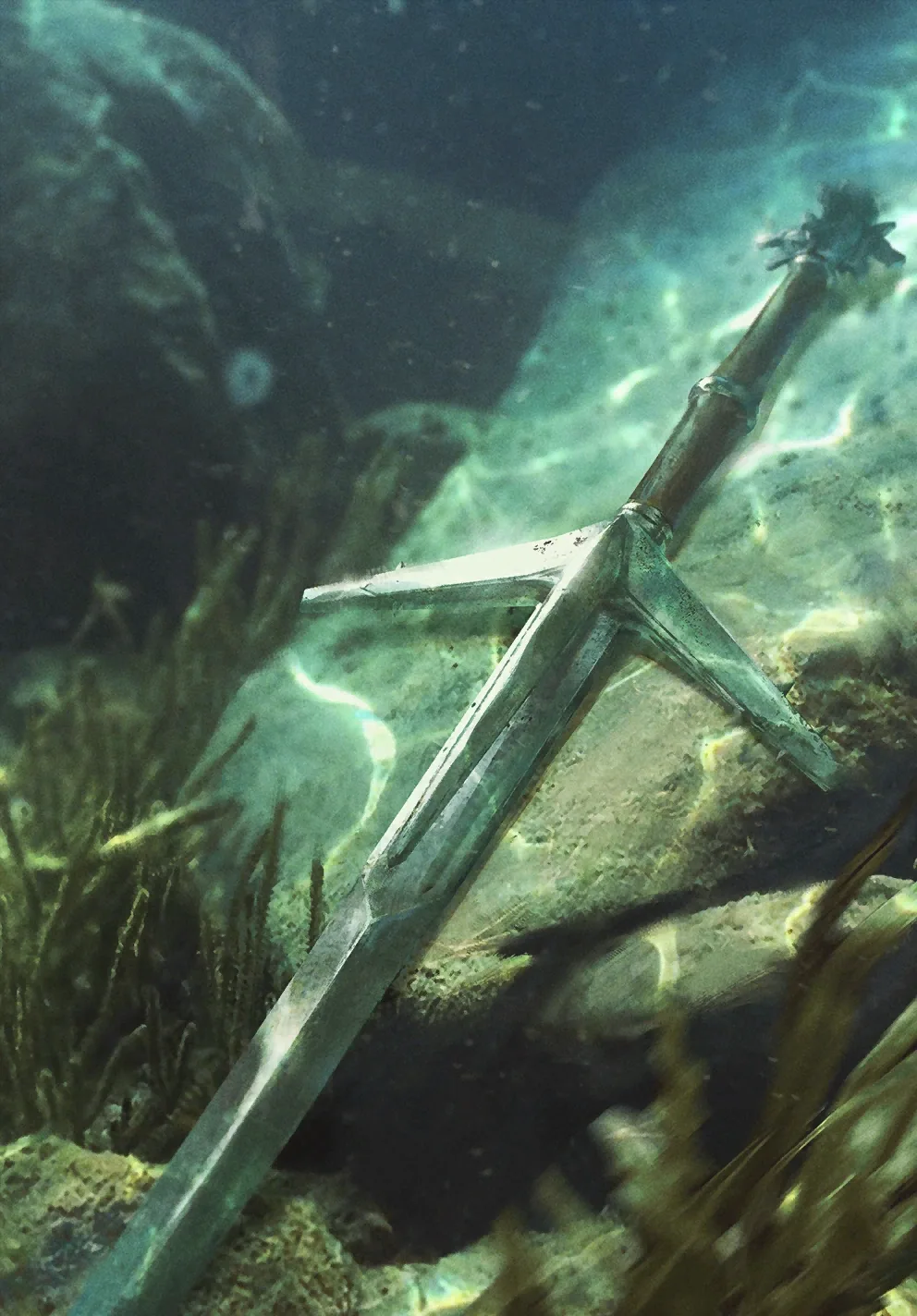
New Game + does not bolt a tier onto the top of the witcher gear ladder. It re-labels the whole ladder as Legendary: Feline armor becomes Legendary Feline armor, Griffin becomes Legendary Griffin, and the same renaming runs through enhanced, superior and mastercrafted, with grandmaster diagrams replaced by their grandmaster legendary versions. Witcher gear attributes normally do not scale with Geralt's level at all — Teigr is the lone exception — so this universal New Game + adjustment is the only thing that moves those numbers.
Take the Griffin chest piece through every tier and the shape of it is obvious:
| Tier | Level requirement | Armour | Rune slots | Sign intensity | Monster resistance |
|---|---|---|---|---|---|
| Griffin armor | 11 | 90 | 1 | +5% | +12% |
| Superior Griffin armor | 26 | 165 | 3 | +15% | +20% |
| Mastercrafted Griffin armor | 34 | 205 | 3 | +20% | +25% |
| Grandmaster Griffin armor | 40 | 240 | 3 | +22% (+24% in NG+) | +26% |
| Legendary Griffin armor | 11 + your starting level | 95 at level 12, +5 per level | 3 | +22% | +26% |
Two things fall out of that table. The first is that the legendary version of the entry tier already carries three rune slots against the original's one, and matches a regular-game grandmaster piece on both sign intensity and monster resistance. The second is that its armour value is a formula rather than a fixed number, so it overtakes grandmaster's flat 240 as soon as you are high enough to wear it.
So why does the wiki tell you your old grandmaster set stays relevant much longer than you think? Two reasons, and neither is the armour number.
The first is that grandmaster pieces get their own New Game + uplift on top of their normal values. Grandmaster Griffin armour goes from +22% to +24% Sign intensity. Grandmaster Feline armour goes from +22% to +24% Attack Power, +12% to +15% piercing resistance, and +36% to +47% resistance to elemental damage. Incoming damage is reduced more by resistances than by raw armour, so the piece you are already wearing is not the downgrade its lower armour number suggests.
The second is the diagram problem again. You cannot craft a single legendary piece until you have re-collected the diagrams, which means the entire early stretch of a New Game + run is spent in the grandmaster set you imported. Plan around wearing it for a long time. Our Witcher 3 witcher gear guide covers which set is worth committing to before you get there.
Upgrading witcher gear a tier carries your glyphs and runestones across, but the runeword enchantment is lost. That matters here more than usual, for reasons the next section makes painfully clear.
The swords that scale with you
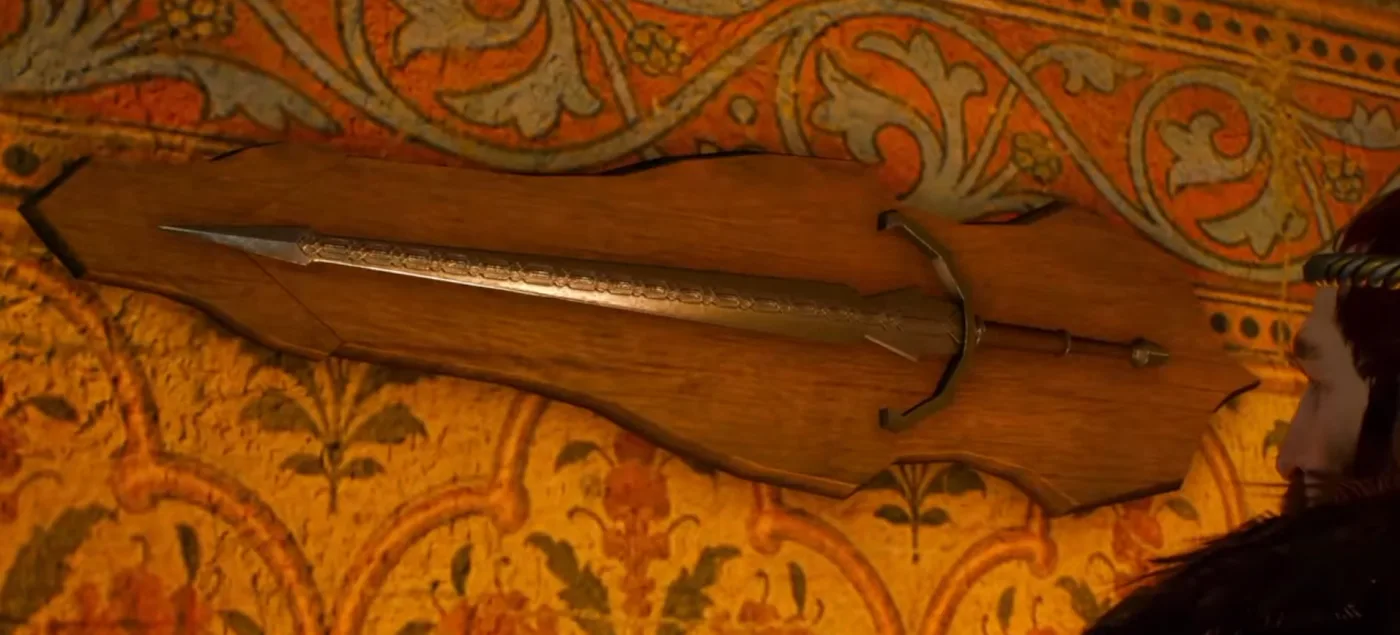
Before the next-gen update there was exactly one level-scaling item in The Witcher 3, and the wiki's New Game + page says so outright: Aerondight. It only exists if you own Blood and Wine, it comes from the secondary quest There Can Be Only One, and that quest only starts once you have completed a quest covering each of the five chivalric virtues at Lac Célavy.
Aerondight arrives at whatever level Geralt is when he receives it, with a floor of 35. At level 35 it deals 414-506 damage before upgrades and 423-517 fully upgraded, then adds 9-11 damage per level after that. Its charge mechanic is what keeps it alive across a whole run: each blow adds a charge worth 10% more sword damage, a fully charged sword always deals critical damage, and killing something while fully charged permanently adds 2 to the weapon's damage, up to a maximum that rises with your character level. It starts with no rune slots and can take up to three.
Patch 4.0 added two more, both steel, and both change how you handle the mode:
- Winter's Blade — given by Crach an Craite during Brothers In Arms: Skellige. +40 armour piercing, +55% critical hit damage, +10% chance to freeze. Three rune slots since 4.0, two before it.
- Blade from the Bits — the relic version from Of Swords and Dumplings, handed over by Éibhear Hattori. +50% critical hit damage. Three rune slots since 4.0, one before it.
Both carry a condition that is easy to miss: Geralt has to be carrying the sword, at minimum in his inventory, to receive the level-up damage increase. Stash it and it stops growing.
That change matters more than the stat lines suggest. On 1.32 your steel sword was disposable: the wiki's own advice for pre-next-gen runs is that you will need to upgrade to a higher-level sword at some point and compensate for the lost enchantment with Greater Runes from your stash. Since 4.0, either of those two blades rides the whole run instead.
Which brings up the timing problem. Visit the Runewright before you start. He is a Hearts of Stone character unlocked through Enchanting: Start-up Costs and Enchanting: Quality Has Its Price, and in New Game + he will be at minimum 30 levels above you, so he is unusable for a very long stretch. Any runeword or glyphword you want on your gear has to go on before you click start.
Potions and bombs get their own numbers
Several consumables carry a separate New Game + value baked into the item itself, and the gap is not small.
| Consumable | Regular game | New Game + |
|---|---|---|
| Swallow | 40 Vitality regeneration | 80 |
| Enhanced Swallow | 65 Vitality regeneration | 100 |
| Superior Swallow | 80 Vitality regeneration | 150 |
| Grapeshot | 250 physical, 250 silver, 5 fire | 450 physical, 450 silver, 10 fire |
| Superior Grapeshot | 450 physical, 450 silver, 10 fire | 900 physical, 900 silver, 20 fire |
Superior Swallow going from 80 to 150 regeneration, at an unchanged 20 toxicity and five charges, is the difference between a panic button and an actual sustain plan on a difficulty where meditation does not heal you. Superior Grapeshot at 900 physical and 900 silver is a bomb that deletes most things it lands on.
Note the Grapeshot rows carefully, because they moved with Patch 4.0: the regular-game numbers came down from 350 and 600 respectively, while the New Game + values are the post-4.0 figures. Anything you read from the 1.32 era has different maths behind it. The rest of the consumable picture is in our Witcher 3 alchemy guide.
The mutagen bug and what to do before you click start
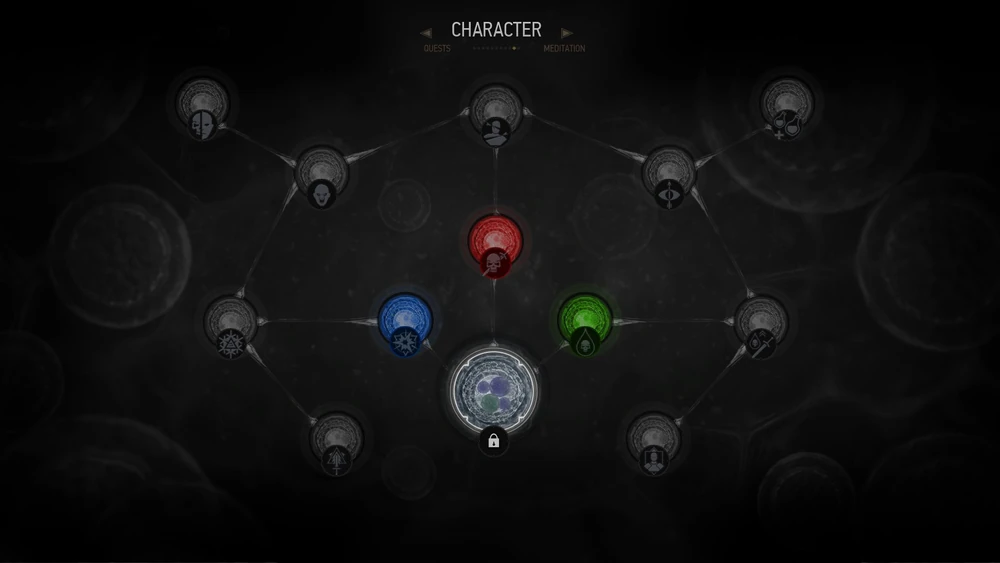
There is a long-standing unfixed bug in the transfer: any stack of mutagens in your inventory or your stash is likely to be reduced to a single copy. Slotted mutagens — the ones already sitting in your four character-panel sockets — are not affected.
Since greater mutagens are the bottleneck on the entire mutation tree, that is worth ten minutes of prevention. The wiki's recommended procedure:
- Make a distinct save you can come back to.
- Start the New Game +, then check your inventory as soon as you can. If nothing has vanished, you are fine and can carry on.
- If you were hit, reload the earlier save.
- Split every mutagen stack so copies sit in both your inventory and your stash, which leaves you holding two of each.
- Put greater red mutagens in your four sockets regardless of colour synergy. Slotted mutagens transfer correctly, and red is the hardest colour to farm.
While you are doing housekeeping, dismantle any monster mutagens you are not using. You cannot dismantle mutagens for a long stretch after starting a New Game +, so anything you leave whole is frozen for a while.
The ability-point maths is the other thing to settle in advance. Researching 4 mutations costs 9 or more ability points and grants 2 extra ability slots; 8 mutations costs 25 or more and grants 3 slots; all 12 costs 49 points. Stopping at 8 of 12 leaves a single slot locked but keeps up to 24 ability points in your pocket, which is the sensible split unless you are starting from a very high level. Our Blood and Wine guide covers the mutation tree itself.
One live bug to watch, recorded as of Patch 4.04: some crafted relic items have their level automatically bumped to your starting level plus the item's base craft level, which makes them unequippable. It is confirmed on crafted Nilfgaardian guardsman's gauntlets and Alder Folk boots; Sarrim and all witcher gear are unaffected. The full scope is not established, so do not build a plan around one specific crafted relic surviving the jump.
Quick Action Checklist
- Finish the main storyline first, and if you completed it before installing the DLC, load that save and re-save it or the menu option stays unavailable.
- Enchant everything you care about at the Runewright before starting. He will be at least 30 levels above you afterwards.
- Move anything displayed at Corvo Bianco into the stash. Display racks do not transfer, the stash does.
- Split your mutagen stacks across inventory and stash, and slot four greater red mutagens, to survive the stack-deletion bug.
- Dismantle unused monster mutagens now, because you cannot for a long time after starting.
- Expect to lose every crafting diagram, every book, every trophy and every Gwent card except the basic Northern Realms deck.
- Sweep the Places of Power again. They reset while the points you already earned carry over, so the skill points compound run over run.
- Keep wearing your grandmaster set. It gets its own New Game + resistance uplift and you cannot craft legendary gear until you re-find the diagrams.
- Carry Winter's Blade or Blade from the Bits in your inventory since Patch 4.0 and your steel sword scales with you for the whole run.
- Re-learn alchemy formulas early. Each one is worth 0.5 maximum toxicity through Acquired Tolerance, and that pool is what Euphoria converts into damage.
Frequently Asked Questions
What carries over to New Game Plus in The Witcher 3?
What do you lose in Witcher 3 New Game Plus?
How does level scaling work in Witcher 3 New Game Plus?
Should I keep my grandmaster gear in New Game Plus?
Which Witcher 3 swords scale with your level?
What is the Witcher 3 New Game Plus mutagen bug?
Do Places of Power reset in New Game Plus?
Keep Reading
- Witcher Wiki — New Game + carry-over list, scaling rules and the mutagen bug
- Witcher Wiki — Legendary Griffin armor level formula and stats
- Witcher Wiki — Grandmaster Griffin armor and its New Game + values
- Witcher Wiki — Aerondight damage scaling and charge mechanic
- Witcher Wiki — Superior Swallow regeneration values in New Game +
- Witcher Wiki — Places of Power reset while their ability points carry over
Related Guides
The Witcher 3 Monster Weaknesses: Oil, Sign and Bomb
The bestiary sorts every monster in the game into eleven classes, and each class has an oil, a sign and a bomb that gut it. Learn the eleven and you stop losing fights you should win.
The Witcher 3 Remastered Skill Tree: What Unlocks What
CD PROJEKT RED described the Remastered skill overhaul in three bullet points and has published no skill list. The Witcher wiki has since filled in all four trees. Here is how unlocking works now, what every skill needs and does at rank 1 and rank 3, and which old skills are gone.

The Witcher 3 Remastered PC Requirements: All Six Tiers
CD PROJEKT RED's Remastered patch notes carry a six-column PC spec table, from a GTX 1660 at 1080p on Low up to an RTX 5080 for path tracing at 4K. Here is every tier, which upscaler your graphics card actually gets, why CDPR's own storage figures disagree, and the PC settings its patches and support pages have touched since launch.
The Witcher 3 Fist Fights: Every Circuit and Brawl Master
Skellige's fistfighting champion is a bear, the Champion of Champions is a rock troll, and before the troll will fight you at all you have to lose a fight to a ghost on purpose. Here is every fistfighting circuit opponent across Velen, Novigrad, Skellige and Toussaint, what each one pays, and the single loss that makes Brawl Master unobtainable.
The Witcher 3 Beginner's Guide: Your First 20 Hours
Most people who bounce off The Witcher 3 do it in White Orchard, and it is almost always the same three reasons: they never learned Quen, they never applied an oil, and they treated the skill tree like a shopping list. Here is the fix.
The Witcher 3 Remastered Mods: How to Install, What Broke
Remastered put a Mods button on The Witcher 3's main menu, and CD PROJEKT RED says the same update stopped mods carrying script, XML or w3strings files from working. Here is how the mod.io menu works on PC and console, what broke and who fixes it, which Steam branch actually gets your old build back, and what a mod does to your trophies and your cross-save.