Breath of the Wild Rupee Farming: How to Make Money Fast
Four Lynel Guts and an Energetic Rhino Beetle sell for 830 rupees raw and 2,330 as an elixir, by the selling formula Zelda Wiki publishes for Breath of the Wild. Here is what sells for the most, what the cooking pot does to a price, what Ramella pays for gems, where rupees still drop as rupees, and which side quests pay in cash or Diamonds.
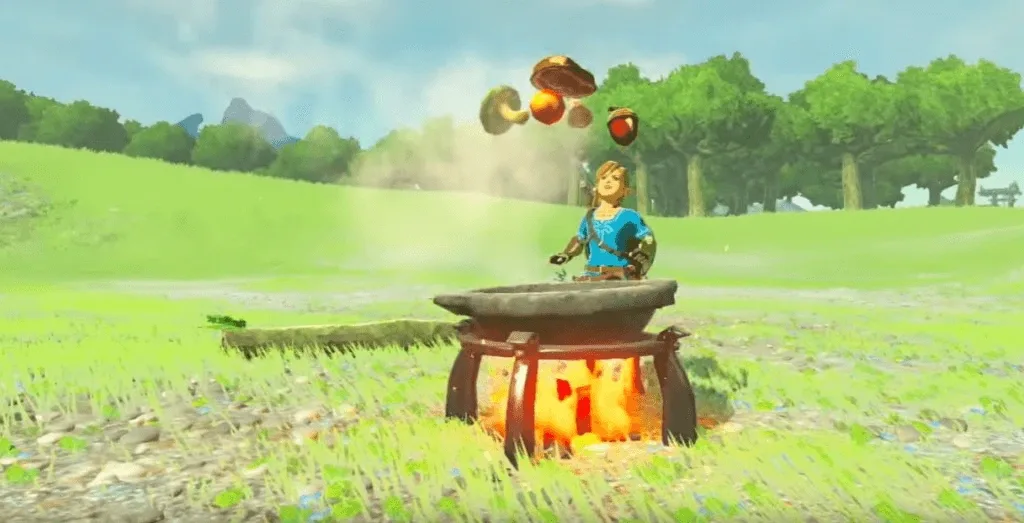
A Lynel Guts sells for 200 rupees. Put four of them in a cooking pot with one Energetic Rhino Beetle and the elixir that comes out sells for 2,330, against 830 for the same five items sold raw. That is not a glitch and it is not a special shop. It is the selling formula Zelda Wiki publishes for Breath of the Wild's meals and elixirs, and nothing else in this guide moves a sale price as far.
Breath of the Wild is stingy with cash, so almost every rupee you hold was sold for, looted, or paid out by a quest. This guide is the money side of that: what sells for the most, what the pot does to a price, the gem buyer who pays over shop rate, the handful of things that still drop rupees directly, and which side quests actually pay.
Rupees barely drop in this game
Zelda Wiki's Rupee entry puts the economy in one line: in Breath of the Wild, rupees do not appear when cutting grass or defeating most monsters. You get them by selling items, by finding them under rocks, in barrels, crates and treasure chests, and from the three creatures the wiki names as droppers: Yiga Clan members, Treasure Octoroks, and Blupees.
| Rupee | Value |
|---|---|
| Green | 1 |
| Blue | 5 |
| Red | 20 |
| Purple | 50 |
| Silver | 100 |
| Gold | 300 |
Two ceilings are worth knowing before you start. The wallet holds 999,999 from the start, with no wallet upgrades to buy, and Zelda Wiki notes that you can keep selling at the cap but the counter will not move. Zelda Wiki names the fourth Great Fairy Fountain, at 10,000, as the game's most expensive purchase: the fountains cost 100, 500, 1,000 and 10,000 in the order you open them, whichever fairy she is, so all four come to 11,600 before a single armor upgrade. What the fairies do once they are open is in the armor guide. A replacement Hylian Shield from Granté in Tarrey Town is another 3,000.
What sells for the most
These are the sell values from Zelda Wiki's table of Breath of the Wild materials: everything worth 50 rupees or more, plus the column that decides what you do with it.
| Item | Sells for | Cook it before selling? |
|---|---|---|
| Diamond | 500 | No. Gems make Rock-Hard Food |
| Star Fragment | 300 | No. Counts as 1 rupee in a dish |
| Shard of Dinraal's, Naydra's or Farosh's Horn | 300 | No. Counts as 1 |
| Sapphire | 260 | No |
| Shard of a dragon's Fang | 250 | No. Counts as 1 |
| Ruby | 210 | No |
| Lynel Guts | 200 | Yes, into an elixir |
| Giant Ancient Core | 200 | Yes, if you have one to spare |
| Topaz | 180 | No |
| Dinraal's, Naydra's or Farosh's Claw | 180 | No. Counts as 1 |
| Dinraal's, Naydra's or Farosh's Scale | 150 | No. Counts as 1 |
| Molduga Guts | 110 | Yes |
| Hinox Guts | 80 | Yes |
| Ancient Core | 80 | Yes |
| Luminous Stone | 70 | No |
| Opal | 60 | No |
| Lynel Hoof | 50 | Yes |
Just under the line sit Lynel Horn and Ancient Shaft (40 each), Hinox Tooth, the three elemental Lizalfos Tails, Raw Gourmet Meat and Raw Whole Bird (35 each). Amber sells for 30 and Flint for 5.
The "No" rows are two different rules. Zelda Wiki's cooking page lists the materials that turn any dish into Rock-Hard Food — Amber, Diamond, Flint, Luminous Stone, Opal, Ruby, Sapphire, Topaz and Wood — and Rock-Hard Food sells for 2 rupees. Dragon parts and Star Fragments do cook, but the same page says they count as a 1-rupee ingredient when it prices the result. A 300-rupee horn shard in a meal is 299 rupees of resale thrown away before the multiplier even runs. Cook with horn shards for the long buff the dragon farming guide describes, not for money.
The Giant Ancient Core row comes with a warning rather than a rule: it is the rare part in the Guardian guide's price list for Cherry's Ancient gear, so do not cook one for 200 rupees and then go looking for another.
The cooking pot nearly triples a sale
Zelda Wiki's Cooking in Breath of the Wild page gives the sell price of a meal or elixir as a four-step sum:
- Add up the sell prices of every ingredient.
- Multiply by a modifier set by how many ingredients went in.
- Round down to a whole number.
- Round up to the next ten.
| Ingredients in the pot | Multiplier |
|---|---|
| 1 | 1.5x |
| 2 | 1.8x |
| 3 | 2.1x |
| 4 | 2.4x |
| 5 | 2.8x |
Five ingredients is 2.8x, so a full pot of anything valuable is worth close to three times the raw stack. Here is what that does to the parts people farm. The arithmetic is mine, on the wiki's formula and its material prices:
| Pot | Raw sale value | Cooked sale value |
|---|---|---|
| 4 Lynel Guts + 1 Energetic Rhino Beetle | 830 | 2,330 |
| 4 Molduga Guts + 1 Energetic Rhino Beetle | 470 | 1,320 |
| 4 Hinox Guts + 1 Energetic Rhino Beetle | 350 | 980 |
| 4 Ancient Cores + 1 Energetic Rhino Beetle | 350 | 980 |
| 1 Lynel Guts + 1 Energetic Rhino Beetle | 230 | 420 |
| 5 Raw Gourmet Meat | 175 | 490 |
| 5 Big Hearty Truffles | 75 | 210 |
Read the first and fifth rows together. Four single-gut elixirs would sell for 1,680 and burn four beetles; one four-gut elixir sells for 2,330 and burns one. Batching is where the money is.
Four rules for a sale pot
- An elixir needs at least one critter and at least one monster part. Zelda Wiki counts Ancient parts as monster parts for this: Screws and Springs are low-grade, Gears and Shafts mid-grade, and the Ancient Core and Giant Ancient Core high-grade, the same tier as every monster's Guts.
- The critter gets multiplied too. The Energetic Rhino Beetle is the priciest critter on the wiki's material table at 30 rupees; the butterflies, darners, Hot-Footed Frog and Hightail Lizard are 2 each. Swap a 2-rupee Hot-Footed Frog into the Lynel pot and it sells for 2,250 instead of 2,330.
- Keep Fairies out of the pot. The wiki says a Fairy turns a recipe that would have been an elixir into a Fairy Tonic, and Fairy Tonics, Dubious Food and Rock-Hard Food all sell for 2 rupees whatever went into them.
- Cook Bokoblin Guts for yourself and Lynel Guts for the shop. The wiki is explicit that monster parts of the same grade differ only in sell price: Lynel Guts add exactly the duration and critical bonus chance a Bokoblin's do. A 20-rupee gut does the job in your own elixir.
One trap goes the other way. Buying ingredients to cook and resell loses money: Zelda Wiki's Material page puts most shops' asking price at four times an item's sell value (Beedle charges five), and the biggest multiplier the pot applies is 2.8. The formula rewards what you farmed, not what you bought. The cooking guide has the rest of the recipe logic if you are cooking to eat.
Ramella pays about 10 percent more, ten at a time

A gem in the pot only makes Rock-Hard Food, which makes Ramella the markup that matters for them. She is a Gerudo gem wholesaler who wanders Goron City by day and sleeps at the Rollin' Inn at night. Once Divine Beast Vah Rudania is calmed, she starts restocking and asks for ten Amber, which opens the side quest "The Jewel Trade."
Her offers, in her own words as Zelda Wiki and the Zelda Fandom wiki quote them, are always for ten:
| Ten of | Shop pays | Ramella pays | Extra |
|---|---|---|---|
| Amber (The Jewel Trade, once) | 300 | 500 | 200 |
| Topaz | 1,800 | 2,000 | 200 |
| Ruby | 2,100 | 2,300 | 200 |
| Sapphire | 2,600 | 2,900 | 300 |
| Diamond | 5,000 | 5,500 | 500 |
The rules that come with her, per Zelda Wiki's Ramella entry:
- After the Amber quest she buys Topaz, Ruby, Sapphire and Diamond only. The Amber premium is the one-time quest payout.
- She picks the jewel, at random, and it is always ten. Sell her ten and she asks for ten more of the same, for as long as you have them.
- Do not try her with fewer than ten. She accuses you of pulling a fast one, and she stays locked on that jewel until you bring the full ten.
- Take the disguise off. Dressed in the Gerudo disguise, she takes you for a rival Vai buyer and will not trade.
The practical version: stockpile gems in tens and sell them in Goron City rather than at the first general store you pass. A 500-rupee premium on ten Diamonds pays for the second Great Fairy fountain outright.
Where rupees still drop as rupees

Three creatures drop cash directly, and one man in Lurelin will gamble with yours.
Blupees. Glowing blue rabbit-like spirits that live in forests across Hyrule. Hit one with an arrow, a Remote Bomb, a thrown boomerang or any melee weapon and it drops rupees; it cannot be killed, and it flees and vanishes in a flash of light once it notices you. Several gather on Satori Mountain on the nights the Lord of the Mountain appears, which the horse guide covers. Photograph one for Peeks in the Great Hyrule Forest and the "Legendary Rabbit Trial" side quest pays a Silver Rupee.
Treasure Octoroks. They bury themselves in sand or snow, disguised as a buried chest, and ambush whoever walks up. The Hyrule Compendium gives the Gerudo Highlands and Gerudo Desert as their common locations, and Zelda Wiki's habitat list adds beaches such as Aris Beach, Rimba Beach and Martha's Landing. The chest is part of the monster and is not magnetic, so Magnesis will not lift it, and a Remote Bomb pops the Octorok out confused and open to attack. A kill leaves rupees — anywhere from Green up to Silver on the wiki's list — plus Octorok parts.

Yiga Footsoldiers. They drop rupees and bananas when they teleport away. Zelda Wiki gives them two drop tables, Normal and High Rank:
| Footsoldier drop table | Rupees |
|---|---|
| Normal | 3-5 Green (25%), Blue (30%), Red (15%) or Purple (3%) |
| High Rank | 4-6 Blue (47%), Red (30%), Purple (20%) or Silver (3%) |
Once Master Kohga is beaten they can also appear out of thin air to ambush you, so the money comes to you. The Yiga Clan Hideout guide covers the fight and the Hideout's own chests.
Numar's bet. On rainy days in Lurelin Village, Numar asks to borrow 100 rupees for the Treasure-Chest Game at Cloyne's shop. Come back the next day: if he won, he pays you 1,000; if he lost, he is broke and you are out 100. The next time it rains, he is back asking for another 100.
The farming loops that feed the pot
The direct drops above are small change next to what you can carry out of a fight and sell. These are the sources, what they drop, and where this site already covers the route:
| Source | What it sells for | Worth knowing | Our guide |
|---|---|---|---|
| Lynels | Guts 200, Hoof 50, Horn 40 | The Guts are the elixir money; the Barbarian Set's upgrades want Guts too, so keep what you need | Lynel guide |
| Dragons | Scale 150, Claw 180, Fang shard 250, Horn shard 300 | Sell raw. They count as 1 rupee in a dish | Dragon farming guide |
| Molduga | Guts 110, Fin 30 | Guts go in the pot | Field bosses guide |
| Hinoxes | Guts 80, Tooth 35, Toenail 20 | Guts go in the pot | Field bosses guide |
| Stone Talus | A guaranteed Ruby (210), then usually a stack of Amber, Opal or Flint | Zelda Wiki's drop table puts the Ruby at 100% | Field bosses guide |
| Stone Talus (Rare) | Gems up to Diamond | The field bosses guide works out its drop table per kill | Field bosses guide |
| Ore Deposits | Gems, Rock Salt, Flint | The cheaper gems drop more often; hammers break them in fewer hits, and a Remote Bomb works too | — |
| Luminous Stone Deposits | Luminous Stone 70, sometimes Flint | Most plentiful around Zora's Domain | — |
| Silver enemies (Golden in Master Mode) | Gems up to Diamond | Rubies and Diamonds are both on their spoils lists | — |
Ore Deposits and Luminous Stone Deposits stay broken until the next Blood Moon, and then every one you cleared comes back. The Ruby off an ordinary Stone Talus is the easy one to forget: there is one on the Great Plateau, and it is worth 210 rupees before its second roll.
Side quests that pay in cash
Zelda Wiki lists 90 side quests for Breath of the Wild. These are the ones whose reward is a Gold Rupee, Diamonds, or a straight rupee payment:
| Side quest | Where it starts | Reward | Sale value |
|---|---|---|---|
| The Weapon Connoisseur | Nebb, Hateno Village | 2 Red, 2 Purple, 2 Silver and 1 Gold Rupee, then a Diamond | 640 + 500 |
| From the Ground Up | Hudson, Hateno Village (Tarrey Town guide) | 3 Diamonds | 1,500 |
| Luminous Stone Gathering | Ledo, Zora's Domain | 2 Diamonds for 10 Luminous Stones | 1,000 |
| The Jewel Trade | Ramella, Goron City | 500 rupees for 10 Amber | 500 |
| A Freezing Rod | Kula, Great Hyrule Forest | Silver and Gold Rupee | 400 |
| Rushroom Rush! | Pirou, Gerudo Canyon Stable | A Diamond for 55 Rushrooms | 500 |
| Riddles of Hyrule | Walton, Great Hyrule Forest | Diamond | 500 |
| Zora Stone Monuments | Jiahto, Zora's Domain | Diamond | 500 |
| A Parent's Love | Ruli, Tarrey Town | Gold Rupee | 300 |
| Special Delivery | Finley, Bank of Wishes | Gold Rupee | 300 |
| Good-Sized Horse | Zyle, Gerudo Canyon | Gold Rupee | 300 |
| Leviathan Bones | Akrah, Serenne Stable | Gold Rupee | 300 |
| Medicinal Molduga | Malena, Gerudo Town | Gold Rupee | 300 |
| Missing in Action | Sesami, Gerudo Canyon Stable | Gold Rupee | 300 |
| The Hero's Cache | Kass, Kitano Bay | Gold Rupee | 300 |
| The Royal Guard's Gear | Parcy, Riverside Stable | Gold Rupee | 300 |
Two of those are trades, and they point in opposite directions. Rushroom Rush! takes 55 Rushrooms, which sell for 3 rupees each (165 in total), and hands back a 500-rupee Diamond. Ledo keeps trading after his quest ends, one Diamond for every ten Luminous Stones — but ten stones sell for 700, so that repeat trade loses you 200 rupees every time (150 if Ramella is buying Diamonds). Take it only when you need the Diamond itself: Zelda Wiki lists Diamonds among what Harth, Rohan, Dento and Buliara need to rebuild the Champions' weapons.
If you are playing the sequel instead, the Tears of the Kingdom rupee guide runs the same question on its very different prices. More Hyrule breakdowns are on the Breath of the Wild coverage hub, and the rest of our coverage is on the Mythras blog.
Quick Action Checklist
- Do not sell valuable monster parts raw if you can fill a pot. Four Lynel Guts and one Energetic Rhino Beetle sell for 2,330 as an elixir and 830 raw.
- Batch to five ingredients. The sell multiplier is 1.5x for one ingredient and 2.8x for five.
- Put the most valuable critter you own in a sale elixir; its price is multiplied too.
- Keep gems, Luminous Stones, Flint and Wood out of the pot — they make Rock-Hard Food, which sells for 2.
- Sell dragon parts and Star Fragments raw. In a dish they are priced at 1 rupee.
- Keep Fairies away from a sale pot. A Fairy Tonic sells for 2.
- Cook your own elixirs with Bokoblin Guts; Lynel Guts give the same effect and are worth ten times as much at the shop.
- Do not buy ingredients to cook for profit. Shops charge about four times sell value and the pot tops out at 2.8x.
- Calm Vah Rudania, then sell gems to Ramella in Goron City in tens, without the Gerudo disguise on.
- Shoot Blupees in forests for rupees, and fight the Yiga Footsoldiers that ambush you once Kohga is beaten.
- Break a Stone Talus for its guaranteed Ruby, and sweep Ore Deposits again after every Blood Moon.
- Do Rushroom Rush! for a cheap Diamond, and skip Ledo's repeat Diamond trade unless you need the Diamond itself.
Frequently Asked Questions
What is the fastest way to make money in Breath of the Wild?
How does cooking change the sell price of food in Breath of the Wild?
What sells for the most in Breath of the Wild?
What does Ramella pay for gems in Breath of the Wild?
Do Blupees drop rupees in Breath of the Wild?
What is the maximum number of rupees in Breath of the Wild?
Which side quests give the most rupees in Breath of the Wild?
Keep Reading
- Zelda Wiki — Cooking in Breath of the Wild: the 1.5x to 2.8x sell-price formula, Rock-Hard Food materials, dragon parts at 1 rupee, monster part grades
- Zelda Wiki — Materials in Breath of the Wild: sell value of every material
- Zelda Wiki — Material: most merchants charge four times the sell value, Beedle five
- Zelda Wiki — Rupee: Breath of the Wild sources, denominations, 999,999 capacity, selling at the cap
- Zelda Wiki — Great Fairy Fountain: 100, 500, 1,000 and 10,000 rupees by the order they are found
- Zelda Wiki — Granté: replacement Hylian Shield for 3,000 rupees in Tarrey Town
- Zelda Wiki — Ramella: Goron City, The Jewel Trade, random ten-gem requests, the disguise rule
- Zelda Wiki — Diamond: 5,500 from Ramella for ten, side quest rewards, Champion weapon rebuilds
- Zelda Wiki — Ruby: Ramella pays 2,300 for ten against 2,100 at a shop
- Zelda Wiki — Topaz: Ramella pays 2,000 for ten against 1,800 at a shop
- Zelda Wiki (Fandom) — Sapphire: Ramella pays 2,900 for ten against 2,600 at a shop
- Zelda Wiki — Blupee: drops rupees when hit, cannot be killed, Satori Mountain, Legendary Rabbit Trial
- Zelda Wiki — Treasure Octorok: Compendium common locations and habitat list, chest disguise, not magnetic, Remote Bomb stun, rupee drops
- Zelda Wiki — Yiga Footsoldier: Normal and High Rank rupee drop tables, ambushes after Master Kohga is defeated
- Zelda Wiki — Numar: the 100-rupee loan and 1,000-rupee payout in Lurelin Village
- Zelda Wiki — Stone Talus: guaranteed Ruby and second-roll drop table
- Zelda Wiki — Ore Deposit: gem drops, Blood Moon respawn, hammers and Remote Bombs
- Zelda Wiki — Luminous Stone Deposit: most plentiful around Zora's Domain, Blood Moon respawn
- Zelda Wiki — Luminous Stone Gathering: two Diamonds from Ledo, then one Diamond per ten stones
- Zelda Wiki — Side Quests in Breath of the Wild: all 90 quests and their rewards
- Zelda Wiki — Lynel Guts: dropped by every Lynel, Barbarian Set upgrade material
Related Guides
Breath of the Wild Hateno House: Every Upgrade and Cost
Buying Link's house in Hateno Village is only the first half of Hylian Homeowner. Bolson then sells 14 additions at 100 rupees each, and nine of them do something. Here is the full 4,400-rupee bill, the conversation that unlocks the renovation menu, and what is worth hanging on the walls.
Breath of the Wild Great Fairy Fountain Locations and Costs
In Breath of the Wild the 10,000-rupee Great Fairy is not Tera. It is whichever fountain you open fourth. Here is where Cotera, Kaysa, Mija and Tera are, what each fairy you revive unlocks, and what every upgrade tier costs in materials once the rupees are paid.
Breath of the Wild Tarrey Town: How to Build It All
Tarrey Town starts as a bare rock island in Lake Akkala with one carpenter standing on it and no supplies. Getting from there to a finished town is a full side quest chain — 110 bundles of wood, four recruits whose names all have to end in "son," and a wedding you are invited to. None of it is required to beat the game.
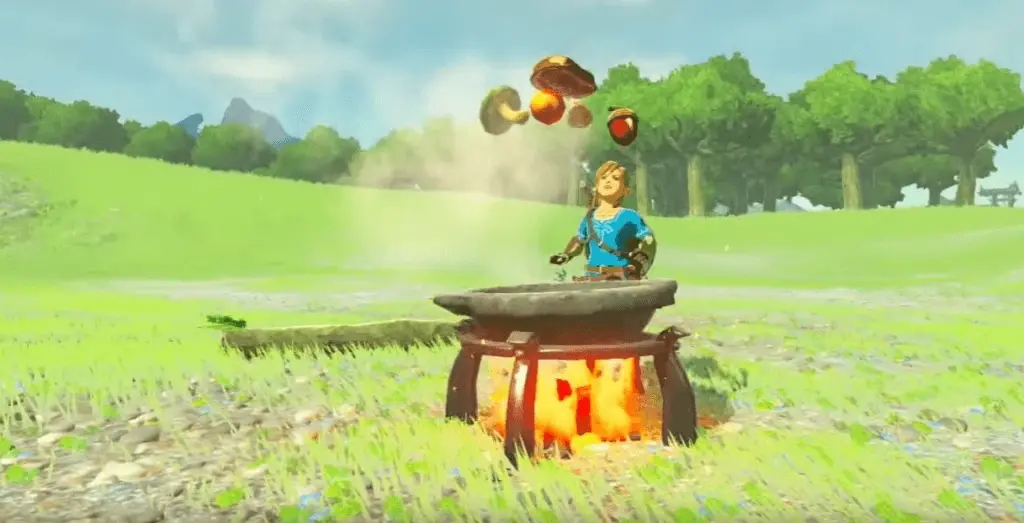
Breath of the Wild Cooking Guide: The Recipes That Matter
Cooking in Breath of the Wild is not flavor text. It is your entire healing economy, your climate gear, and your damage buff — and almost every failed dish comes down to one rule people never get told.
Breath of the Wild Beginner's Guide: Your First 10 Hours
Breath of the Wild does not tell you that armor matters more than hearts, that your weapons are ammunition, or that the Blood Moon is a restock button. Here is the stuff the game leaves you to discover the hard way.
Breath of the Wild Best Shields: All 33, Stats and Locations
The Ancient Shield and the Royal Guard's Shield both block at 70 guard, but surf them down a rocky slope and the Royal Guard's loses durability fifteen times as fast. Here are all 33 shields with guard, durability, material and source, plus the surfing friction, surfing wear and Guardian-beam values from the game's data.