Tetris
The puzzle benchmark. Stacking fundamentals, T-spins and finesse, versus strategy and garbage management, and modern guideline mechanics.
October 2026
1 post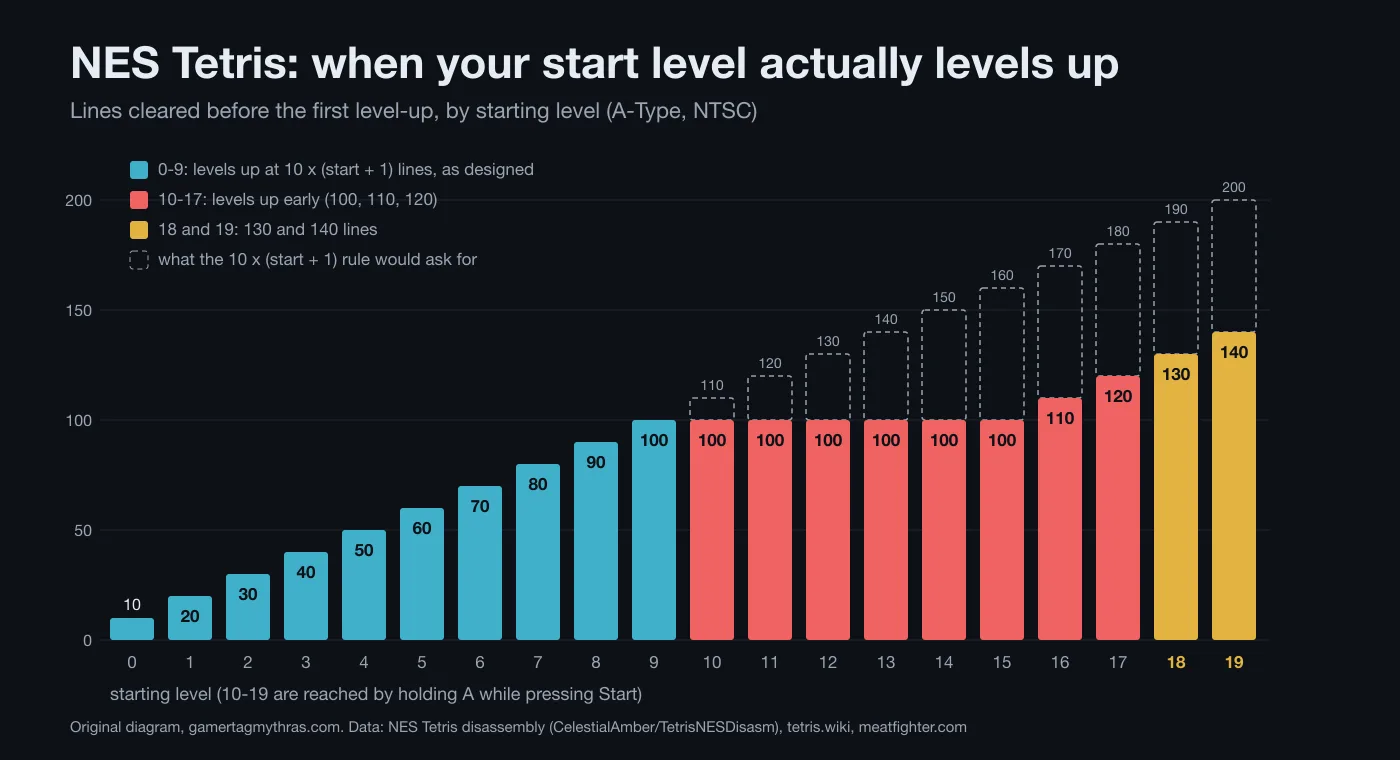
NES Tetris Level Transition and Scoring Explained
Start NES Tetris on 18 and you stay there for 130 lines. Start on 19 and it is 140. Start on 12 and it is 100. One missing conversion in the cartridge explains all three, and it also decides which clear gets paid at the higher rate.
September 2026
8 posts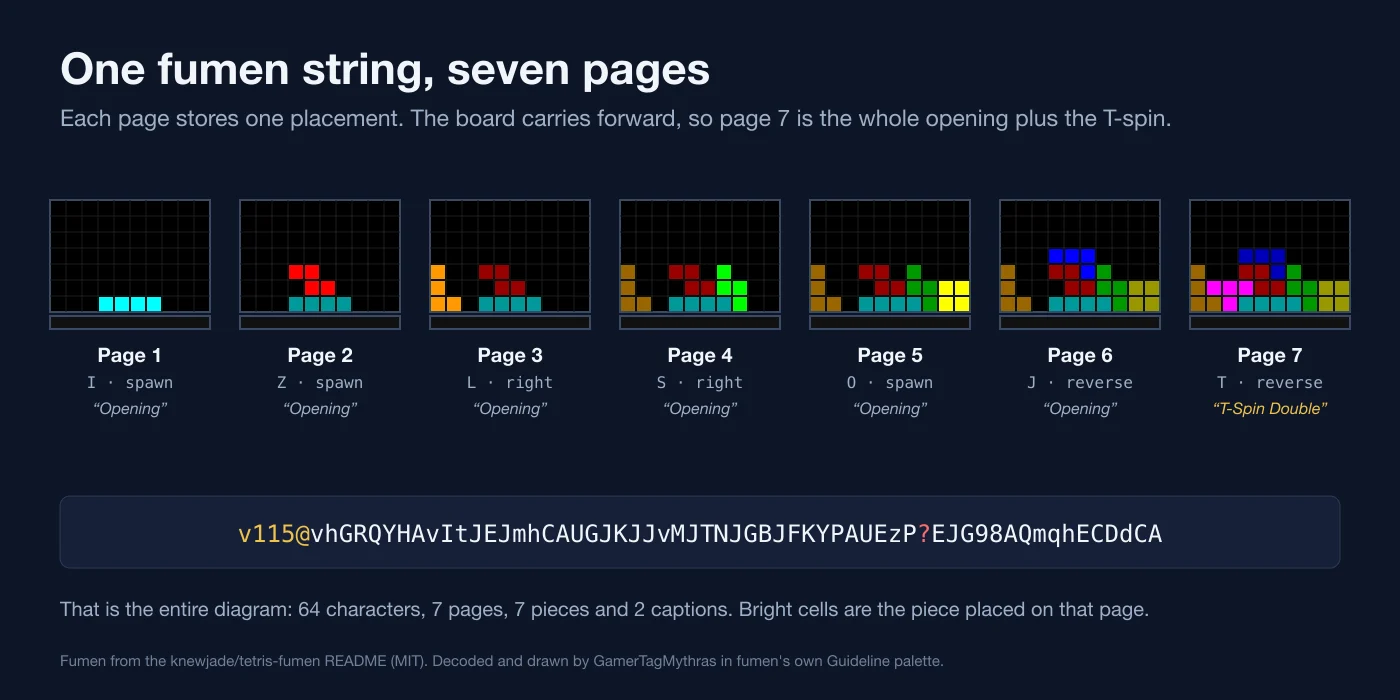
Tetris Fumen Explained: Read, Make and Share Diagrams
The v115@ string attached to Tetris setups is a whole multi-page board packed into a link. Here is what is inside it, which editor to open it in, what Lock, Rise and Mirror do, and where numbers like 84.64% come from.
TGM4 Absolute Eye Modes Explained: Where to Start
Arika's first Grand Master in twenty years is not one game. It is six modes, four unlockable variants behind Normal, two control types that change the randomizer, and a 2,600-level Master mode that freezes your own stack. Here is what each one asks and where to start.
Puyo Puyo Tetris 2 Skill Battle Explained
Puyo Puyo Tetris looks like a novelty crossover until you open Skill Battle: a team of three sharing one HP bar and one MP gauge, where topping out costs you a slice of that HP instead of the match. Here's what actually happens under the hood.
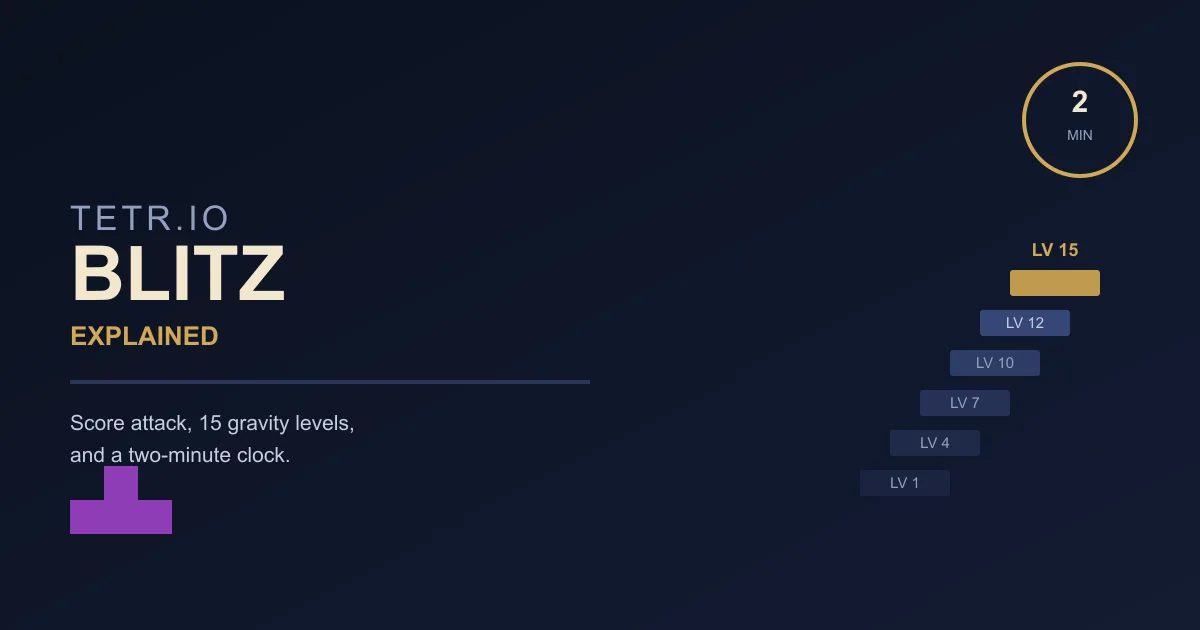
TETR.IO Blitz Explained: Levels, Gravity, and Score
TETR.IO's own wiki calls Blitz "similar to Ultra" and leaves it there. What that skips: a 15-level gravity ladder that multiplies every point you score and eventually outruns your reaction time, a Perfect Clear bonus that does not work the way Tetris Effect's does, and a spin rule the all-spin rework never touched.

Classic Tetris World Championship Explained
Every other guide on this site covers a Tetris built after 2001, when the Guideline standardized rotation, hold and 7-bag. The one tournament with real prize money and 129 entrants in 2026 ignores all of it and plays the 1989 NES cartridge instead. Here is how that tournament is actually run.
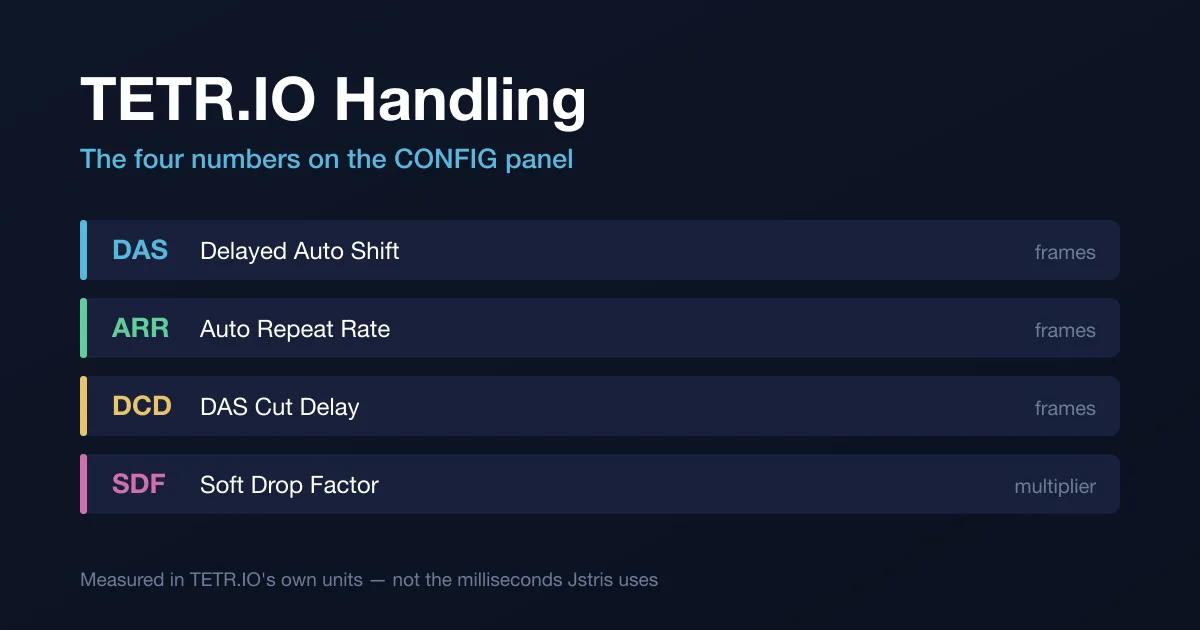
TETR.IO Handling Settings Explained: DAS, ARR, SDF, DCD
TETR.IO gives you four handling numbers and explains none of them in the panel. One of them had its ceiling raised out from under a warning, and one is described differently by the two sources that document it. Here is the whole panel, with the version and date each behaviour arrived.
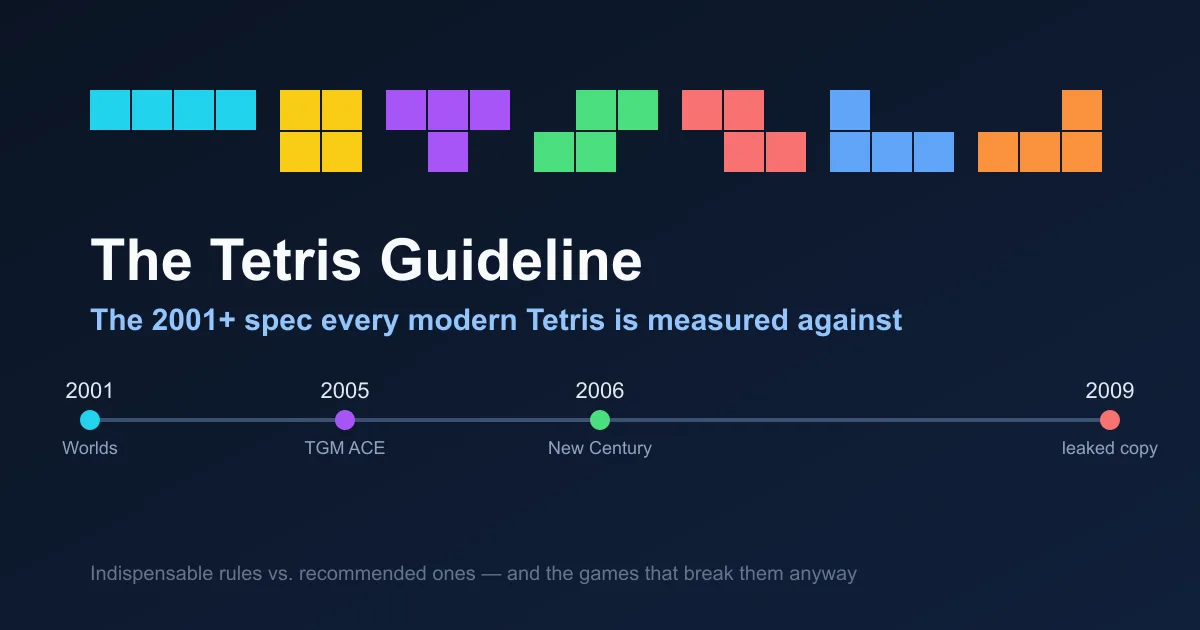
Tetris Guideline Explained: Rules, Versions, Exceptions
Every guide on this site says "modern Guideline Tetris" as background and moves on. Here is what that word is actually short for: a yearly document, four known revisions, an indispensable list and a recommended one, a trademarked theme song, and at least four officially licensed games that break it anyway.
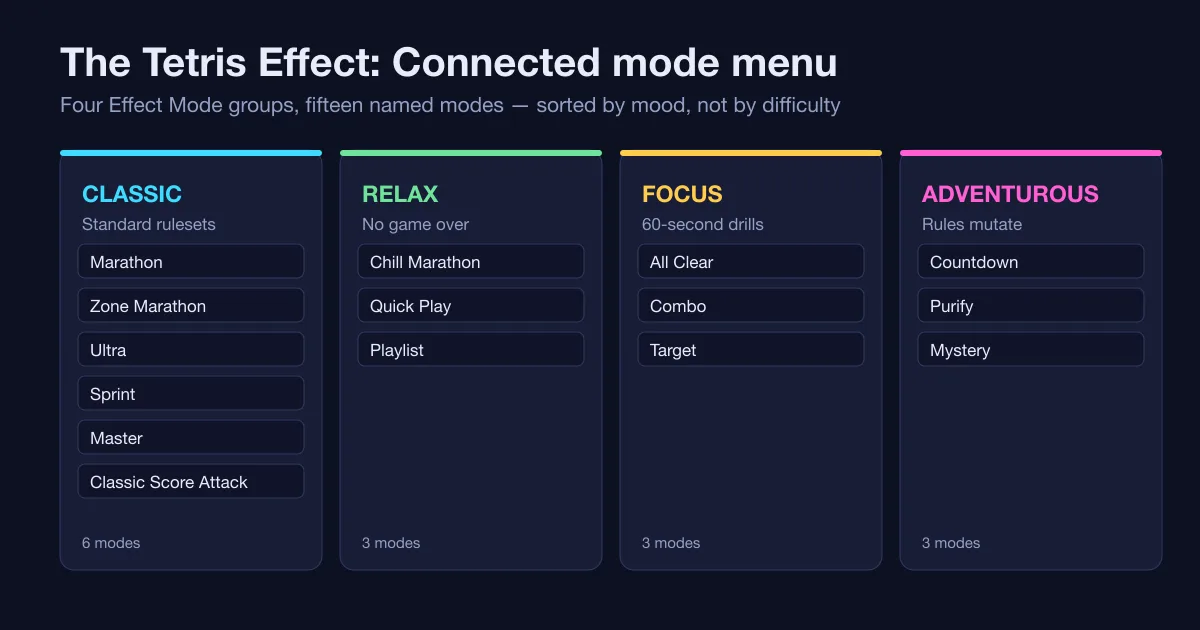
Tetris Effect Modes Explained: SS Grades and What to Play
The Effect Modes menu sorts fifteen modes into four groups by mood rather than difficulty, and each one grades you against a published threshold. Ultra wants 35,000 points in three minutes for an SS. Sprint wants 40 lines in 1:10. Master wants 150 lines at 20G.
August 2026
9 posts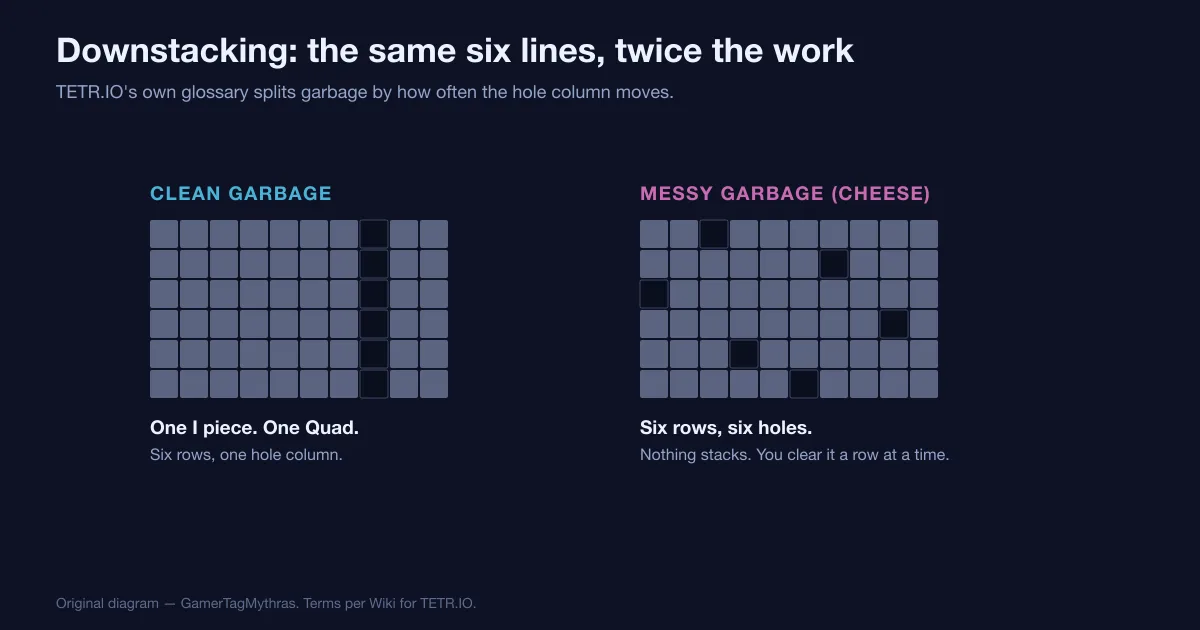
Tetris Downstacking: How to Dig Out of Garbage
Garbage is not one obstacle, it is two. Where the hole column sits from row to row decides whether six lines cost you one piece or six, and TETR.IO scores the lines you dig out at exactly the same rate as the lines you send.
TETR.IO Ranks Explained: TR, Percentiles and Cutoffs
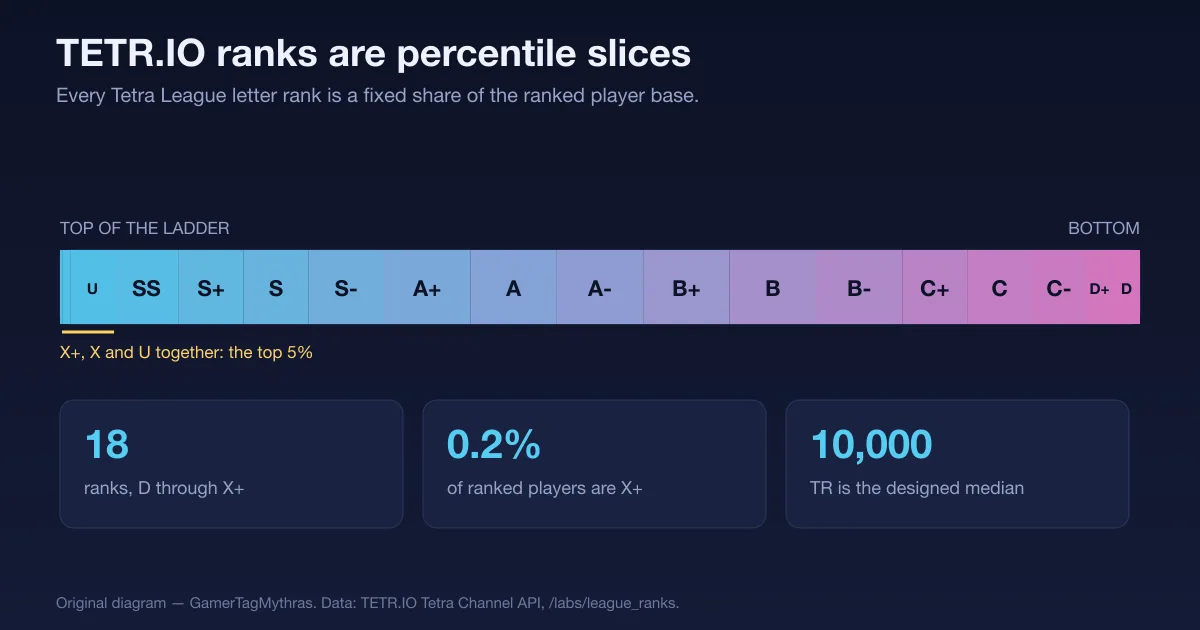
A Tetra League letter is not a skill score, it is a slice of the leaderboard — and TETR.IO publishes exactly how big each slice is, what TR it currently costs, and how fast the people inside it play.
Tetris All-Spin Explained: S, Z, L, J and I Spins
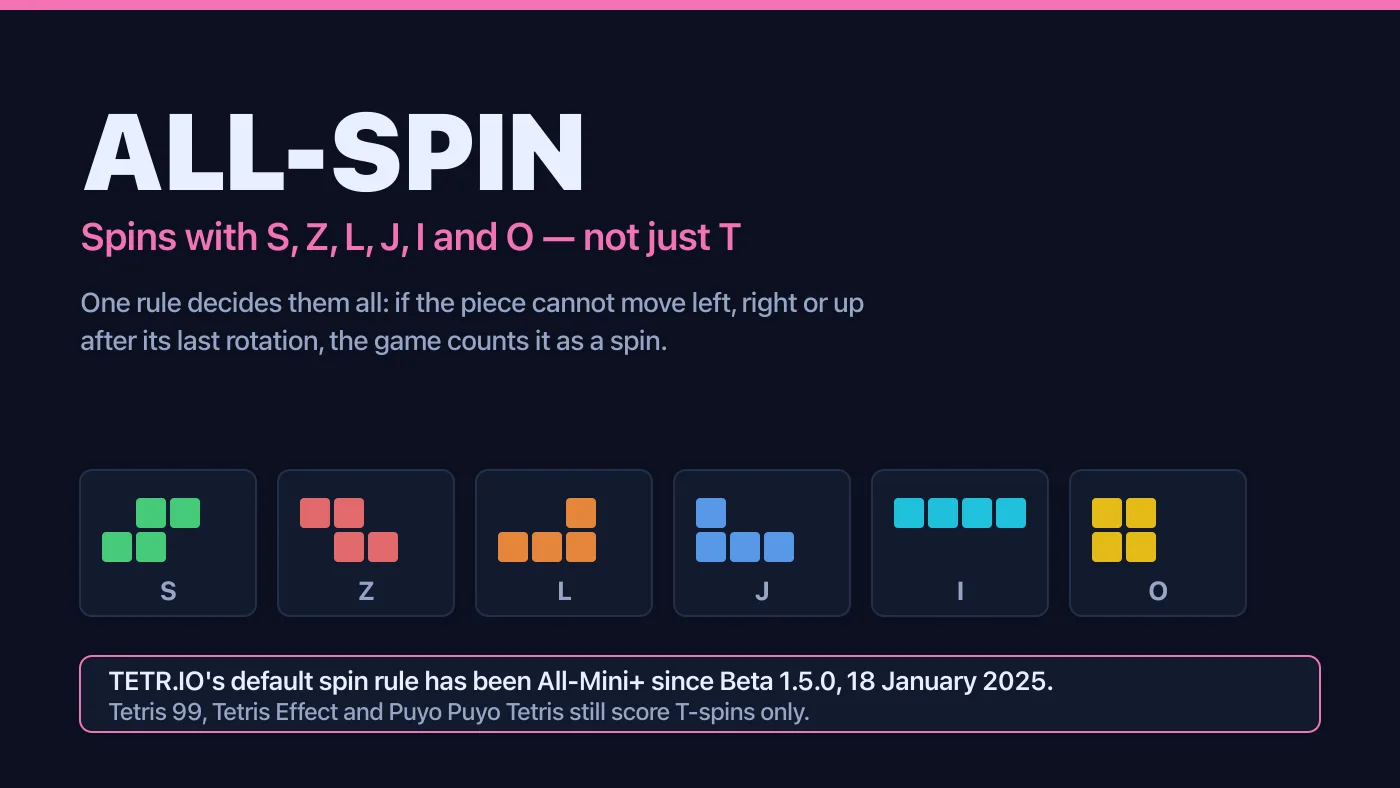
A Z piece rotated into a slot nothing else reaches is either a scored spin or an ordinary Double, and which one it is has nothing to do with you. It is a setting, and most Tetris games have it switched off.
Which Tetris Should You Play? TETR.IO to Tetris Effect
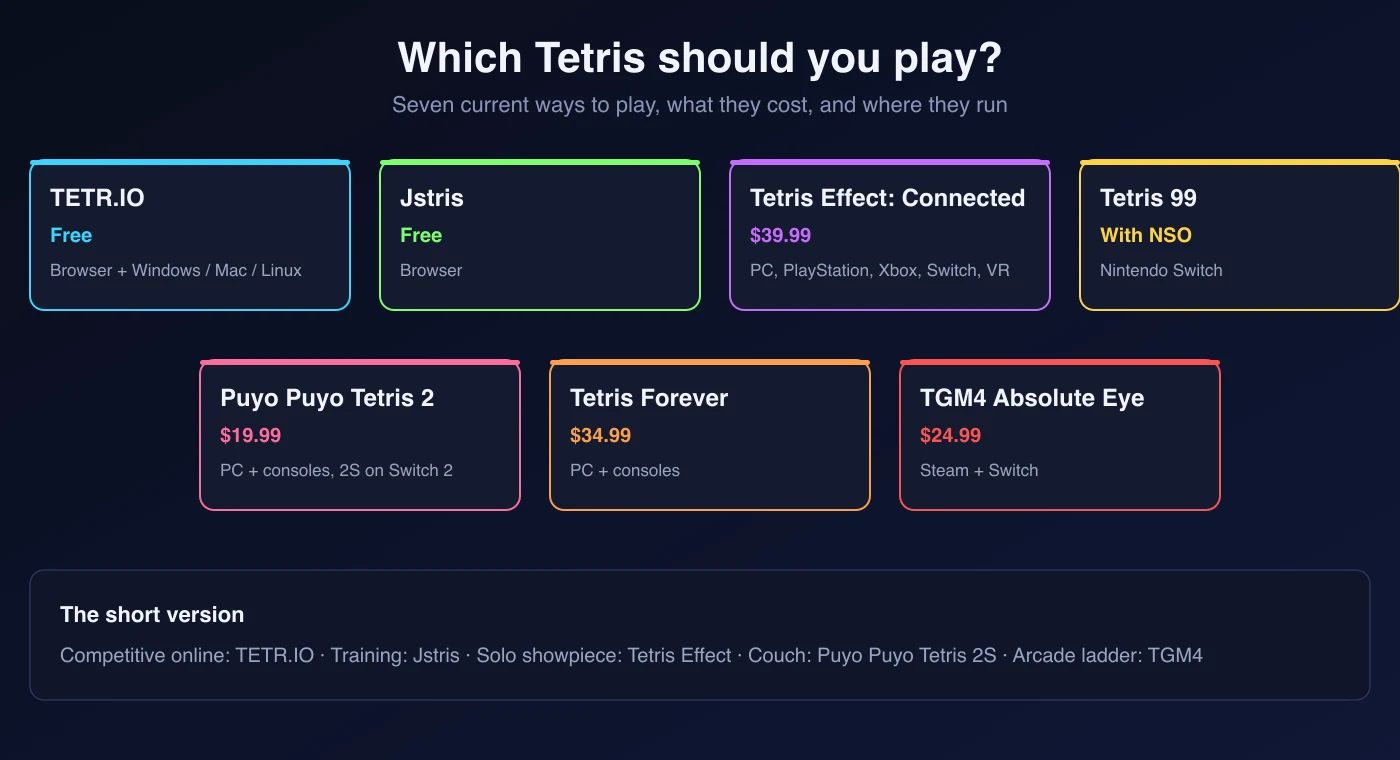
There are at least seven current, maintained ways to play Tetris, and they are not interchangeable — two are free in a browser, one costs $39.99 and works in VR, and one is an arcade grading ladder that came back after twenty years. Here is which one to actually install.
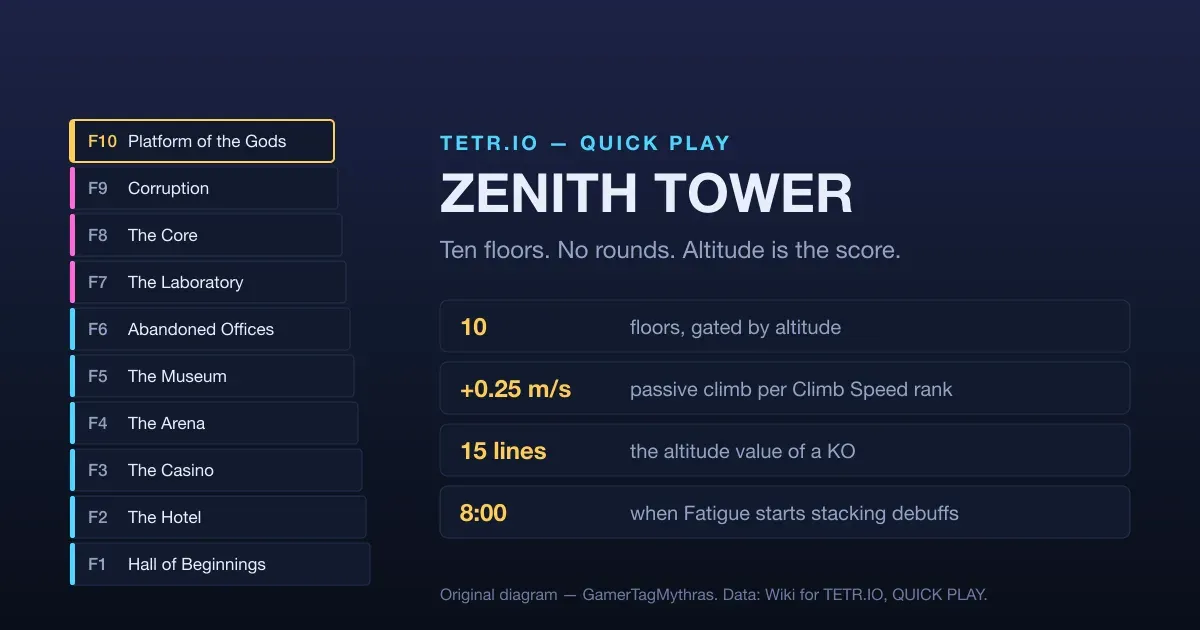
TETR.IO Quick Play Explained: The Zenith Tower, Climb Speed, and HYPERSPEED
Quick Play looks like a battle royale and scores like a speedrun. There is no round to win and nobody to outlast — only altitude, and altitude is bought mostly with the lines you send at other people.
The Tetris Effect Zone Guide: Ultimatris, the Attack Table, and When to Press It
Zone is sold as a get-out-of-jail button, and used as one it pays a fraction of what it could. The published Zone Bonus Attack table says the same lines can be worth 40 garbage rows or 80, depending only on when you pressed it.
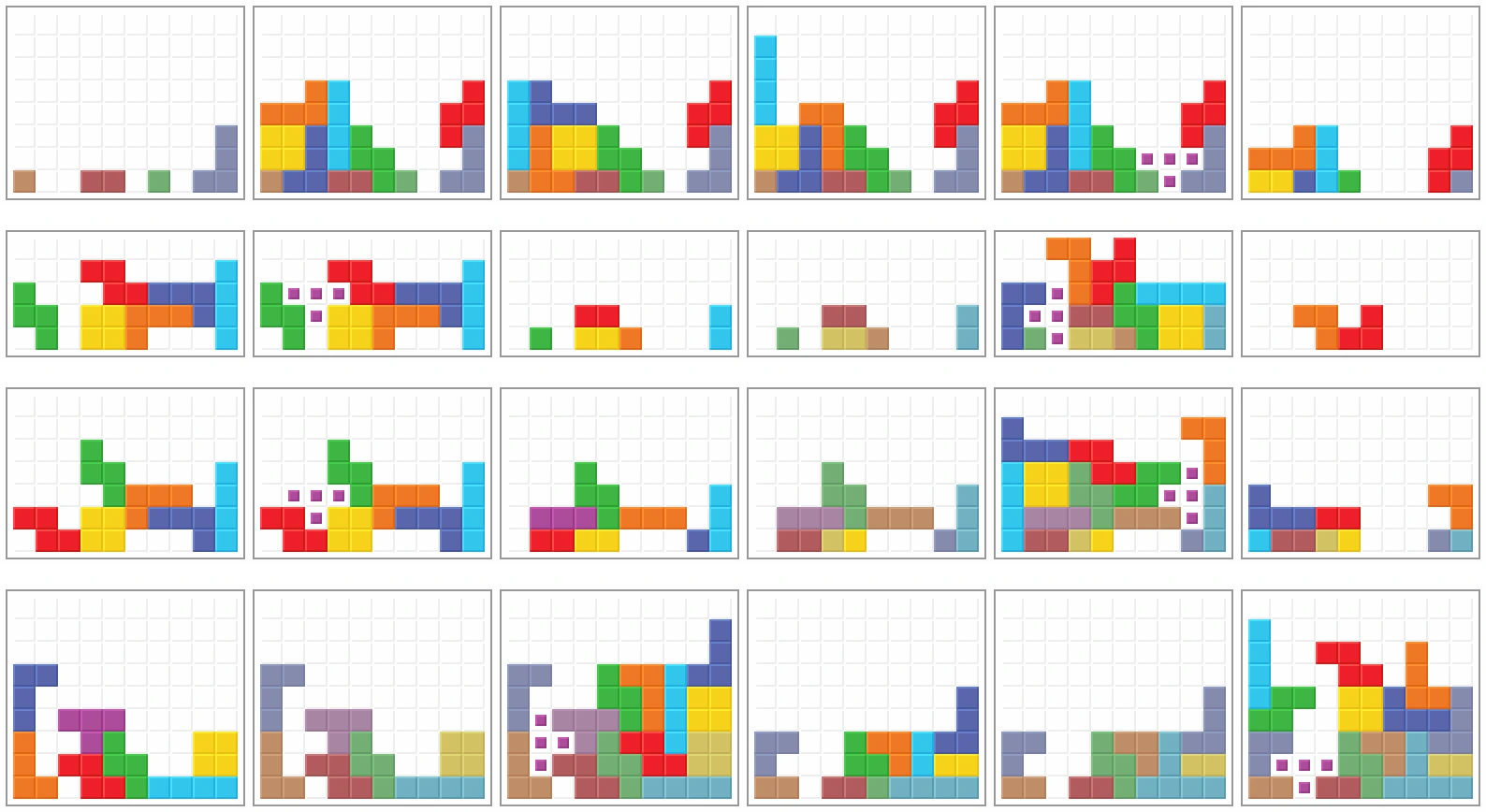
Tetris Openers: TKI-3, DT Cannon and Albatross
Your first seven pieces decide which opener is even legal. Memorising one build and forcing it every game is why your opening dies half the time. Here is the actual decision tree, from the I-piece TKI family down to the SZT bags nobody wants.
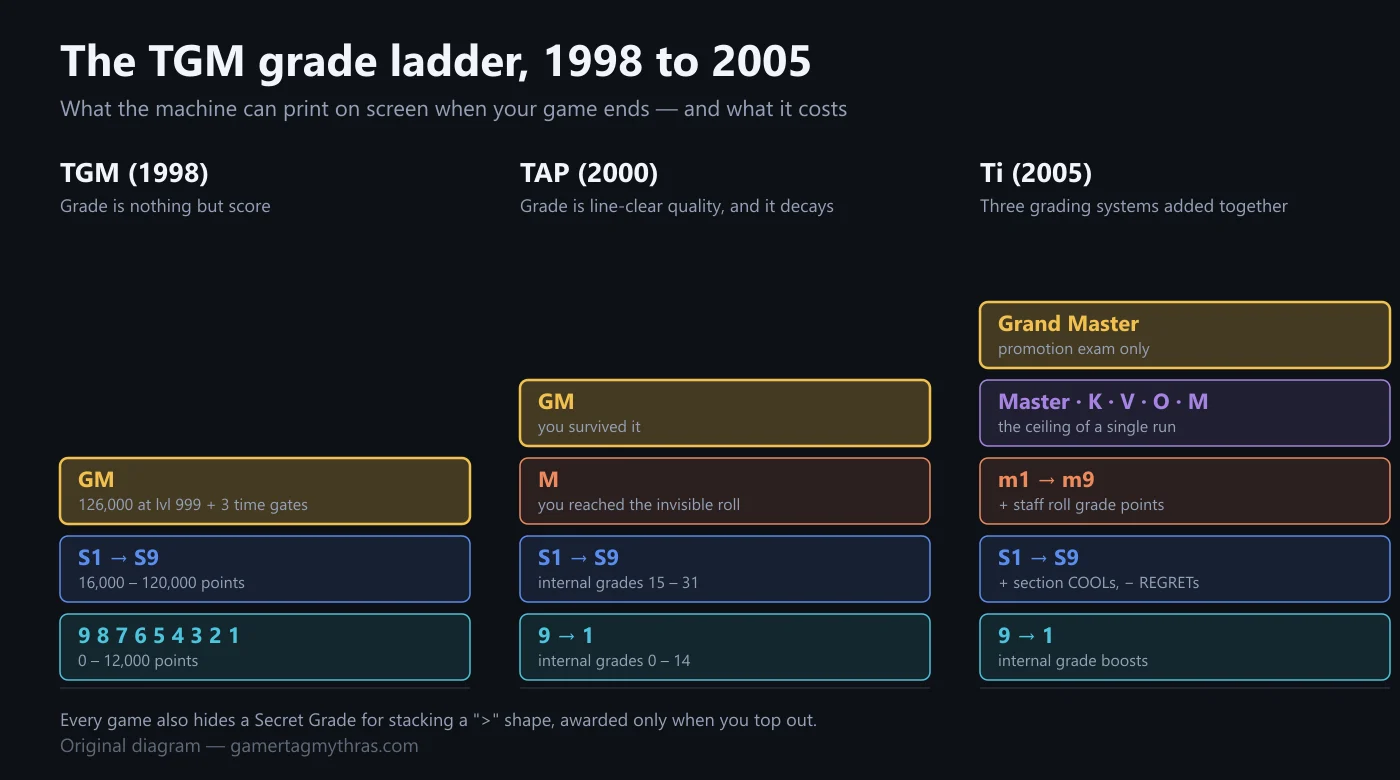
Tetris The Grand Master Explained: 20G, the Grade Ladder, and the Invisible Roll
Most Tetris games ask you to survive. Arika's ask you to justify yourself. Here is how the TGM series actually grades a run — the piece-counted level, the 20G cliff at level 500, TAP's decaying grade points, and the promotion exam standing between Ti players and Grand Master.
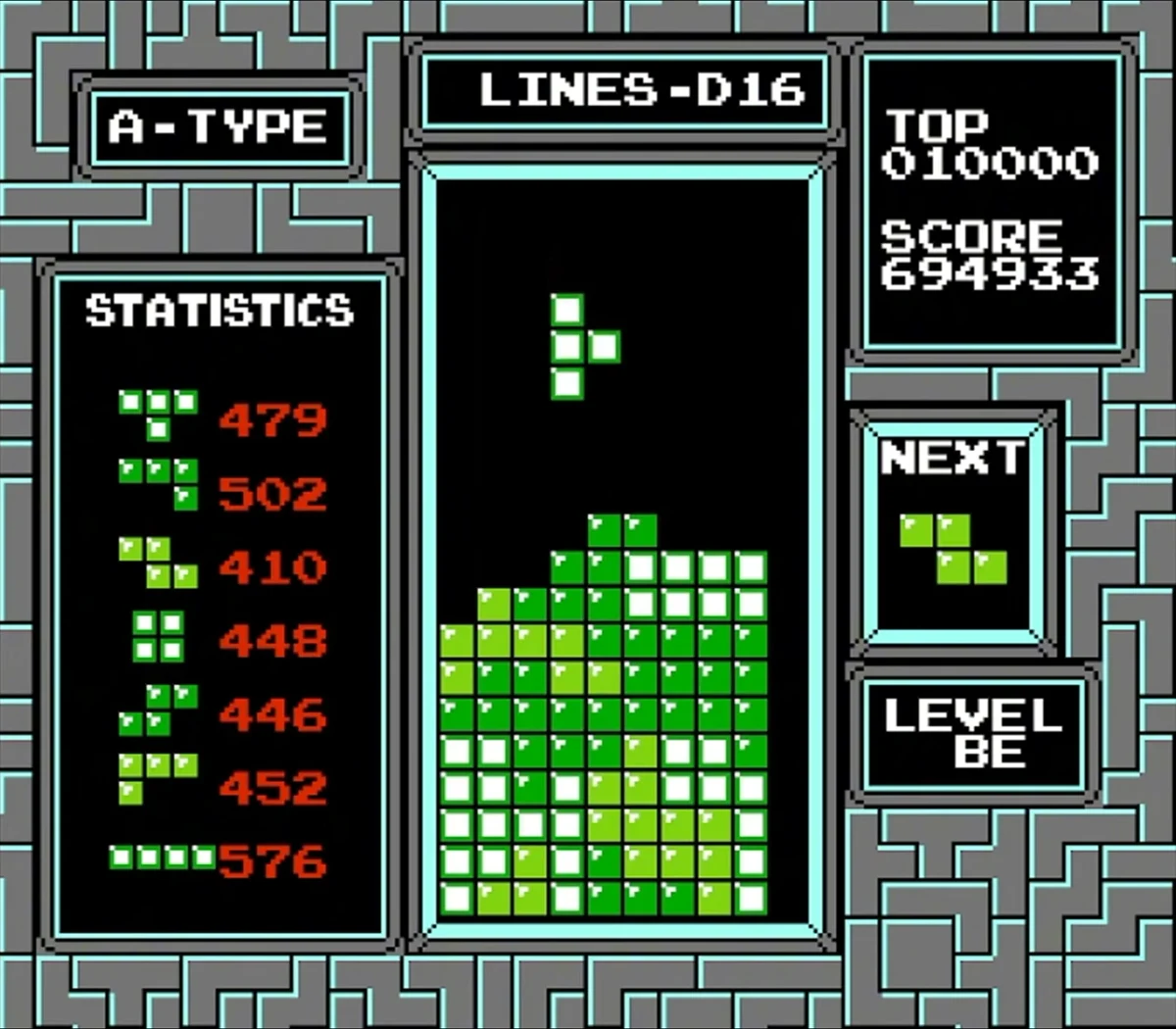
Tetris Randomizers Explained: 7-Bag, TGM History Rolls, and Why NES Owed You Nothing
Every version of Tetris answers the same question differently: what comes next? The answer ranges from a shuffled bag with hard mathematical guarantees to a single polite reroll that owes you nothing, and knowing which one you are playing against changes how you stack.
July 2026
10 posts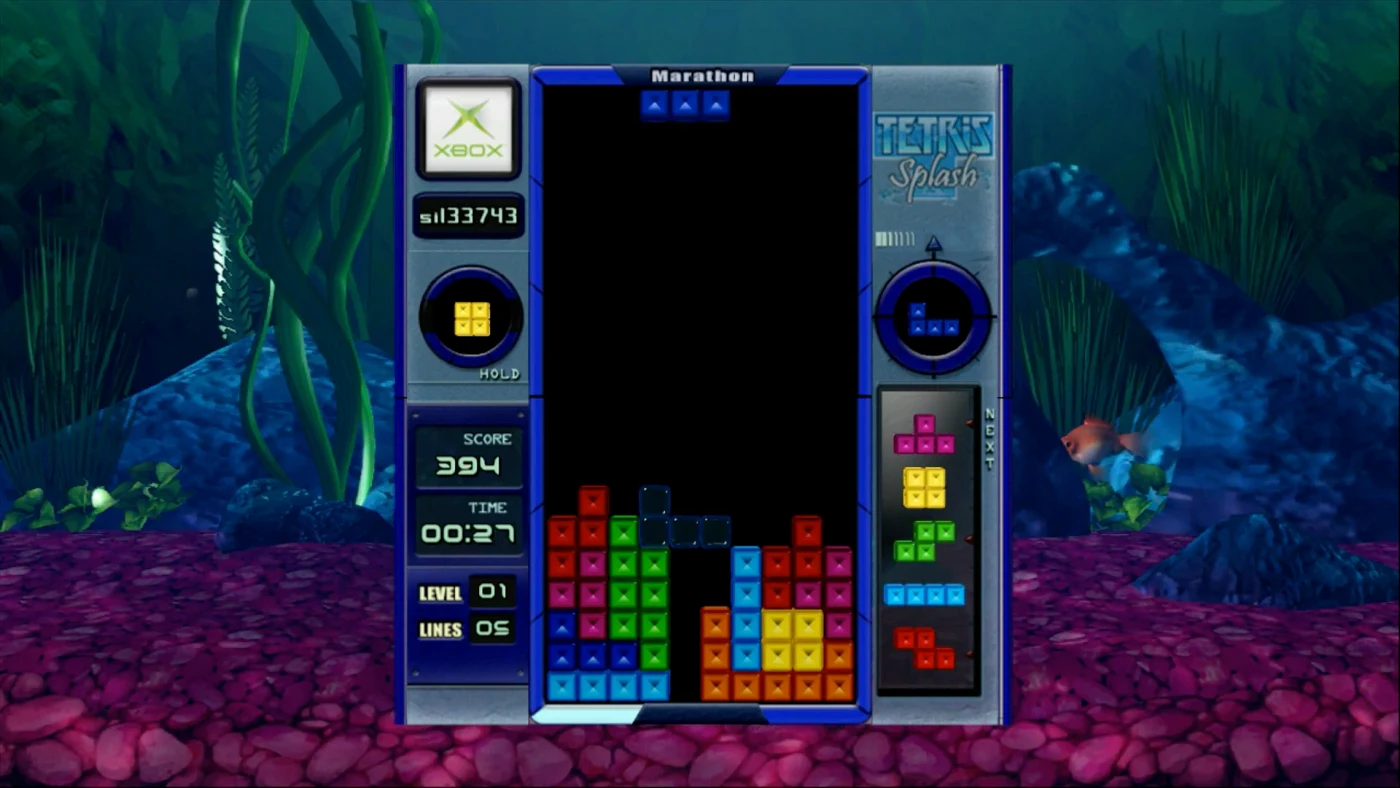
Tetris Gravity and Lock Delay Explained: The Speed Curve, the 15-Move Limit, and 20G
Every modern Tetris game runs on three clocks you never see: gravity, lock delay, and entry delay. All three are published numbers, and they explain exactly why level 15 feels like a different game than level 5.
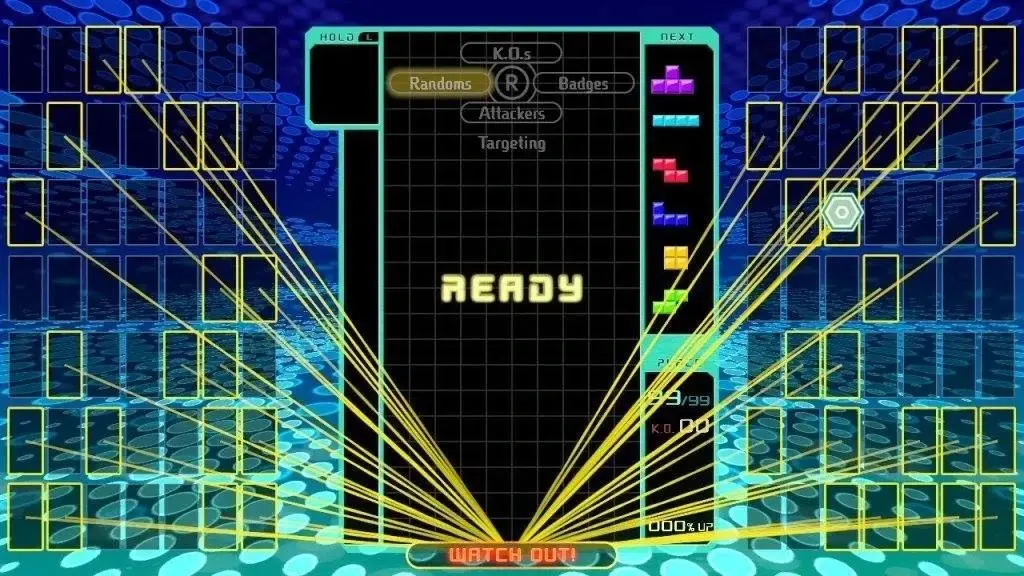
Tetris 99 Strategy Guide: Badges, Targeting, and Winning the 99
Tetris 99 is not a speed contest with 98 strangers. It is an economy — badges are the currency, targeting is the market, and the players who win are the ones who understand both while everyone else just stacks. Here is how the mode actually works.
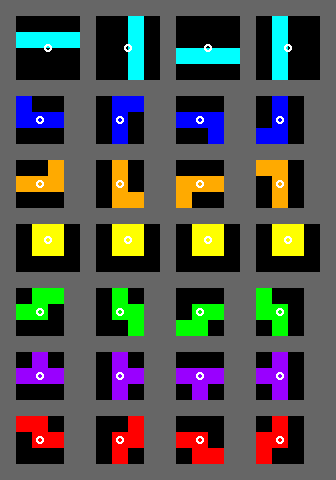
Tetris Wall Kicks Explained: SRS Kick Tables, ARS, and NES
Your I piece did not glitch. It jumped two columns left because test 2 of its kick table says to, and the game ran that test before it ran the one you wanted. Here is what every modern Tetris is actually checking when you press rotate.
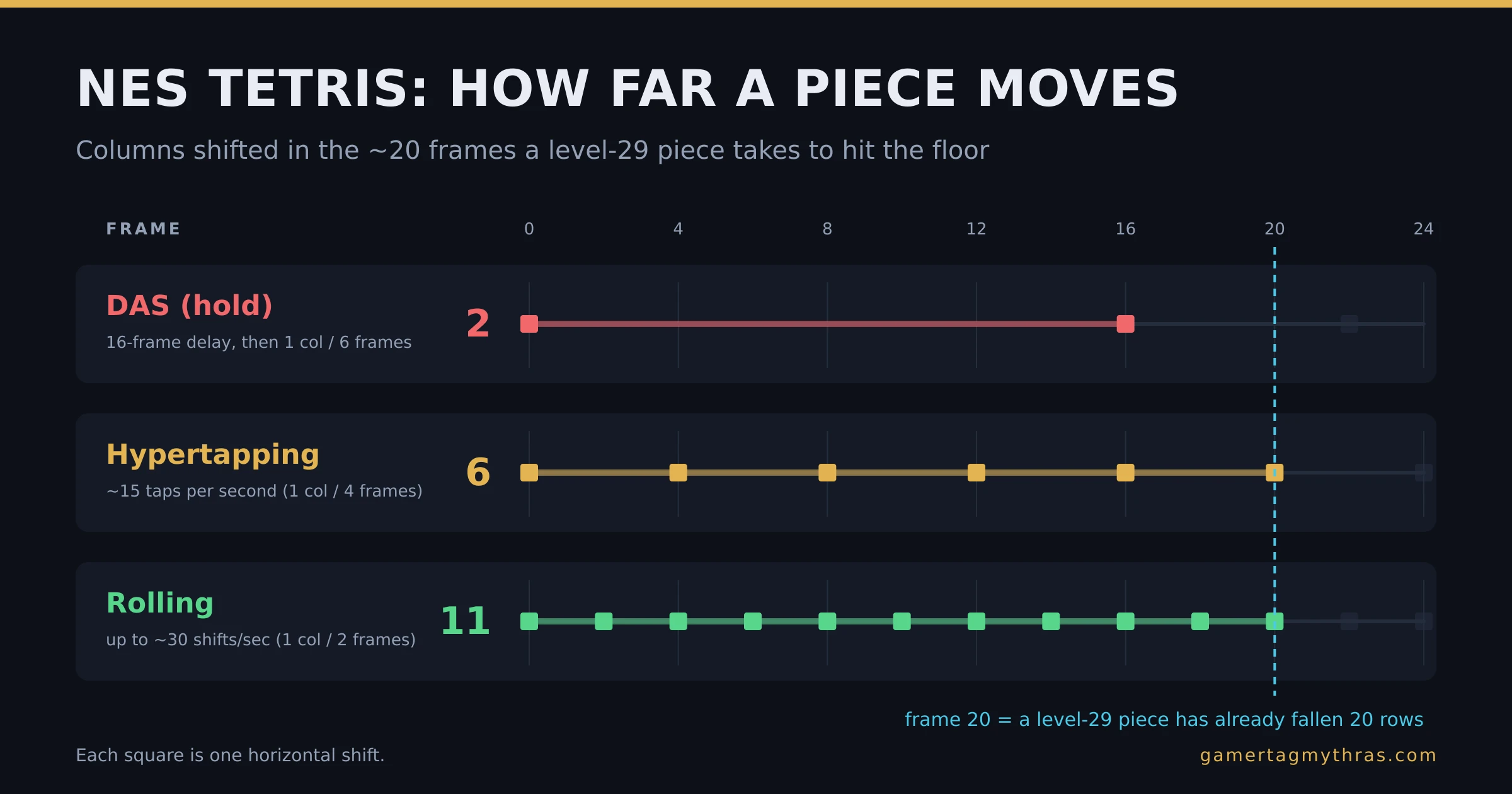
NES Tetris DAS, Hypertapping and Rolling: How the Kill Screen Died
NES Tetris moves your piece sideways ten times a second. At level 29 a piece falls the whole well in twenty frames. That gap is why hypertapping and rolling exist, and why the kill screen is not a kill screen anymore.
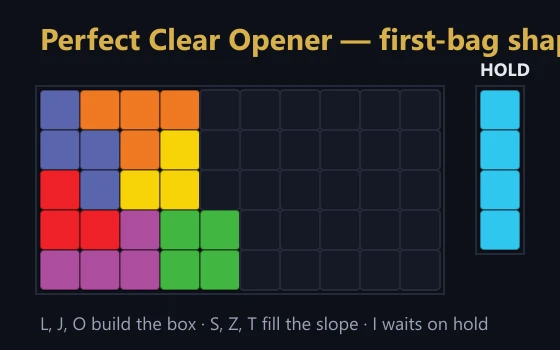
The Tetris Perfect Clear Guide: PCO Openers and Setups
The Perfect Clear Opener wipes your board in ten pieces and dumps the attack table's biggest single-clear bonus on your opponent before they have a well. It succeeds nearly two thirds of the time blind, and 84.64% if you hold the I. Here is how it is built.
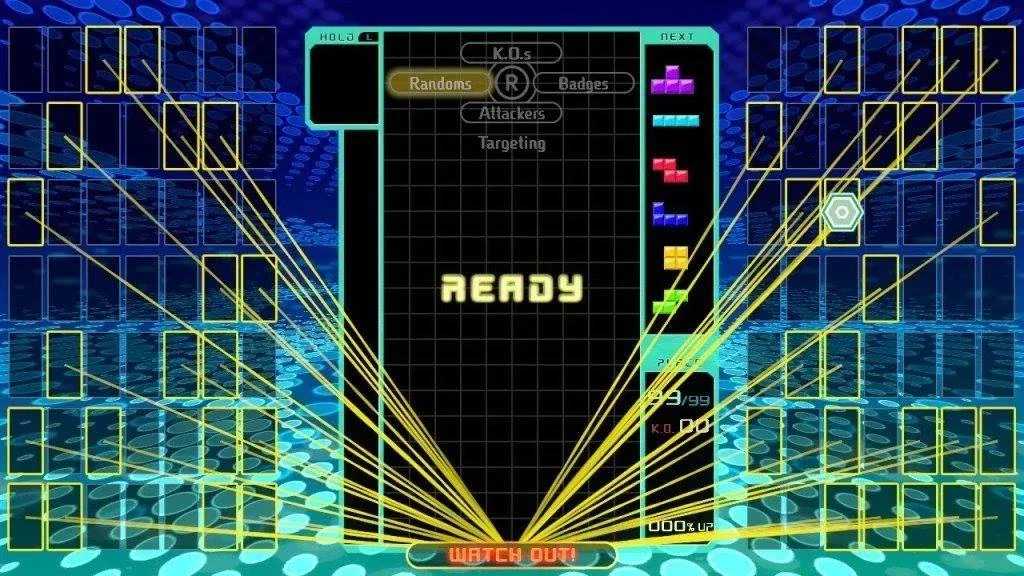
Tetris Scoring and Attack Explained: Points, B2B, Combos, and Garbage
Points and garbage are two completely different economies, and most players optimise for the wrong one. Here are the actual numbers behind Guideline scoring, versus attack, back-to-back, combos, and perfect clears.
Tetris 40-Line Sprint: How to Actually Get Faster
You finished a clean run and the clock still said 48 seconds. The gap between you and a sub-30 sprint is not talent — it is two measurable numbers, and both of them are trainable. Here is exactly what to work on.
Tetris Stacking Fundamentals: Build a Board That Wins
Most players do not lose to speed. They lose to a board they built themselves three minutes earlier. Here is how stacking actually works in modern Guideline Tetris, and the habits that stop you from burying your own well.

The Tetris T-Spin Guide: Detection, Setups, and Damage
A T-spin double sends the same 4 garbage rows as a Tetris while using half the rows. That is the whole argument. Here is how the game decides what counts, and the setups that let you do it on purpose.
Tetris Finesse: Place Every Piece in Two Keypresses
Under SRS, every placement on the board is reachable in two keypresses before the drop. If you are spending five, you are not slow because of your hands — you are slow because of your habits.